
The best miniature poodle breeders in Florida are the ones who document parent health testing, explain adult-size expectations, and prepare you for life with your puppy. At Goldendoodles of Miami, we offer Poodles with curriculum-based training and family support; confirm the parents’ size classification before choosing a miniature Poodle.
- Choose miniature poodle breeders in Florida by documented health testing, parent size, puppy preparation, and written commitments.
- Goldendoodles of Miami offers Poodles with curriculum-based training, a two-year health guarantee, and lifetime family support.
- The American Kennel Club defines miniature Poodles as over 10 inches and no more than 15 inches tall.
- A miniature Poodle, toy Poodle, and miniature doodle are different choices; confirm parentage before applying.
What makes the best miniature Poodle breeder?
For your 2026 search, start with evidence rather than a cute photograph. A puppy becomes part of your family, and the breeder’s explanations should help you make that decision with confidence.
Use these criteria before comparing programs:
- Health documentation: Ask for the parents’ actual screening results, not just a statement that they are healthy.
- Size clarity: Confirm that the pairing involves miniature Poodles rather than assuming that a small puppy is miniature.
- Puppy preparation: Ask what the puppy has practiced and what you will need to continue at home.
- Family matching: Discuss your schedule, children, other pets, and expectations honestly.
- Written commitments: Read the health agreement and understand any insurance coverage separately.
- Ongoing support: Find out how you can ask questions after your puppy comes home.
A strong recommendation depends on the specific pairing and puppy, not the breeder’s name alone. Treat each conversation as a chance to understand the furever friend you are considering.
Why this matters in 2026
Miniature Poodle is a size classification, not a general label for any small, curly-coated dog. The American Kennel Club’s Poodle breed standard defines miniature Poodles as over 10 inches and no more than 15 inches at the highest point of the shoulders. Toy Poodles measure 10 inches or less.
Those measurements describe adult height, not a promised puppy weight. Ask how the breeder explains the expected adult size, then keep that discussion separate from coat appearance, personality, and training.
Your home matters just as much. A smaller dog still needs grooming, daily interaction, training, and veterinary care; choosing a miniature Poodle does not remove those responsibilities.
Poodle and doodle choices at a glance
Before comparing miniature Poodle breeders in Florida, make sure you are comparing the same kind of dog. These options have different parentage, and none comes with a guaranteed personality or allergy outcome.
| Option | Best for | Defining distinction | Main advantage | Key limitation |
|---|---|---|---|---|
| Miniature Poodle | Families specifically seeking the miniature Poodle classification | Purebred Poodle; adult height over 10 inches through 15 inches | A defined breed and size classification | Individual temperament and adult weight still vary |
| Toy Poodle | Families specifically seeking the toy Poodle classification | Purebred Poodle; adult height 10 inches or less | A smaller recognized Poodle classification | Small size does not eliminate training or grooming needs |
| Goldendoodle | Families intentionally seeking a Golden Retriever–Poodle cross | Mixed parentage rather than a Poodle size variety | An option for families interested in that cross | Coat, size, and temperament vary |
| Bernedoodle | Families intentionally seeking a Bernese Mountain Dog–Poodle cross | Mixed parentage rather than a Poodle size variety | An option for families interested in that cross | A miniature label does not establish a standardized adult size |
| Cavapoo | Families intentionally seeking a Cavalier King Charles Spaniel–Poodle cross | Mixed parentage rather than a Poodle size variety | An option for families interested in that cross | Parentage does not guarantee an allergy-friendly coat |
Choose a miniature Poodle because you want a Poodle—not because a photograph resembles another breed or cross. If you prefer a doodle, make that a deliberate choice and ask about the individual pairing.
Ten checks before you choose a breeder
These ten checks turn a 2026 shortlist into a practical decision. Use them with every program you consider, including ours.
1. Confirm miniature Poodle parentage
Best for: families who want a miniature Poodle specifically. Ask whether both parents are Poodles and how their adult size is classified. Request adult measurements rather than relying on descriptions such as small, mini, or petite.
The benefit is clarity: you know what the breeder means before discussing a particular puppy. The limitation is that parental measurements do not guarantee an exact adult measurement for every offspring.
Verdict: Hold until parentage and size classification are clear. A small puppy alone is not enough evidence.
2. Review health testing, not just a health claim
Best for: careful researchers who want documented information. Ask which screening tests each parent received and request the results. A routine veterinary examination and screening for inherited conditions answer different questions.
We emphasize health-tested parents, but you should still ask about the specific pairing you are considering. Documentation gives you something concrete to discuss with your veterinarian; it does not promise that a puppy will never develop a health problem.
Verdict: Choose documented explanations over broad reassurance. Make room for questions before making a commitment.
3. Understand the puppy curriculum
Best for: first-time puppy parents who want a clear starting point. Ask what curriculum-based preparation includes and what the puppy has actually practiced. Useful discussion topics include gentle handling, household experiences, settling, and early learning.
Goldendoodles of Miami offers curriculum-based training. Preparation provides a foundation, not a finished adult dog; your home, routine, and continued teaching remain part of the process.
Verdict: Choose a program that explains both the preparation and your next steps. Do not interpret curriculum-raised as fully trained.
4. Match the puppy to your real household
Best for: families balancing children, work, and other pets. Describe a normal weekday rather than an ideal weekend. Explain who will handle toilet breaks, grooming appointments, training, and supervision.
A thoughtful matching conversation helps you identify practical responsibilities before your puppy arrives. Its limitation is that puppy behavior develops over time, so no early description can guarantee an adult personality.
Verdict: Choose an honest household match over a favorite photograph. Your daily routine should guide the decision.
5. Read the health guarantee
Best for: families who want to understand written commitments. Read the agreement itself and ask about its scope, responsibilities, exclusions, and process for raising a concern. Keep a copy with your puppy’s records.
Our program includes a two-year health guarantee. The duration is a concrete commitment, but duration alone does not explain every term; the written agreement governs what the guarantee covers.
Verdict: Read before you commit. A guarantee is not a substitute for veterinary care or parent health screening.
6. Separate insurance coverage from the guarantee
Best for: families organizing their puppy’s care paperwork. Ask how any introductory coverage works, what you need to do, and which insurer documents explain its terms. Discuss continuing coverage directly with the insurer.
Our program includes 30-day Trupanion coverage. Insurance coverage and a breeder health guarantee are separate arrangements, so do not assume they cover the same situations or have the same requirements.
Verdict: Understand each agreement separately. Keep the insurance information alongside, not instead of, the health guarantee.
7. Ask what lifetime support means in practice
Best for: puppy parents who value an ongoing relationship. Ask how to raise questions after homecoming and what kinds of guidance the breeder provides. Explain whether you are new to Poodles or already have dogs.
Goldendoodles of Miami offers lifetime family support. That relationship gives you a place to ask puppy-parent questions, but breeder guidance does not replace a veterinarian or a qualified trainer when professional help is needed.
Verdict: Choose accessible guidance with clear boundaries. Support matters beyond the day you bring your puppy home.
8. Discuss grooming before choosing a coat
Best for: families attracted to the Poodle’s curls. Ask about brushing, combing, professional grooming, and introducing your puppy to gentle handling. Decide who in your household will maintain the coat between appointments.
A Poodle coat allows different grooming styles, but appearance comes with maintenance. Coat texture and shedding also do not establish whether someone with allergies will tolerate an individual dog.
Verdict: Choose the care routine, not just the haircut. If allergies matter, discuss them with your clinician before committing.
9. Plan a calm transition home
Best for: families preparing for their first days together. Ask about the puppy’s current routine and what information accompanies the handoff. Prepare a resting area, supervision arrangements, and a veterinary appointment plan.
Continuity helps you organize the transition, but your puppy still needs time to learn a new household. Curriculum-based preparation does not mean the puppy already understands your doors, sounds, schedule, or family rules.
Verdict: Prepare before homecoming. Keep the introduction calm instead of treating arrival as a full-house celebration.
10. Use the application as a family conversation
Best for: families ready to take the next step. A useful puppy application should describe your household, experience, care plan, and preferences. Give specific answers rather than trying to sound like the perfect applicant.
We want the conversation to help you think through life with your furever friend. An application starts that discussion; it does not replace questions about parentage, documents, or the individual puppy.
Verdict: Apply when your care plan is clear. Ask how to access the puppy application and bring your remaining questions.
How to organize your shortlist
For a 2026 comparison, use the same questions with every breeder. Record what you received, what the answer means, and what still needs clarification.
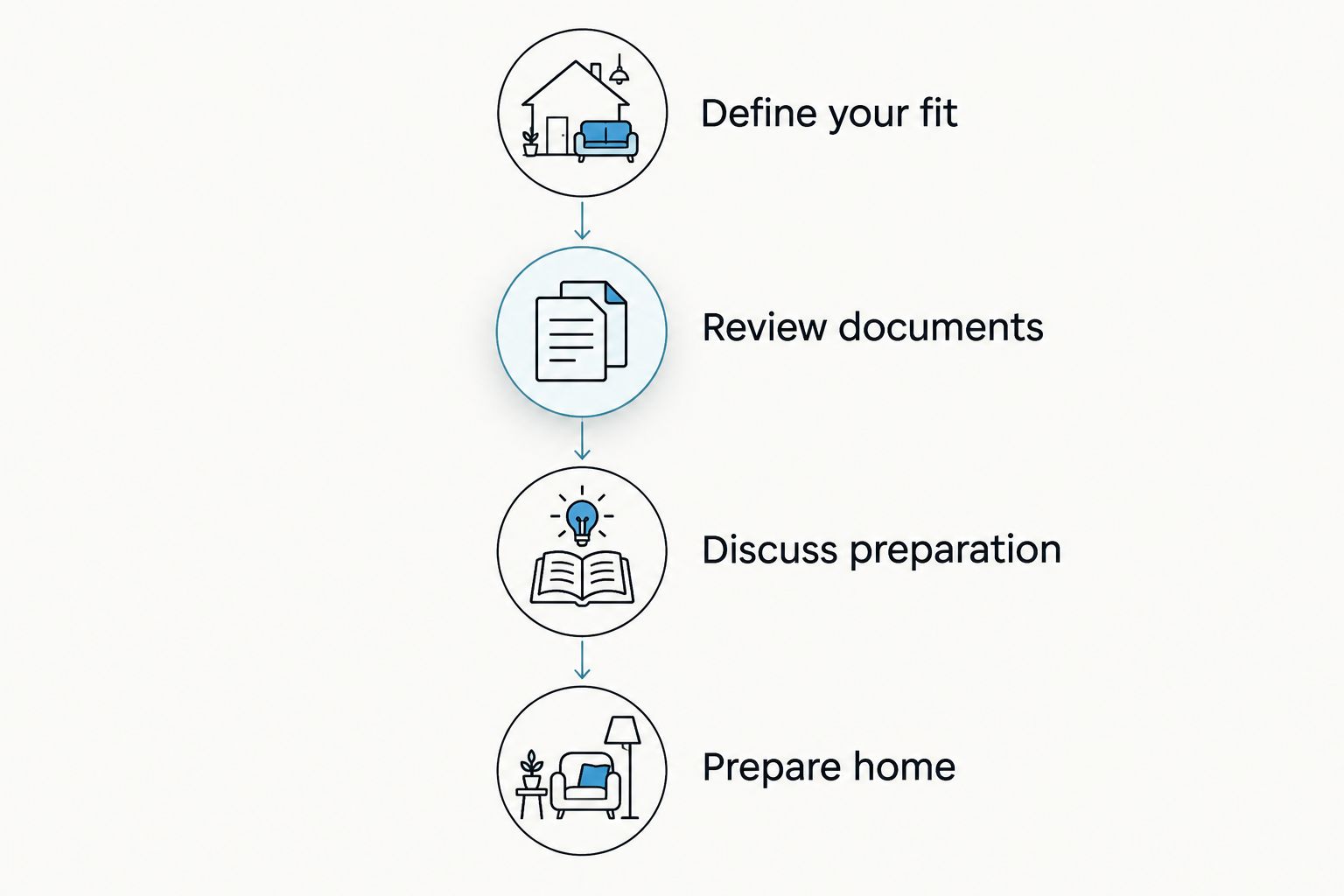
Work through these stages in order:
- Define your fit: Confirm that you want a miniature Poodle and describe your household routine.
- Review documents: Examine parent testing, size information, and written commitments.
- Discuss preparation: Understand the curriculum and the responsibilities you will continue.
- Prepare home: Arrange care, grooming, supervision, and the homecoming routine.
Keep emotional preference and factual review together. You can love a puppy’s expression and still pause to read the documents; careful questions are part of caring for your future family member.
Is our program the right fit?
Goldendoodles of Miami is a fit for Poodle families seeking health-tested parents, curriculum-based training, and lifetime family support. Our Miami-based program also offers Goldendoodles, Bernedoodles, and Cavapoos.
Our program’s strengths: health-tested parents, curriculum-raised puppies, a two-year health guarantee, 30-day Trupanion coverage, and lifetime family support.
What to resolve before choosing: confirm the specific parents’ size classification, review the pairing’s documentation, and read the written terms. Our preparation does not replace the training, grooming, and care you will provide at home.
Best for: families who want a supported Poodle-parenting relationship and are ready to discuss the individual pairing. Verdict: Hold until miniature classification and household fit are confirmed.
Explore our Poodle program
Learn about our program, then ask about parent size, health documentation, and the puppy application.
Which breeder should you choose?
Choose the program that gives you clear answers about the miniature Poodle pairing and fits your household. For an undecided family, documentation and an understandable care plan are better tie-breakers than coat color.
These recommendations prioritize parentage, health information, preparation, written commitments, and support. They are decision criteria—not claims that one program produces a universally better dog.
Your next move in 2026: confirm miniature parentage, review the documents, and then discuss the puppy application. Keep that order even when you have already fallen for a photograph.
FAQ
What should I look for in miniature Poodle breeders in Florida?
Look for documented parent health testing, clear miniature Poodle parentage, puppy preparation, and written commitments. Discuss your household routine and confirm what support continues after homecoming.
How big is a miniature Poodle?
The American Kennel Club defines a miniature Poodle as over 10 inches and no more than 15 inches tall at the highest point of the shoulders. That classification describes adult height, not a guaranteed weight.
Does Goldendoodles of Miami offer Poodles?
Goldendoodles of Miami offers Poodles, along with Goldendoodles, Bernedoodles, and Cavapoos. Ask about the specific parents’ size classification before choosing a puppy for a miniature Poodle household.
Is a miniature Poodle the same as a miniature Goldendoodle?
No, a miniature Poodle and a miniature Goldendoodle have different parentage. A Goldendoodle is a Golden Retriever–Poodle cross, while miniature identifies a recognized Poodle size classification.
Are miniature Poodles hypoallergenic?
No dog is guaranteed to be hypoallergenic. Allergic reactions involve more than visible shedding, so discuss your circumstances with a clinician and do not treat a curly coat as an allergy guarantee.
Does curriculum-based training mean my puppy is fully trained?
No, curriculum-based training provides early preparation rather than a fully trained adult dog. Ask what your puppy has practiced and how to continue that learning at home.
What is the difference between a health guarantee and insurance?
A health guarantee and insurance are separate agreements with their own terms. Read the breeder’s written guarantee and the insurer’s coverage documents rather than assuming either covers every health concern.
How do I start the puppy application process?
Ask the breeding program how to access its puppy application. Prepare details about your household, schedule, other pets, grooming plan, and the Poodle size you are seeking.
Resumen para nuestras familias hispanohablantes
Para elegir un criador de caniches miniatura en Florida en 2026, confirma el tamaño de los padres y pide los resultados de sus pruebas de salud. Pregunta también cómo se prepara al cachorro y qué aprendizaje deberás continuar en casa.
Nuestro programa ofrece caniches con preparación basada en un currículo, garantía de salud de dos años, cobertura de Trupanion durante 30 días y apoyo de por vida. Antes de solicitar un cachorro, confirma que la pareja corresponde al tamaño miniatura y revisa las condiciones por escrito.
One last thing
Ask about the ordinary Tuesday you will share with your puppy. Where will your dood sleep, who will handle care during the workday, and how will grooming fit into your routine?
That conversation makes the choice personal in the right way. Your furever friend needs a home prepared for everyday life, not just a family excited about homecoming.