
Goldendoodles of Miami fits families comparing standard Goldendoodle breeders who want health-tested parents, curriculum-raised puppies and continuing support. This 2026 guide gives you ten checks to make before choosing a breeder, with particular attention to standard-size expectations, family fit and the responsibilities that follow homecoming.
- Goldendoodles of Miami offers health-tested parents, curriculum-raised puppies and a two-year health guarantee.
- Compare standard goldendoodle breeders through parent records, size expectations, puppy preparation and written commitments.
- Goldendoodle puppies need individual coat and allergy consideration; no puppy comes with a hypoallergenic promise.
- Choose a breeding program that explains both its puppy preparation and your responsibilities after homecoming.
Why this matters
Choosing a furever friend means choosing the people responsible for that puppy’s earliest care. A sweet photograph cannot answer your questions about parent testing, early learning or what happens when you need guidance at home.
At Goldendoodles of Miami, we offer Goldendoodle, Bernedoodle, Poodle and Cavapoo puppies through our Miami-based breeding program. Our commitments include health-tested parents, curriculum-based puppy preparation, a two-year health guarantee, 30-day Trupanion coverage and lifetime family support.
Those commitments give you specific subjects to discuss. They do not replace your own questions about a particular puppy, the puppy’s parents or the written agreement. For a standard Goldendoodle, start by confirming that the planned size fits your household rather than assuming every Goldendoodle program has the same size focus.
What makes the best standard Goldendoodle breeder for your family?
The best match is the program whose documented care and puppy fit align with your home. Use these criteria before comparing photographs or submitting an application:
- Parent health testing: Ask what testing each parent completed and how you can review the results.
- Standard-size expectations: Discuss the parents and the basis for the breeder’s adult-size estimate.
- Early learning: Ask what curriculum-based preparation includes and how to continue it at home.
- Individual temperament: Discuss observed behavior alongside your household’s daily routine.
- Written commitments: Read the health guarantee, coverage information and family-support terms.
- Practical communication: Choose a program that answers specific questions without replacing detail with reassurance.
For your 2026 search, compare the substance behind each promise. A health guarantee, a parent’s test results and a puppy’s learning experiences answer different questions; none stands in for the others.
Breeder-selection priorities at a glance
These are decision paths, not a ranking of competing breeders. Each helps you identify what matters most without losing sight of the other checks.
| Selection priority | Best for | Strength | Key limitation |
|---|---|---|---|
| Parent records | Families prioritizing documented parent testing | Gives you specific results to review | Does not predict every future health issue |
| Puppy preparation | First-time puppy parents | Establishes a starting point for learning | Training must continue after homecoming |
| Written commitments | Families comparing breeder promises | Makes obligations easier to examine | Terms still need careful reading |
| Household fit | Families with particular routines or constraints | Connects the choice to daily life | Puppy behavior develops with experience |
The strongest decision considers all these priorities together. Do not select a puppy solely because one column looks reassuring while the other questions remain unanswered.
Ten checks before choosing your standard Goldendoodle breeder
1. Parent health testing: best for evidence-focused families
Ask the breeder to explain the health testing completed for each parent of the puppy you are considering. Keep the conversation specific to that pairing rather than accepting a general statement about the whole program.
We emphasize health-tested parents because families deserve a concrete discussion about the breeding program. Testing supports informed decisions; it is not a promise that a puppy will never develop a health problem.
Strength: Parent records give you something specific to review and discuss with your veterinarian.
Limitation: A general claim about testing does not tell you which tests were completed or what their results mean.
Best for: Families who want documentation before making an emotional commitment.
Verdict: Hold until the parent-testing discussion is clear.
2. Standard-size expectations: best for space-conscious households
Tell the breeder what standard size means to you in practical terms. Describe your living space, transport arrangements and comfort handling a larger adult dog, then ask about the parents and the expected size of the particular pairing.
Goldendoodles are crosses, so a size label is not an exact adult-weight promise. Keep an estimate separate from a guarantee and make sure your plans accommodate uncertainty.
Strength: A pairing-specific conversation connects your search to the puppy you are actually considering.
Limitation: Parent size and breeder estimates cannot establish an exact adult size.
Best for: Families whose housing, travel or handling needs make adult size especially important.
Verdict: Hold until the expected size range fits your home.
3. Curriculum-based preparation: best for first-time puppy parents
Ask what the puppy experiences during early preparation and what you should continue after homecoming. Useful questions address gentle handling, exposure to ordinary household experiences and the approach to introducing new situations.
Our curriculum-raised puppies receive early preparation within the breeding program. Your role begins when your puppy joins your family: maintain patient, consistent learning rather than expecting a finished adult dog.
Strength: A clear curriculum gives you a starting point for the transition home.
Limitation: Early preparation does not replace house training, ongoing socialization or professional help when needed.
Best for: Families who want guidance on continuing the puppy’s learning.
Verdict: Proceed when you understand both the preparation and your next steps.
4. Individual temperament: best for households with children
Describe how your family actually lives. Mention children’s ages, visitors, existing pets, working hours and opportunities for quiet rest, then ask what the breeder has observed about the puppy.
A puppy’s response to handling or a new experience is more useful than a blanket description such as perfect family dog. Children also need guidance on gentle interaction and respecting a puppy’s rest.
Strength: Individual observations make the conversation more relevant to your household.
Limitation: Early behavior is not a fixed prediction of adult temperament.
Best for: Families balancing a puppy’s needs with children or other pets.
Verdict: Hold if the recommendation ignores your household routine.
5. Coat expectations: best for grooming-ready families
Ask about the puppy’s coat without treating a photograph as a maintenance guide. Discuss brushing, professional grooming and how to introduce handling around the face, paws and body gently.
Goldendoodle coat characteristics vary. A curlier appearance does not establish a puppy’s eventual shedding pattern or someone’s allergy response, and we do not promise that any puppy is hypoallergenic.
Strength: A realistic grooming conversation helps you plan recurring care.
Limitation: Coat appearance alone cannot settle allergy concerns or predict every adult coat characteristic.
Best for: Families ready to make grooming part of their regular routine.
Verdict: Proceed only with realistic coat and allergy expectations.
6. Written health guarantee: best for careful agreement readers
Our two-year health guarantee is a specific commitment to review before bringing a puppy home. Ask what the agreement covers, what it excludes and what steps you must follow if a concern arises.
A guarantee describes contractual responsibilities. It is not a medical assurance, and it does not replace veterinary care or the separate conversation about parent health testing.
Strength: Written terms make the commitment easier to examine than a verbal promise.
Limitation: The headline duration alone does not explain coverage or requirements.
Best for: Families who want to understand responsibilities before applying.
Verdict: Hold until you have read and understood the agreement.
7. Transition coverage: best for organized homecoming plans
Our program includes 30-day Trupanion coverage. Ask how that coverage applies, what actions you need to complete and which terms govern it before relying on it for your puppy’s transition.
Keep coverage questions separate from your veterinary appointment and longer-term insurance decisions. A named coverage period does not mean every situation is covered, and the applicable documents should guide your expectations.
Strength: Coverage information gives you a concrete part of the homecoming plan to review.
Limitation: The coverage period does not explain exclusions, conditions or continuation arrangements.
Best for: Families planning veterinary care and insurance questions in advance.
Verdict: Hold until the coverage details are understood.
8. Lifetime family support: best for families seeking continuity
Goldendoodles of Miami offers lifetime family support, so your questions do not have to end when your dood joins your home. Ask how to reach the breeding family and what kind of guidance that support includes.
Staying connected is valuable, but breeder guidance has boundaries. Medical concerns belong with your veterinarian, and behavior concerns sometimes require an appropriately qualified professional.
Strength: Continuing communication gives families a familiar place to ask puppy-related questions.
Limitation: Family support does not replace veterinary diagnosis or individualized professional training.
Best for: Puppy parents who value a continuing relationship.
Verdict: Proceed when the support relationship is clearly explained.
9. Family readiness: best for busy households
Before completing a puppy application, work out who handles feeding, bathroom trips, grooming practice, supervision and rest. Discuss your routine honestly with the breeder rather than describing the schedule you hope to have someday.
For a 2026 homecoming, prepare the household before choosing the puppy. A caring match considers whether your family can meet a young dog’s needs, not just whether you love the puppy’s photograph.
Strength: A practical plan turns enthusiasm into shared responsibilities.
Limitation: A written routine still needs adjustment as you learn about your puppy.
Best for: Families coordinating work, school and caregiving.
Verdict: Wait if daily care has no clear owner.
10. Clear communication: best for ready-to-apply families
Bring your unanswered questions together before requesting the puppy application. Ask about the particular puppy or pairing, written commitments, homecoming preparation and the next step in the process.
Warmth matters. So does clarity. You should be able to distinguish a confirmed fact from an estimate and understand what the breeding family expects from you.
Strength: Specific answers help you make a decision without relying on impressions alone.
Limitation: Friendly communication is not a substitute for records or an agreement.
Best for: Families ready to move from research to a considered application.
Verdict: Proceed when the important questions have direct answers.
How to turn these checks into a decision
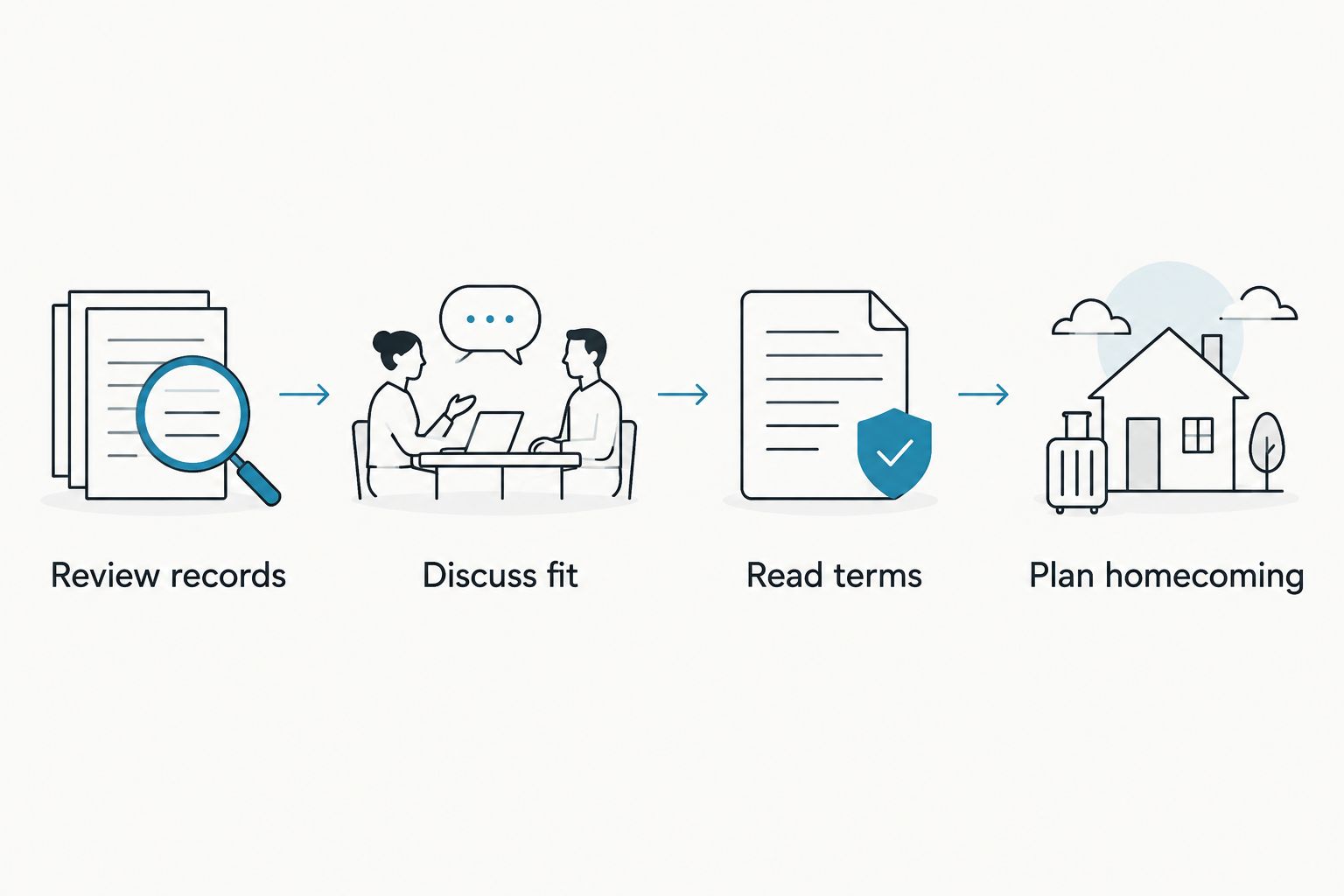
Use a simple sequence: Review records, Discuss fit, Read terms, then Plan homecoming. That order keeps the puppy’s photograph from becoming the whole decision.
Review parent information first. Next, discuss standard-size expectations, temperament and your family routine; then read the written commitments before organizing the transition home.
For your 2026 comparison, keep notes under the same headings for every program you consider. A specific unanswered question is more useful than a vague feeling that everything sounds reassuring.
Start your family’s puppy conversation
Explore our breeding program, then ask about standard-size expectations and the puppy application.
How this guide evaluates a breeding program
This guide prioritizes parent documentation, puppy preparation, individual fit and written responsibilities. It does not assign a statewide ranking to breeders or treat a longer list of names as proof of quality.
Goldendoodles of Miami offers several of the commitments covered here, including health-tested parents, curriculum-raised puppies and continuing family support. Your final decision should still address the particular puppy, standard-size expectations and the terms you will agree to.
Which standard Goldendoodle breeder should you choose?
Choose the program that can explain its care commitments and discuss your household honestly. For families interested in our Miami-based breeding family, the next move is to ask about standard-size expectations and request the puppy application.
If size, records or agreement terms remain unclear, pause. Finding your furever friend should leave you prepared for daily life together, not merely excited about homecoming day.
Resumen en español
Para elegir un criador de Goldendoodles de tamaño estándar en Florida en 2026, revise las pruebas de salud de los padres, la preparación del cachorro y las condiciones escritas. Pregunte también por el tamaño adulto esperado y cómo encaja el cachorro con su rutina familiar.
Nuestro programa incluye una garantía de salud de dos años, cobertura de Trupanion durante 30 días y apoyo familiar de por vida. Ningún cachorro viene con una promesa de ser hipoalergénico; converse sobre alergias, cuidado del pelo y la solicitud antes de decidir.
FAQ
What should I look for in standard Goldendoodle breeders in Florida?
Look for parent health-testing records, clear standard-size expectations, early puppy preparation and written commitments. Discuss the particular pairing and your household rather than relying on a general breed description.
Does Goldendoodles of Miami offer standard-size Goldendoodle puppies?
Ask Goldendoodles of Miami directly about standard-size expectations for the pairing you are considering. The program offers Goldendoodle puppies, but your decision should use pairing-specific information rather than assume a particular adult size.
Does health testing guarantee a healthy Goldendoodle puppy?
No, parent health testing does not guarantee that a puppy will never develop a health problem. Review the parent results and discuss relevant questions with your veterinarian.
Are standard Goldendoodles hypoallergenic?
No puppy should come with a hypoallergenic promise. Goldendoodle coat characteristics and individual allergy responses vary, so appearance alone cannot establish suitability for someone with allergies.
What does a two-year health guarantee cover?
Coverage depends on the written guarantee’s terms. Read the covered conditions, exclusions and required steps before agreeing; the duration alone does not explain the commitment.
Are curriculum-raised puppies already fully trained?
No, curriculum-based preparation does not mean a puppy is fully trained. Families must continue patient teaching, house training and appropriate socialization after homecoming.
How do I begin the puppy application process?
Contact the breeding program to request the puppy application and discuss your household. Explain your standard-size preference, routine and questions about the particular puppy or pairing.
One last thing
Before applying, write down the ordinary day you can offer a puppy: who is home, where the puppy rests and who handles care. Share that description with the breeder.
The useful question is not just whether a puppy suits your family, but whether your family’s routine suits that puppy. That conversation belongs at the center of your 2026 search.