
Best overall for an eligible puppy whose veterinarian recommends an oral option: NexGard; best topical alternative: Frontline Plus for Dogs; best collar option: Seresto for Dogs; best nonmedicated companion tool: a flea comb. At Goldendoodles of Miami, we approach flea and tick prevention for Goldendoodle puppies as a family routine built around veterinary guidance, the current product label, and your puppy’s age and weight—not a one-size-fits-all purchase.
- Choose flea and tick prevention for Goldendoodle puppies with your veterinarian; age, weight, and health history determine eligibility.
- NexGard is the oral shortlist choice; Frontline Plus for Dogs is the topical alternative for eligible puppies.
- Seresto for Dogs suits families who can manage collar fit and supervision; a flea comb supports coat checks.
- Goldendoodles of Miami recommends veterinary guidance before choosing prevention for your puppy’s homecoming.
Why this matters for your puppy’s homecoming
A fluffy coat does not tell you which preventive suits your puppy. Neither does the word Goldendoodle on a shopping page. Your veterinarian needs your puppy’s current weight, age, health history, existing medications, and exposure to other pets and outdoor spaces.
We want your furever friend’s first weeks at home to feel welcoming, not confusing. That starts with knowing what your puppy has already received and when the next step belongs on the calendar. Do not add a new product until you know the previous product and application date.
For your 2026 shortlist, distinguish the format from the decision: a chew, topical application, collar, and comb require different handling. None earns an automatic recommendation for every puppy.
What makes the best puppy flea and tick prevention
We use these criteria before comparing options:
- Label eligibility: The exact dog product must match your puppy’s age and current weight. Similar packaging does not make different formulations interchangeable.
- Veterinary fit: Your veterinarian should review health history, other medications, and any previous reaction before choosing a preventive.
- Reliable administration: Choose a format your household can use correctly. A missed application or a chew that was not swallowed needs product-specific guidance.
- Coat access: Topical products require access to the skin, not just the surface of a dood’s curls. Collars require correct fit beneath the coat.
- Household safety: Other pets, children, bathing, and close contact affect how you follow label precautions.
- A clear follow-up plan: Know the next scheduled administration, whom to call with concerns, and how to record what you used.
The best format is the one your veterinarian approves and your family can administer exactly as directed. Convenience comes after eligibility, not before it.
Puppy prevention options at a glance
This 2026 comparison separates use cases rather than declaring one product suitable for every Goldendoodle puppy. The age and weight details below refer to the named U.S. formulations; consult the current package insert before use.
| Option | Best for | Standout practical feature | Key limitation |
|---|---|---|---|
| NexGard | Families seeking a veterinarian-selected oral option | Chewable format avoids a skin application | Prescription selection and age/weight eligibility matter |
| Frontline Plus for Dogs | Families preferring a topical format | Applied to the skin rather than given orally | Dense coats require careful parting and label-specific handling |
| Seresto for Dogs | Families able to supervise a prevention collar | Collar-based format | Fit, chewing, and household contact require attention |
| Flea comb | Families adding hands-on coat inspection | Nonmedicated tool for examining the coat | Does not replace veterinary-selected flea and tick prevention |
1. NexGard: best oral option to discuss with your veterinarian
NexGard is a prescription chewable option for dogs. We put NexGard first for families who want an oral format and have a veterinarian confirm that the specific puppy is an appropriate candidate.
The U.S. NexGard label specifies dogs 8 weeks of age or older and weighing 4 pounds or more. Those are minimum eligibility thresholds, not a recommendation to give NexGard to every puppy who reaches them. Bring a current weight and your puppy’s medication history to the appointment.
NexGard pros:
- Oral administration avoids parting a dense coat for application.
- The chewable format gives you a specific administration event to record.
- A prescribing veterinarian can select the appropriate labeled weight range.
NexGard cons:
- A puppy below either label threshold is not eligible for this formulation.
- You must confirm administration rather than assume an offered chew was swallowed.
- NexGard belongs to the isoxazoline class, which carries an FDA neurological adverse-event warning.
For your 2026 decision, discuss the FDA’s isoxazoline safety information with your veterinarian, especially if your puppy has a neurological history. The FDA identifies reported neurological events including tremors, incoordination, and seizures; that warning belongs in the selection conversation, not hidden beneath a convenience claim.
Best for: Eligible puppies whose veterinarian recommends a prescription chew and whose family can supervise administration.
Verdict: Hold until your veterinarian confirms NexGard fits your puppy.
2. Frontline Plus for Dogs: best topical alternative
Frontline Plus for Dogs is a topical format applied to the skin. We include Frontline Plus for Dogs for families who prefer an external application and can follow the handling instructions carefully.
The U.S. dog label specifies puppies 8 weeks of age or older and weighing 5 pounds or more. Use the dog formulation and the correct labeled weight range. Do not substitute another animal’s product or choose by package color alone.
Frontline Plus for Dogs pros:
- The topical format does not require your puppy to swallow a chew.
- Application can become a recorded household task.
- Parting the coat makes the application location visible.
Frontline Plus for Dogs cons:
- Product on the hair surface is not the same as application to the skin.
- Application-site contact and bathing require attention to the current label.
- A puppy below the age or weight threshold needs another veterinarian-directed plan.
Before applying anything, arrange the coat so you can clearly see the skin at the label-directed location. We also recommend deciding who handles application and who records it. That simple division prevents one family member from repeating another person’s task.
Best for: Eligible puppies whose veterinarian recommends a topical approach and families comfortable with precise skin application.
Verdict: Buy only after confirming the exact Frontline Plus for Dogs formulation and instructions with your veterinarian.
3. Seresto for Dogs: best collar option for attentive households
Seresto for Dogs is a flea and tick collar option. We include Seresto for Dogs for families who can check fit, supervise chewing, and follow the package’s contact precautions.
The U.S. dog label permits use on puppies 7 weeks of age or older. Your puppy’s weight determines which labeled dog collar size applies. Do not assume a collar that fits around the neck is automatically the correct product.
Seresto for Dogs pros:
- The collar is visible during routine coat care.
- You can incorporate fit checks into your puppy’s handling routine.
- Collar administration avoids offering an oral chew or applying a topical dose.
Seresto for Dogs cons:
- Fit needs attention as your puppy grows.
- Puppies that chew collars complicate safe use.
- Family members must understand the label’s handling and contact precautions.
A prevention collar is not a walking attachment. Keep leash handling separate, and ask your veterinarian how to manage the collar alongside your puppy’s usual equipment. Inspect the skin beneath it during routine care rather than letting curls hide the area.
For a 2026 purchase, use the current labeled instructions from a reputable source. Keep the packaging so you can identify the exact product if a concern arises.
Best for: Eligible puppies in households that can consistently supervise collar wear and fit.
Verdict: Hold if collar chewing, fit, or household contact remains unresolved.
4. Flea comb: best nonmedicated companion to prevention
A flea comb is a fine-toothed inspection tool, not a replacement for flea and tick prevention. We recommend a flea comb as an addition to coat care because it gives you a close look at what is happening beneath your dood’s fluff.
Use the comb gently on a manageable, untangled section of coat. Do not drag it through mats or force a frightened puppy to tolerate a long session. If you see something unfamiliar, save a clear photo or sample for your veterinarian rather than identifying it from memory.
Flea comb pros:
- No medication is administered during inspection.
- Hands-on use brings your attention to the skin and coat.
- Short, gentle sessions support a repeatable grooming routine.
Flea comb cons:
- A comb does not provide ongoing flea and tick prevention.
- Dense or tangled hair can make inspection difficult.
- A clean-looking comb does not establish that your puppy is parasite-free.
Best for: Families adding gentle inspection to a veterinarian-selected prevention plan.
Verdict: Buy as a companion tool; skip it as your only prevention strategy.
Build a prevention routine your family can follow
At Goldendoodles of Miami, our Goldendoodle puppy prevention recommendation is a veterinarian-led plan paired with a routine your family understands. Before you choose a format, prepare these details for the first appointment.
Confirm history
Write down your puppy’s birth date, current weight, previous flea and tick products, administration dates, and other medications. Bring the packaging or a clear photograph when possible. Exact product names matter more than remembering that something was a chew or a drop.
Choose format
Tell your veterinarian how your household works. Mention other animals, children, grooming routines, and whether your puppy chews wearable equipment. These details help turn a product discussion into a practical home plan.
Follow label
Use the exact formulation and weight range selected for your puppy. Follow its administration, bathing, contact, and storage instructions. Do not combine products, split doses, or improvise an early repeat application. Ask your veterinarian what to do after a missed or uncertain administration.
Record use
Keep the product name, administration date, and next scheduled step together. Update your puppy’s weight when your veterinarian directs you to reassess dosing. A growing puppy’s old package is not a substitute for a current selection.
Check coat
Include the skin beneath the curls in routine handling. Look around the ears, neck, legs, and paws without turning inspection into a stressful wrestling match. Report unfamiliar findings or reactions to your veterinarian.
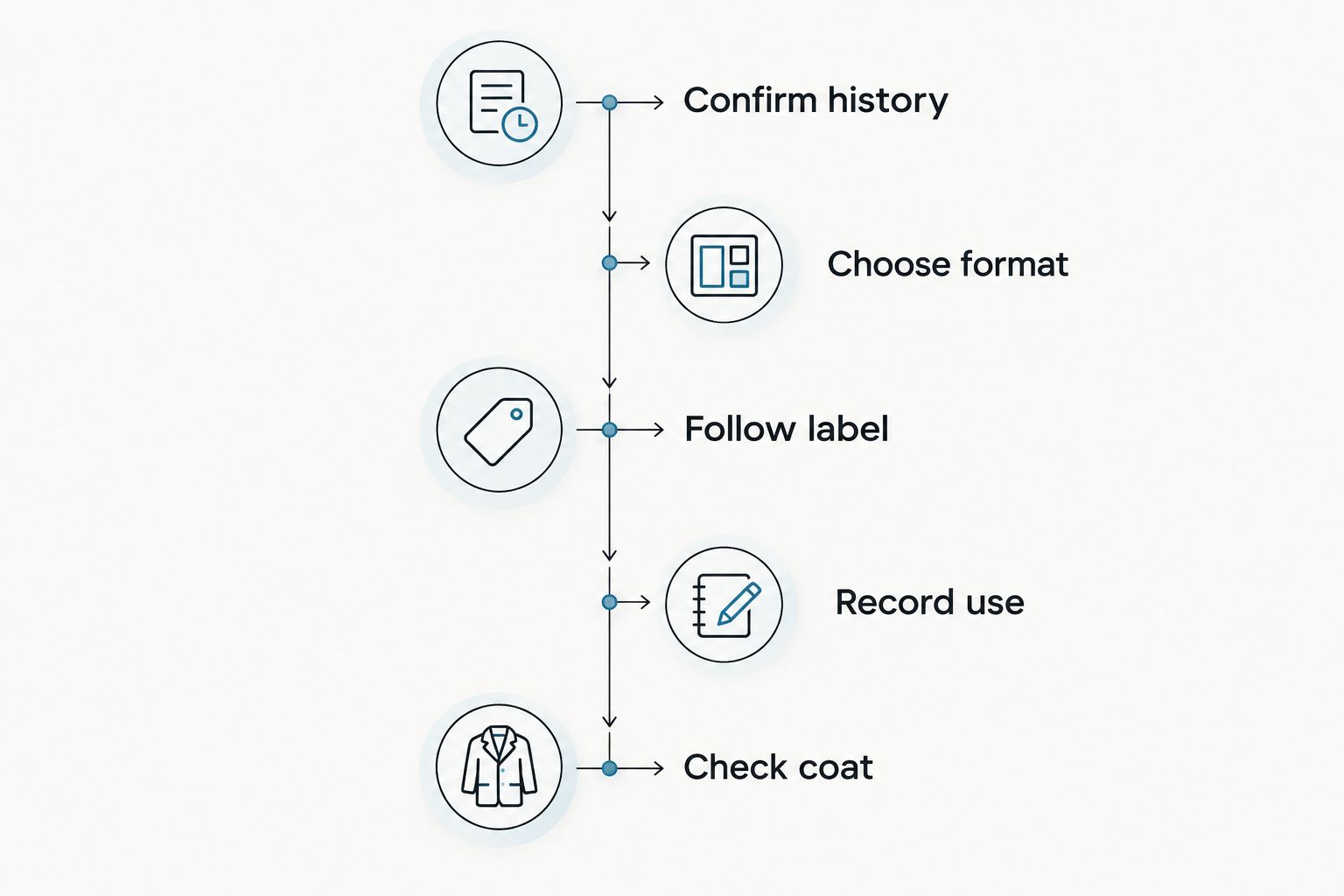
Keep the plan where every caregiver can find it. If someone else watches your puppy, explain what has already been given and leave the veterinarian’s contact details. Shared responsibility works best when the record is shared too.
How we ranked these options
This is a format-based buying guide, not a clinical trial or a claim that one preventive works best for every puppy. NexGard occupies the oral slot, Frontline Plus for Dogs the topical slot, Seresto for Dogs the collar slot, and a flea comb the nonmedicated inspection slot.
The eligibility figures come from the named U.S. product labels; the isoxazoline caution comes from FDA animal-drug safety information. Our 2026 ranking prioritizes label eligibility, veterinary selection, correct handling, and household follow-through. Your veterinarian’s recommendation outranks the order of this list.
Which option should your family choose?
Start by asking your veterinarian whether NexGard is appropriate if an oral format suits your household. If oral administration is not the chosen approach, discuss Frontline Plus for Dogs or Seresto for Dogs rather than switching on your own. Add a flea comb for inspection, not as a substitute.
We raise our puppies with health-tested parents and a curriculum-based approach. Goldendoodles of Miami also provides a two-year health guarantee, 30-day Trupanion coverage, and lifetime family support. Those supports do not replace veterinary care or make a particular preventive right for your puppy.
Ready to welcome a furever friend? Begin the puppy application process through our website, and make prevention planning part of your homecoming conversation.
Plan your puppy’s homecoming
Explore our breeding family and begin the puppy application process through our website.
Resumen para nuestras familias hispanohablantes
La mejor prevención contra pulgas y garrapatas para un cachorro Goldendoodle depende de su edad, peso, historial y orientación veterinaria. No elija un producto solo por su popularidad ni combine tratamientos por cuenta propia.
En Goldendoodles of Miami queremos acompañarle mientras prepara la llegada de su nuevo compañero. Lleve al veterinario el nombre y la fecha de cualquier producto que el cachorro ya haya recibido. NexGard, Frontline Plus for Dogs y Seresto for Dogs tienen instrucciones específicas; el peine antipulgas sirve para revisar el pelaje, pero no sustituye la prevención indicada por el veterinario.
FAQ
What’s the best flea and tick prevention for Goldendoodle puppies?
The best choice is the exact product your veterinarian selects for your puppy’s age, weight, health history, and household. NexGard is the oral shortlist option in this guide, while Frontline Plus for Dogs and Seresto for Dogs represent topical and collar alternatives.
How old does my puppy need to be before using these products?
The U.S. labels specify at least 8 weeks for NexGard and Frontline Plus for Dogs, and at least 7 weeks for Seresto for Dogs. Weight requirements and the exact formulation also matter, so age alone does not establish eligibility.
Does my Goldendoodle’s curly coat change which preventive to choose?
A curly coat changes handling requirements, not the product’s eligibility rules. Topical application requires access to skin, and collars require correct fit beneath the coat; your veterinarian should select the preventive.
Is NexGard better than Frontline Plus for Dogs?
Neither is the better choice for every puppy. NexGard is an oral prescription option, while Frontline Plus for Dogs is topical; your veterinarian should assess which format and formulation fit your puppy.
Can I use a flea comb instead of a preventive?
A flea comb is not a substitute for veterinarian-selected flea and tick prevention. Use it for gentle inspection alongside the plan your veterinarian recommends.
What should I do if I find a tick on my puppy?
Contact your veterinarian for removal guidance and advice about follow-up. Keep your puppy calm, avoid improvised remedies, and record where the tick was found.
What if my puppy seems unwell after a preventive?
Contact your veterinarian promptly and provide the product name, administration time, and observed signs. Seek urgent veterinary care for seizures, collapse, breathing difficulty, or other severe signs, and do not administer another product while seeking guidance.
One last thing
Put one person in charge of the medication record, even when everyone helps care for the puppy. Two loving caregivers can each believe they are completing the same overdue task. A shared record makes the previous administration visible before anyone opens another package.
We want prevention to fit naturally into life with your dood: a clear veterinary plan, gentle coat checks, and no guessing. Keep the package insert with the record. When something changes—weight, medication, routine, or a reaction—ask before adjusting the plan.