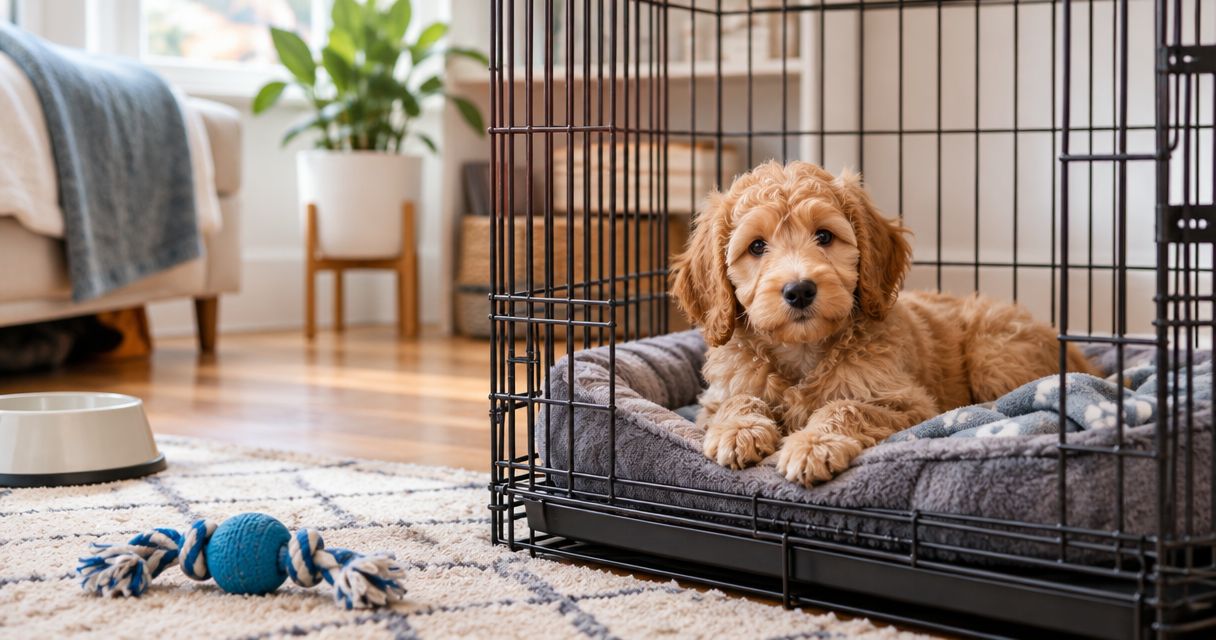
Yes, two puppies from the same litter can be raised together, but each needs individual training, rest, social experiences, and time with you away from the other puppy. Raising littermate puppies together also means managing two developing dogs at once—not expecting them to teach or entertain each other. Our recommendation for families planning in 2026: choose two only when your household can consistently meet each puppy’s needs separately.
- Raising littermate puppies together requires individual training, separate rest spaces, and supervised play—not constant togetherness.
- For first-time puppy parents, starting with one puppy makes individual attention and training easier to organize.
- Goldendoodles of Miami supports prospective puppy families with curriculum-raised puppies and lifetime family support.
- If either puppy struggles alone or guards resources, seek individualized professional guidance rather than waiting for improvement.
Can two puppies from the same litter be raised together?
Yes. The goal is two dogs who enjoy each other and can also function comfortably apart. Sharing a birthday does not remove either puppy’s need to build a relationship with the people in the home.
Before deciding, compare the care you can provide—not just how sweet the puppies look together. Our guide for first-time Goldendoodle owners is a useful starting point for understanding the responsibilities of one puppy.
| Household choice | Best for | Practical benefit | Main limitation |
|---|---|---|---|
| One puppy first | First-time families building a routine | You can focus training and observation on one learner | A second dog becomes a separate future decision |
| Two littermates together | Families able to provide individual care every day | The puppies have a familiar play companion | You must organize separate learning, rest, and outings |
| A second puppy later | Families wanting multiple dogs without simultaneous puppyhood | You can establish the first dog’s routines beforehand | The dogs still need careful introductions and individual attention |
For first-time puppy parents, we recommend starting with one puppy unless a realistic separate-care plan is already in place. Wanting two is understandable; having enough help and time is the deciding factor.
Why this matters for your family
Two puppies playing together can look like a ready-made solution to a busy household. We encourage families to look beyond that picture: companionship does not replace toilet training, human interaction, grooming practice, or learning to settle.
A puppy who follows a sibling outside has not necessarily learned to respond independently. A puppy who rests beside a sibling has not necessarily practiced resting without that sibling nearby.
For your 2026 homecoming plan, build around what each puppy can do alone. Shared activities should complement individual care, not take its place.
Why raising littermates together varies between households
We would look at these factors before encouraging a family to take on two puppies:
- Caregiver availability: Someone needs to supervise one puppy while the other receives individual attention.
- Separate spaces: Each puppy needs a safe place to eat, rest, and enjoy appropriate chews without interruption.
- Individual temperament: Observe each puppy’s comfort, engagement, and responses rather than treating the pair as one unit.
- Training consistency: Everyone in the household should use the same cues and reward the same behaviors.
- Daily responsibilities: Work, school, travel, and children’s activities must leave room for individual puppy care.
- Access to help: Identify a veterinarian and a qualified reward-based trainer before problems become difficult to manage.
A large yard does not answer these questions. Neither does having grown up with dogs. The useful question is whether your current household can carry out the daily plan.
How we recommend organizing life with two littermate puppies
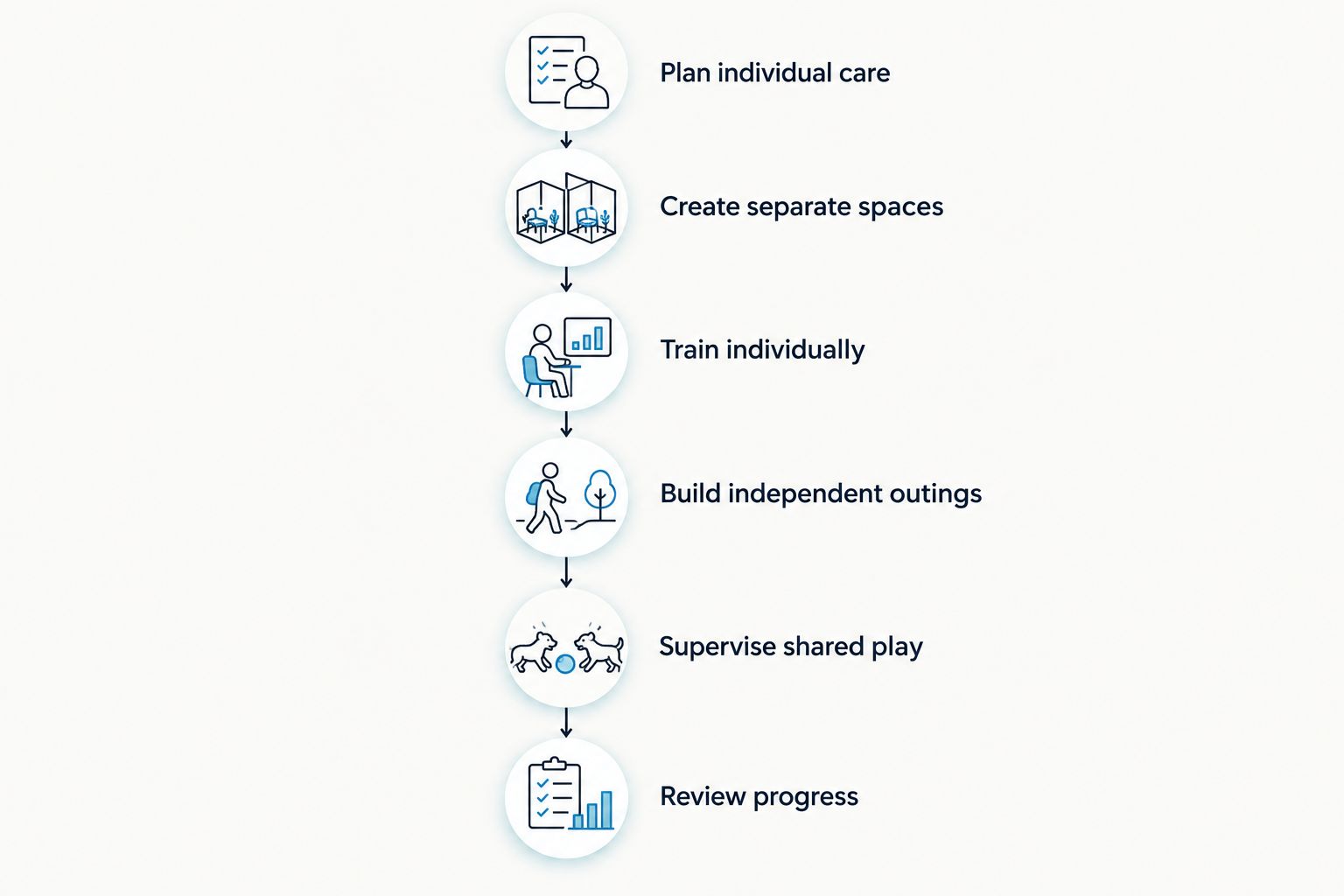
1. Plan individual care before pickup
Write down who handles feeding, toilet trips, individual training, supervision, and bedtime. Then walk through an ordinary workday—not an unusually quiet weekend.
If one adult takes a puppy outside, what happens to the sibling? If both need attention while dinner is cooking, who is available? These small questions expose gaps before the puppies arrive.
For families preparing in 2026, a written plan is more useful than a promise to work it out later. Include a backup caregiver who understands the separate routines.
2. Create separate spaces
Set up 2 feeding stations and an individual resting space for each puppy. Position them so each puppy can eat without the other approaching or taking food.
Separate resting spaces do not mean abruptly isolating a frightened puppy. Introduce those spaces positively and adjust the setup to each puppy’s comfort. If you use crates, teach crate comfort individually; never use confinement as punishment.
Keep household hazards out of both areas. A puppy resting behind a barrier still needs a safe environment, suitable supervision, and timely toilet opportunities.
3. Train individually
Work with 1 puppy at a time when introducing a new cue. That makes it easier to see which puppy understands, deliver the reward to the intended learner, and adjust the exercise.
Start with useful household skills: responding to a name, following you, settling on a mat, and cooperating with gentle handling. Keep the task manageable and finish before either puppy becomes frustrated.
Later, practice familiar skills with both puppies present. If the distraction makes learning difficult, return to individual practice rather than repeating the cue more loudly.
4. Build independent outings
Give each puppy opportunities to experience the world without the sibling directing the encounter. That might mean a short individual outing, a calm visit with a familiar person, or gentle grooming practice with you.
Ask your veterinarian which environments are appropriate for each puppy’s vaccination status. Social experiences should be safe and positive—not a checklist of crowded places to push through.
When one puppy stays home, arrange appropriate supervision and an activity suited to that puppy. Independence practice should not depend on leaving a distressed puppy to struggle.
5. Supervise shared play
Allow play when both puppies appear willing to participate, and interrupt calmly when one repeatedly tries to disengage. Give each puppy a way to move away and rest.
Watch the interaction rather than assuming siblings will sort everything out. Repeated chasing of a puppy trying to hide, competition around food, or difficulty disengaging deserves a change in management.
Separate valuable chews and meals. You do not need to manufacture sharing exercises to prove the puppies get along.
6. Review each puppy’s progress
Keep a simple individual record of toilet habits, training, meals, settling, and concerns. Describe what happened rather than assigning labels such as dominant, jealous, or naughty.
Useful notes sound like: settled while the sibling went outside; responded to a name away from the sibling; left a chew when called. Those observations help you recognize progress and explain concerns to a professional.
Judge the plan by each puppy’s experience, not by whether both puppies reach the same milestone together.
What a workable day needs to include
We recommend organizing the day around repeatable care opportunities rather than an inflexible timetable. Puppies differ, and toilet needs, rest, and comfort should guide adjustments.
- Morning: Give each puppy an appropriate toilet opportunity, an individual meal, and attention without competition.
- During the day: Alternate individual learning and safe experiences with rest and supervised interaction.
- Before shared play: Check that neither puppy is trying to sleep, escape attention, or protect an item.
- Evening: Practice familiar household skills individually and prepare calm resting spaces.
- Overnight: Plan how a caregiver will respond when either puppy needs care without assuming both need the same thing.
The point is not to keep siblings apart all day. We want each puppy to experience both enjoyable companionship and supported independence.
When should you ask for professional help?
Ask for individualized guidance when either puppy repeatedly struggles during separation, guards food or objects, avoids the sibling, or cannot engage with you when the sibling is absent. Describe the behavior and its context instead of diagnosing it yourself.
If you notice injury, a sudden behavior change, or a concern about eating or physical comfort, contact your veterinarian. For training and relationship concerns, seek a qualified reward-based professional who can observe both puppies individually and together.
Do not force proximity to repair conflict. Use safe separation and professional guidance rather than putting food, toys, or puppies closer together to test their relationship.
Avoid punishment for growling or other signs of discomfort. Your immediate job is to make the situation safer and understand what prompted it—not to suppress the warning.
Is one puppy a better choice for a first-time family?
One puppy is our recommendation when your family is still learning how puppy care fits into everyday life. You can concentrate on that puppy’s communication, routines, and relationship with each family member before deciding whether another dog belongs in the household.
Choosing one does not mean depriving a puppy of a meaningful life. You can provide suitable social experiences, play, enrichment, and human companionship without bringing home a sibling.
If your 2026 calendar already feels crowded, do not build your decision around the hope that two puppies will keep each other occupied. Choose the responsibility your family can manage consistently.
If we already brought home two puppies, is it too late?
Two puppies already living together need a practical individual-care plan, not blame. Start by reviewing feeding arrangements, resting spaces, supervision, and opportunities for each puppy to interact with you alone.
Introduce changes at a level each puppy can handle. If separation causes distress, get guidance rather than suddenly imposing long periods apart.
There is no universal rule that siblings must be rehomed. Decisions about safety and household fit need an assessment of the actual dogs, their behavior, and the family’s resources.
What support should families ask a breeder about?
Ask how each puppy has been observed individually, what routines are familiar, and what guidance is available after homecoming. Ask for the details of health testing and written health commitments rather than treating a reassuring phrase as a substitute for documentation.
Goldendoodles of Miami is for prospective puppy parents seeking curriculum-raised puppies and lifetime family support. We emphasize health-tested parents, a two-year health guarantee, and 30-day Trupanion coverage; families should review the applicable terms and understand that these do not replace daily training or veterinary care.
Our doods become part of a family, and that decision deserves a thoughtful conversation. Before submitting a puppy application, contact our family to discuss your household, your experience, and whether one puppy or two fits the care you can provide.
Talk through your puppy plans
Discuss your household and questions before taking the next step toward a puppy application.
Resumen en español para nuestras familias
Sí, dos cachorros de la misma camada pueden criarse juntos, pero cada uno necesita atención, entrenamiento, descanso y experiencias individuales. No recomendamos llevar dos a casa esperando que se eduquen o se entretengan solos.
En Goldendoodles of Miami queremos ayudarles a tomar una decisión que encaje con su familia. Preparen espacios separados para comer y descansar, organicen tiempo individual y consulten a un profesional si alguno muestra angustia o conflictos. Para una familia primeriza, nuestra recomendación es empezar con un cachorro si todavía no cuenta con un plan realista para cuidar a dos por separado.
FAQ
Can two puppies from the same litter live happily together?
Yes, two puppies from the same litter can live together, but each needs individual care, training, and supported independence. A familiar sibling does not replace a relationship with people.
What does littermate syndrome mean?
Littermate syndrome is an informal label used for concerns such as dependence, difficulty functioning apart, and conflict between puppies raised together. The label alone does not establish what is happening with your puppies; describe their behavior to a qualified professional.
Should littermate puppies sleep in the same crate?
We recommend an individual resting space for each puppy rather than one shared crate. Introduce separate spaces positively and get guidance if either puppy struggles to settle.
Can I train both littermate puppies at the same time?
Teach new skills individually before practicing them with both puppies present. Individual sessions help you see what each puppy understands and reward the intended behavior.
Is getting a male and a female puppy enough to prevent problems?
No, choosing a male and a female does not replace individual training, supervision, or separate care. Discuss reproductive management with your veterinarian as well.
Do littermate puppies need to be separated permanently?
Permanent separation is not an automatic requirement for littermate puppies. Decisions about safety and living arrangements should reflect the individual dogs and professional assessment when concerns arise.
How can Goldendoodles of Miami help us decide between one puppy and two?
Goldendoodles of Miami offers prospective families a conversation about household fit and provides lifetime family support. Explain your schedule, experience, and separate-care plan before moving toward a puppy application.
One last thing
For your 2026 puppy decision, try this household rehearsal: imagine one puppy needs a toilet trip while the other needs quiet supervision. Who handles each task, and where does each puppy go?
That ordinary moment tells you more than a photo of siblings cuddling. Choose the plan that lets you know and care for each furever friend as an individual.