Instead of repeatedly guessing when your puppy needs a potty break, practice, or rest, continue puppy training at home after pickup by carrying familiar cues into a simple household routine. We recommend starting with the puppy’s existing routine, rewarding small successes, and adding distractions only when the familiar version feels easy.
- Continue puppy training at home after pickup with familiar cues, reward-based practice, potty breaks, and protected rest.
- Goldendoodles of Miami’s curriculum-raised puppies still need patient practice in their new homes.
- Ask which skills your puppy has actually practiced; curriculum exposure is not a finished behavior.
- Keep a shared routine so every family member rewards the same actions.
Why this matters
A puppy’s learning does not automatically transfer from one home to another. A different doorway, unfamiliar voices, and excited children change the setting, even when the cue sounds familiar. Your first job is to make familiar behaviors easy again—not to test everything your puppy knows.
Goldendoodles of Miami’s curriculum-based puppy training is best for families ready to continue that learning at home. Our puppies come from health-tested parents, but neither health testing nor a training curriculum replaces the daily care your furever friend needs.
At Goldendoodles of Miami, we want families to see pickup as a handoff, not a finish line. Use this 2026 homecoming plan to turn that handoff into clear, repeatable habits.
Before you start
- Collect the handoff details. Ask about the puppy’s current food, meal routine, potty arrangements, resting setup, familiar cues, and rewards. Write down what the puppy has practiced separately from what the puppy does reliably.
- Prepare a manageable home setup. Have a safe resting area, a supervised play space, cleanup supplies, suitable rewards, and a shared household note ready. Agree on who handles meals, potty trips, and supervision.
- Resolve the outdoor-access question before pickup. Ask your veterinarian which potty locations and outings suit your puppy’s vaccination status and local conditions. A shared dog area is not interchangeable with a private potty spot.
The easily missed detail is the reward signal. If the puppy already recognizes a particular marker word, ask exactly how it has been used; otherwise, agree on one simple signal rather than letting everyone invent a different version.
Familiar cues and the handoff record
We suggest making a short 2026 household plan before the excitement of homecoming takes over. This is a family worksheet, not a test of your puppy’s abilities.
- Record the starting point. Write down the exact cue, the behavior it requests, and the setting where the puppy has practiced it. Ask for a demonstration when possible.
- Choose your marker. Use the familiar marker if one exists. If you introduce a new word, consistently pair it with a reward so it gains meaning.
- Pick one easy practice location. Start in a quiet, puppy-safe space. Put visitors, television noise, and busy household activity out of the exercise rather than expecting your puppy to ignore them immediately.
- Agree on family rules. Decide whether greetings happen with paws on the floor, where the puppy rests, and how children join practice. Adults should supervise interactions and manage the rewards.
Expected result: Everyone can explain the same cue and reward the same behavior. Your puppy gets one understandable message rather than several competing instructions.
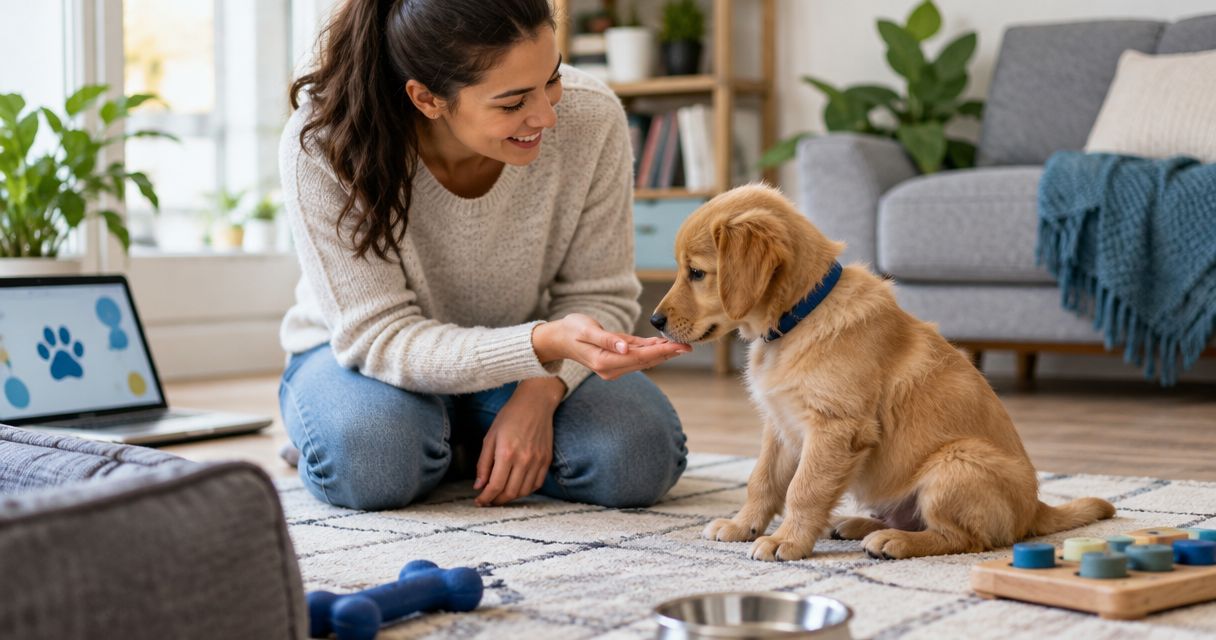
A useful opening exercise is rewarding attention. Say the puppy’s name once in a quiet setting; when the puppy turns toward you, mark that moment and reward. If there is no response, reduce the distraction instead of repeating the name louder.
Potty, meals, and the daily sequence
Build the day around events, not an impressive-looking timetable. Waking, eating, drinking, and active play give you practical reminders to offer a potty opportunity; your puppy’s individual pattern determines the additional breaks.
- Start with the existing meal routine. Confirm the food and feeding instructions at handoff. Keep training rewards within the daily feeding plan and ask your veterinarian about appropriate portions.
- Choose the potty route. Take your puppy to the agreed location after waking and around the puppy’s observed needs. Stay nearby so you can reward toileting in the right place immediately afterward.
- Supervise between breaks. Keep your puppy close enough to notice sniffing, circling, wandering away, or other changes in behavior. When direct supervision is impossible, use an appropriately prepared safe area.
- Keep a simple record. Note meals, naps, successful potty trips, and accidents. Use the pattern to adjust your next day rather than assuming the puppy should follow a universal schedule.
Expected result: Your family knows which event comes next and can spot when the routine needs adjusting. Accidents become information about supervision or timing—not a reason to punish.
For your 2026 routine log, start with these four labels: Potty, Practice, Quiet activity, and Rest. Meals fit into the feeding instructions you receive; the labels describe the activity sequence, not a requirement to feed after every nap.
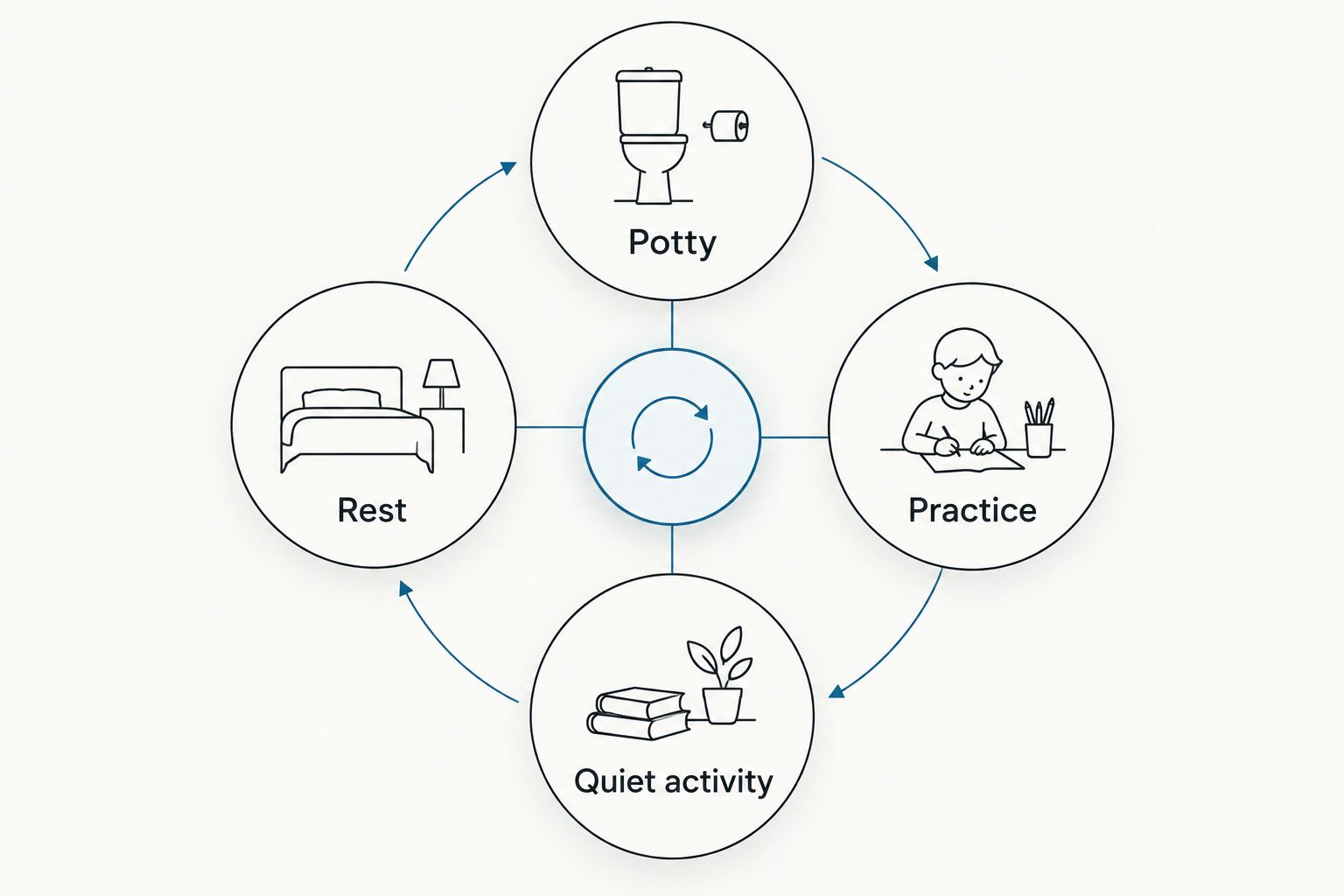
After a potty opportunity, invite a little interaction if your puppy is comfortable and attentive. Then offer a calm activity and a chance to settle. If your puppy needs another potty trip, take it; the sequence serves the puppy, not the other way around.
Reward-based practice and protected rest
We want our doods to learn without making every waking moment a lesson. Short, successful practice is more useful than pushing through distraction or frustration.
- Choose one behavior. Practice an action your puppy has already encountered, such as turning toward a name or following a familiar cue. Avoid adding several new expectations at once.
- Set a modest starting limit. Try up to 1 minute of practice or 3 easy repetitions, whichever comes first. These are suggested limits for your plan, not developmental requirements or promises about attention span.
- Reward the moment that matters. Mark the wanted action as it happens, then deliver the reward. Keep rewards easy to access so you do not spend the useful moment searching a cupboard.
- Finish before engagement disappears. If your puppy walks away, repeatedly grabs clothing, or struggles with an easy task, stop and check the basics: potty, thirst, distraction, and rest.
- Introduce the resting area gently. Let the puppy explore it with supervision and positive associations. Build comfort before increasing confinement or separation; do not use the space as punishment.
Expected result: Your puppy can complete a small exercise comfortably, and the family knows when to stop. Rest becomes part of the routine rather than something the puppy must earn.
For a starting household exercise, give yourself 2 minutes of quiet observation after practice. Put the phone down and watch whether your puppy chooses a calm activity, seeks interaction, or needs another break. This is observation time, not an instruction to ignore distress.
If a puppy becomes increasingly distressed during separation, shorten the exercise and seek qualified help. Repeatedly leaving a distressed puppy to struggle does not make the setup a successful training session.
The same routine when your workday changes
Your weekday and weekend schedules do not need identical clock times. Keep the important relationships familiar: supervision, appropriate potty opportunities, brief practice, and rest.
Use this comparison to choose the version that fits your 2026 household schedule. Neither version removes the need to meet your puppy’s individual care needs.
| Routine version | Best for | Benefit | Limitation |
|---|---|---|---|
| Home-based routine | Families with an adult present | Makes observation and timely rewards easier | Constant interaction can crowd out independent settling |
| Caregiver-supported routine | Families whose work takes them away | Gives a caregiver clear instructions to follow | Requires reliable handoffs and coverage for puppy care |
For the home-based version, protect quiet periods even when everyone wants another cuddle. Being home does not mean the puppy needs continuous entertainment.
For the caregiver-supported version, share the same cue list, feeding instructions, potty record, and resting setup. Arrange care before leaving; a training plan cannot substitute for someone meeting a young puppy’s needs.
When the household changes, follow this reset:
- Tell the next caregiver when the puppy last ate, rested, and toileted.
- Keep the familiar cue words and reward rules.
- Return to the easiest practice setting if performance changes.
- Add distractions separately rather than changing the room, handler, and task together.
Expected result: A different caregiver can continue the routine without inventing a new training system.
Troubleshooting common homecoming problems
Your puppy responds at pickup but not at home
The new setting is part of the task. Move to a quieter space, stand closer, and reward an easier version of the behavior. Avoid repeating the cue until it becomes background noise.
Accidents keep happening between planned breaks
Increase supervision and offer more opportunities based on the log. Clean accidents thoroughly and avoid scolding; punishment does not explain the correct location. Contact your veterinarian about sudden changes, straining, or other concerning signs.
Your puppy bites clothing during practice
Pause the exercise and prevent a chase or tugging game with clothing. Offer an appropriate supervised activity, then assess whether the puppy needs a potty break or rest. Do not turn an overtired moment into a longer obedience lesson.
Your puppy cries in the resting area
Check immediate needs and whether the setup is comfortable and familiar. Practice easier, shorter experiences with you nearby rather than increasing separation during distress. Ask a qualified reward-based trainer for help if the problem persists or escalates.
Family members use different rules
Put the cue list where adults can read it before interacting. Choose one greeting rule and one response to unwanted behavior, then practice the human handoff without the puppy present. Consistency starts with the people.
Customize your workflow
Once the basic sequence feels manageable, add one useful household skill: calm brushing introductions, settling while someone prepares food, or comfortable handling of a harness. Start gently, reward cooperation, and stop before your puppy struggles.
Our curriculum-raised puppies still need this individual pacing. Goldendoodles of Miami offers a two-year health guarantee, 30-day Trupanion coverage, and lifetime family support; those supports complement your daily routine rather than replace veterinary care or hands-on training.
If you are still planning your furever friend’s arrival, review the puppy application-to-home pickup timeline and ask about the puppy application. Bring questions about your working hours, children, other pets, and supervision arrangements so the conversation reflects your real family life.
Resumen para nuestras familias hispanohablantes
Para continuar el entrenamiento después de recoger a tu cachorro, conserva las señales que ya conoce y organiza una rutina sencilla de salidas al baño, práctica breve y descanso. Pide detalles sobre su alimentación y aprendizaje previo; haber participado en un programa educativo no significa que ya domine cada conducta.
Premia los pequeños logros y evita castigar los accidentes. Consulta con tu veterinario qué lugares son adecuados para las salidas según su vacunación y las condiciones locales. Queremos que tu nuevo compañero se sienta parte de la familia, con paciencia y expectativas claras.
FAQ
How do I continue puppy training at home after pickup?
Continue puppy training at home after pickup by using familiar cues, rewarding wanted behavior, supervising potty opportunities, and protecting rest. Start in a quiet setting and increase difficulty only after the easier version is comfortable.
Does a curriculum-raised puppy arrive fully trained?
No. Curriculum experience gives a puppy opportunities to learn, but families still need to practice those skills in their own homes. Ask which behaviors the individual puppy has encountered and under what conditions.
How long should puppy training sessions last?
Begin with brief practice that ends while your puppy is still comfortable and engaged. As a suggested starting limit, try up to 1 minute or 3 easy repetitions, then adjust to the puppy rather than extending the session to meet a target.
Should I wake my puppy to keep the training schedule?
Do not wake your puppy just to fit an obedience practice session into the schedule. Practice during suitable waking moments and discuss individual overnight potty needs with your veterinarian.
What if my puppy forgets a cue after coming home?
Make the task easier before assuming the puppy has forgotten it. Use a quieter location, reduce distractions, and reward a small success without repeating the cue continuously.
Can my children help train our new puppy?
Children can participate with adult supervision and simple, consistent instructions. Adults should manage safety, reward delivery, and the puppy’s access to rest.
What should our 2026 puppy routine include?
A useful 2026 puppy routine includes feeding instructions, appropriate potty opportunities, supervised activity, brief reward-based practice, and rest. Record your puppy’s actual pattern instead of relying on a generic clock-based timetable.
One last thing
The most useful training note is often what happened just before the difficulty. Record whether your puppy had just awakened, finished playing, encountered visitors, or missed a potty opportunity. That context gives you something practical to change tomorrow.
We want your puppy to become part of our family’s wider circle with support, not pressure. Keep the routine kind, repeatable, and small enough that your whole household can follow it.