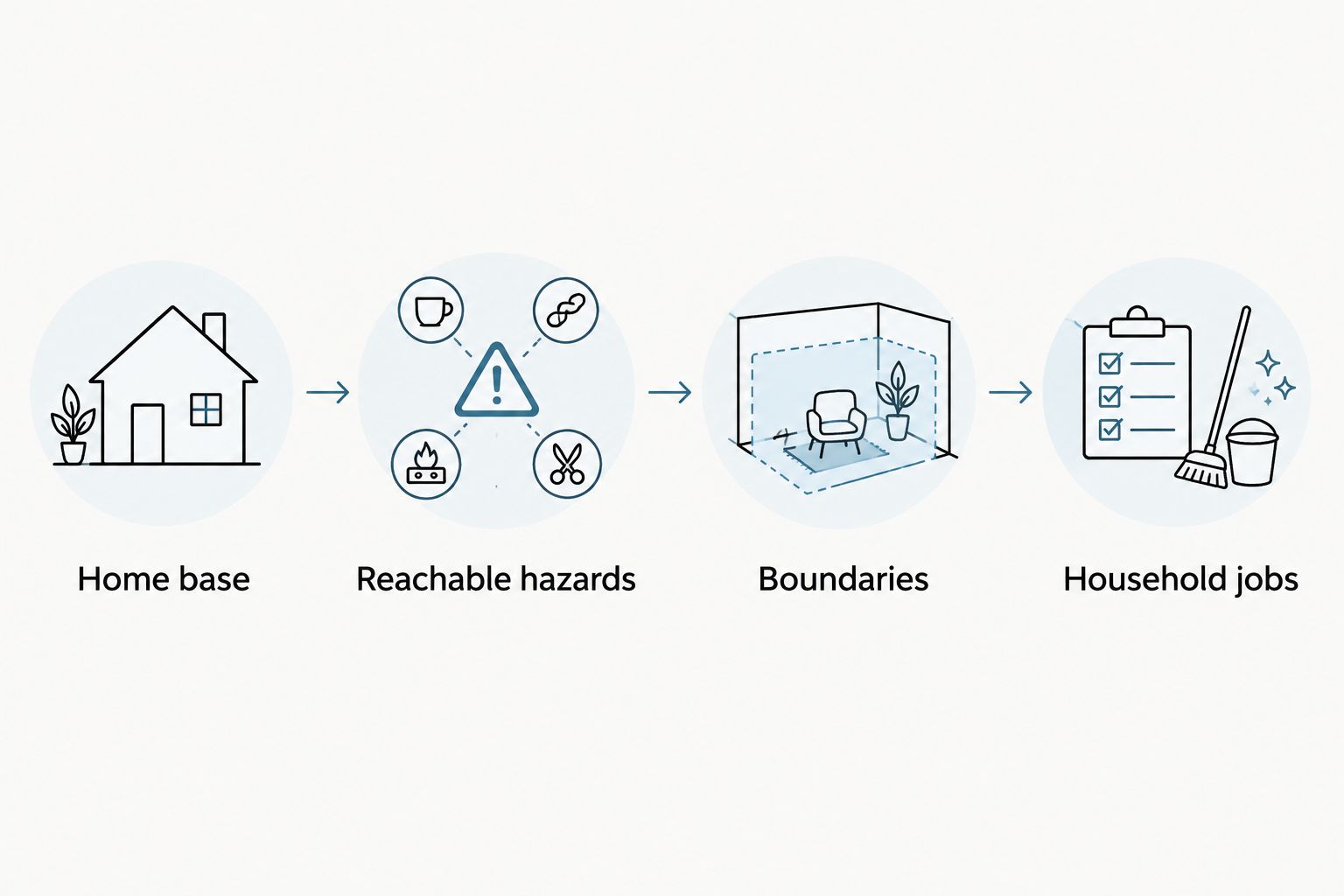
Instead of moving shoes, cleaning supplies, and loose cords every time your puppy explores, prepare a protected home base before pickup so your furever friend can settle safely. Here’s how to prepare home for new puppy arrival: secure the space, organize supplies, confirm the current routine, and plan a quiet homecoming.
- Goldendoodles of Miami suits families seeking curriculum-raised puppies and ongoing family support.
- How to prepare home for new puppy arrival: secure hazards, create a rest area, and agree on household responsibilities.
- Keep the puppy’s current food and routine consistent while you learn their needs.
- Prepare separate spaces for resident pets before introductions, and supervise every interaction.
Why this matters
A puppy doesn’t know which rug is precious, which doorway leads outside, or where the family expects potty breaks. We make the transition easier by arranging the environment before asking a puppy to understand it.
Prepare a smaller, safer space—not immediate access to the whole house. That gives you a manageable place to supervise, notice potty signals, and offer uninterrupted rest. It also means less scrambling when everyone wants to meet the newest family member.
At Goldendoodles of Miami, our breeding program includes health-tested parents, curriculum-raised puppies, and lifetime family support. Early learning gives your family a starting point; it doesn’t replace supervision or practice at home. Use this 2026 checklist to prepare your household around that transition.
Before you start
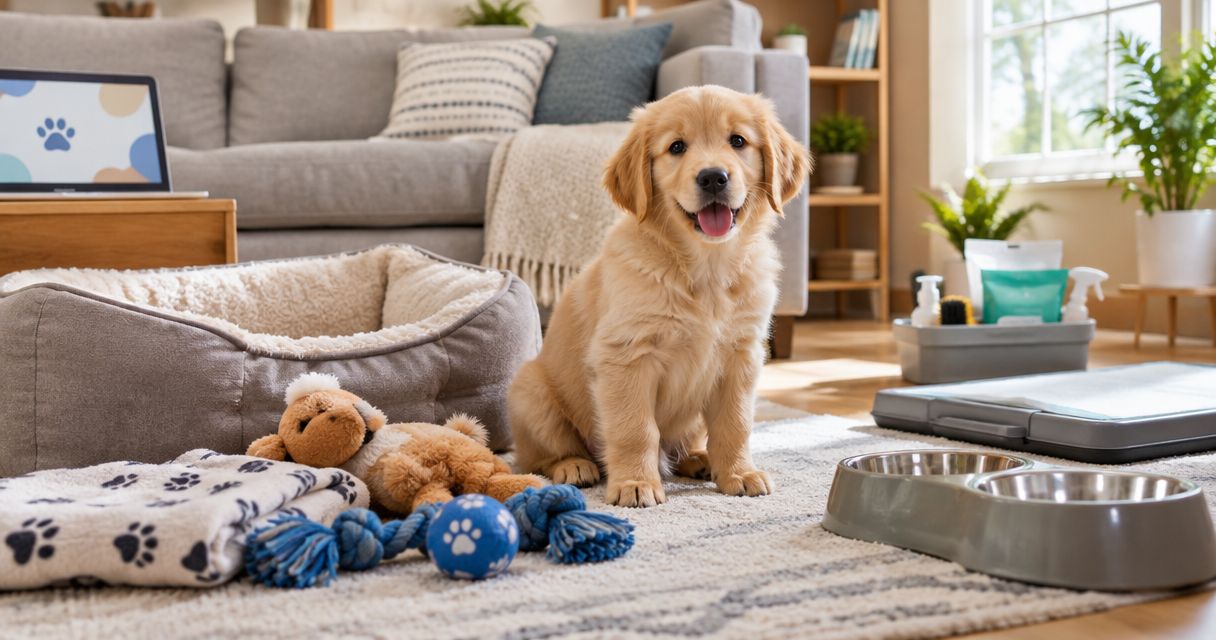
- Gather the essentials. Have the puppy’s current food, food and water bowls, a suitable crate or pen, washable bedding, a leash, a properly fitted collar, waste bags, cleaning supplies, and puppy-appropriate chew toys ready.
- Confirm the handoff details. Ask about the current feeding routine, potty cues, sleeping arrangement, training cues, and records you’ll receive. Save your veterinarian’s contact information and the nearest emergency veterinary contact before pickup.
- Check the overlooked access points. A pen is not puppy-proof if a cord, curtain, houseplant, or cleaning bottle is reachable through its sides. Inspect from floor level, including behind furniture and beneath cabinets.
Goldendoodles of Miami provides a two-year health guarantee and 30-day Trupanion coverage. Read the actual documents and confirm any required actions directly; don’t assume that collecting paperwork completes every step. Keep these records together in your 2026 puppy folder.
Home safety setup
- Choose the home base. Select an easy-to-clean area near family activity but away from constant foot traffic. Keep access to the rest of the home controlled with a securely installed barrier.
- Remove reachable hazards. Put medications, household cleaners, batteries, laundry products, loose cords, and small swallowable objects behind secure doors. Check bags and coat pockets too.
- Inspect boundaries. Check doors, screens, balcony access, fences, and gates. A yard still needs supervision; a fence is not a substitute for watching your puppy.
- Assign household jobs. Decide who handles meals, potty trips, supervision, and bedtime. Place a simple written checklist where everyone can find it.
Make this your 24-hour-before-pickup recommendation: finish the safety sweep while there is still time to move furniture or replace an unsuitable barrier. The goal is preparation, not a deadline that excuses an unfinished room.
Get down to puppy height and look again. A phone charger hidden behind a chair can be invisible from standing height and accessible from the floor. Check that furniture cannot tip or shift into the puppy’s space.
Expected result: You can place your puppy in the prepared area without immediately moving something unsafe, and every household member knows which doors must stay closed.
Rest and supply setup
- Choose a resting arrangement. Match the setup to your puppy’s size, supervision needs, and the layout of your home. Confirm that gates and latches close securely.
- Separate supplies from reach. Store food, spare toys, cleaning products, and waste bags outside the puppy’s enclosure. Keep everyday items convenient for adults, not accessible to curious mouths.
- Prepare a simple sleeping space. Use suitable washable bedding, and remove anything the puppy starts chewing apart. Keep the area comfortable and away from direct air-conditioning drafts.
- Create a cleaning station. Keep towels and a pet-appropriate enzymatic cleaner nearby but secured. Follow the cleaner’s label and keep the puppy away while cleaning.
Which home-base arrangement fits your household?
| Arrangement | Best for | Benefit | Limitation |
|---|---|---|---|
| Crate | Supervised introductions to a defined resting space | Provides a clear sleeping area | Requires gradual, positive introduction; it is not an all-day care plan |
| Exercise pen | Families needing a bounded activity area | Gives room for supervised movement and play | Can shift or be climbed; nearby objects remain a concern |
| Gated room | Homes with a genuinely puppy-proof room | Uses an existing room as a controlled space | More surfaces and hiding places require inspection |
Choose the arrangement you can supervise consistently. A larger space is not automatically better, and a crate should never become punishment. Introduce the resting area calmly rather than closing the door on a distressed puppy and hoping they adjust.
For your 2026 shopping checklist, prioritize safe fit, washable materials, secure closures, and easy inspection over decorative extras. Avoid filling the space with accessories before you know what your puppy chews or finds comfortable.
Expected result: Your puppy has a clear resting place, adults can reach essential supplies quickly, and cleaning products remain inaccessible.
Feeding and potty setup
- Confirm the current food. Ask for the exact food name and current feeding instructions before pickup. Begin with that plan rather than changing food simply because a different bag is already at home.
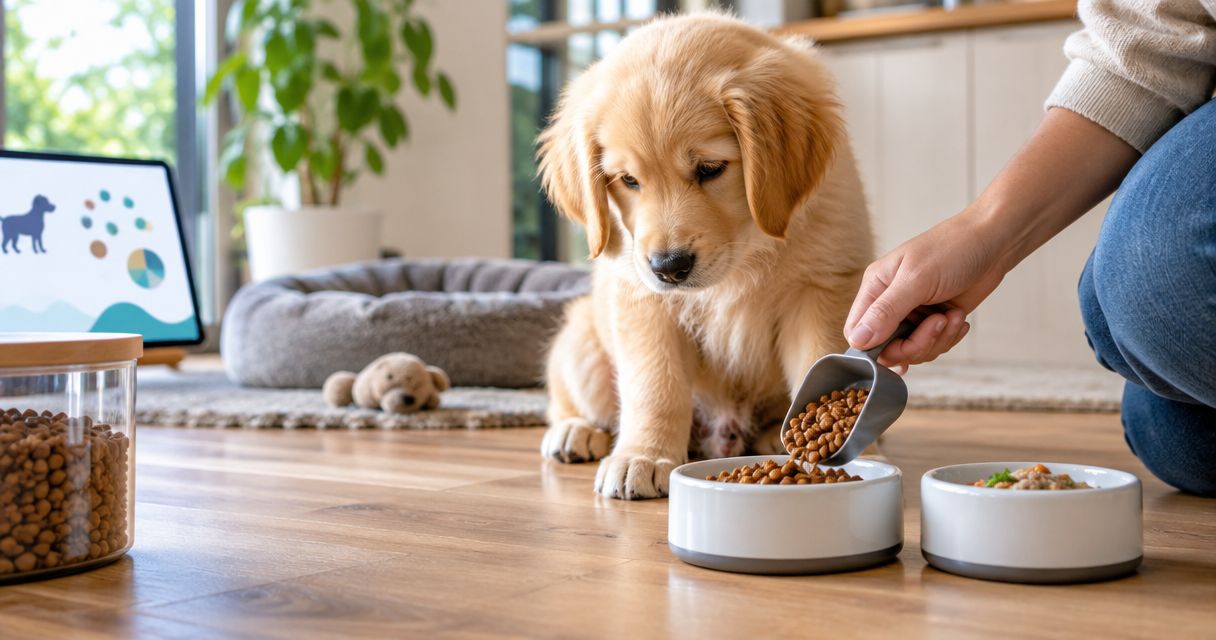
- Choose the feeding spot. Set bowls on a stable, easy-to-clean surface away from busy doorways. Provide access to fresh drinking water and discuss any individual concerns with your veterinarian.
- Plan the potty route. Identify the exit, keep the leash nearby, and choose a destination appropriate to your veterinarian’s guidance about local exposure risks.
- Prepare a shared log. Record meals, potty trips, accidents, and sleep. Use plain labels such as Meal, Potty, Rest, and Notes so another family member can take over without guessing.
Offer potty opportunities after waking, eating, and play, and before settling for the night. Watch the puppy rather than relying only on the clock. Sniffing, circling, or abruptly leaving an activity can be a reason to offer a prompt trip outside.
If an accident happens, clean it without scolding. An accident is a cue to adjust supervision or timing—not a reason to frighten your puppy. A log helps you spot where the plan needs changing without turning the day into a rigid timetable.
Keep feeding and potty responsibilities with an adult, even when children want to help. Children can participate with guidance, but the puppy should not depend on a child remembering every task.
Expected result: Everyone knows what to feed, where meals happen, which route to use for potty breaks, and how to record the day.
Pickup and homecoming setup
- Prepare safe transport. Arrange an appropriately sized travel carrier or suitable vehicle restraint before leaving. Don’t plan for the driver to hold the puppy or allow free movement through the vehicle.
- Prepare your handoff questions. Bring a written list covering feeding, recent routines, care records, training cues, and follow-up questions. Save documents somewhere you can retrieve them easily.
- Keep arrival quiet. Go to the planned potty location, then introduce the home base. Let family members meet the puppy calmly rather than crowding around together.
- Protect rest. Postpone a welcome party and keep handling gentle. Show children how to give the puppy space and let a resting puppy sleep.
Use the first 48 hours as a quiet-settling recommendation, not a promise that your puppy will feel fully comfortable by then. Keep expectations modest: eating, drinking, resting, exploring a controlled area, and learning where caring people are nearby.
Before bedtime, agree on who will respond to waking and handle potty opportunities. Keep needed supplies ready so nobody has to search through bags in the dark. Follow the puppy’s needs rather than assuming every puppy can manage the same overnight routine.
Expected result: The ride is planned, records are organized, and arrival leads into a predictable routine rather than a house full of surprises.
A second workflow: homes with resident pets or shared outdoor space
The basic checklist stays the same, but these households need separation and an outdoor-access plan before pickup. Add this branch to your 2026 preparation list rather than improvising introductions at the front door.
| Home situation | Best for | Helpful setup | Limitation to plan around |
|---|---|---|---|
| Separate pet areas | Families with resident dogs or cats | Individual resting, feeding, and retreat spaces | Requires active management of doors and barriers |
| Shared outdoor access | Apartment and condo families | A prepared leash station and agreed potty route | Shared surfaces require veterinarian-guided exposure decisions |
- Prepare separate resources. Give resident pets their own food, water, bedding, and retreat areas. Keep the puppy away from those resources during the initial settling period.
- Plan introductions deliberately. Use controlled, supervised introductions rather than immediate unrestricted contact. Ask your veterinarian or a qualified reward-based trainer for advice tailored to the animals involved.
- Map the outdoor route. For a condo, consider doors, elevators, corridors, and where other dogs gather. Ask your veterinarian how to manage necessary outings while accounting for the puppy’s vaccination status.
Do not ask a resident pet to tolerate persistent chasing, climbing, or interrupted sleep. Separate calmly when either animal needs space. Shared living starts with protected boundaries, not forced friendship.
Troubleshooting your setup
- The puppy can reach objects through the pen. Move the enclosure away from furniture, cords, curtains, and stored supplies. Inspect reach from inside the enclosure rather than judging only the floor area.
- The puppy cries in the resting area. Check potty needs, comfort, and whether the introduction was too abrupt. Stay nearby and build positive familiarity; seek help if distress persists or you notice signs of illness.
- Accidents happen despite regular outings. Reduce unsupervised freedom and review the log for missed transitions after sleep, meals, or play. Contact your veterinarian about painful urination, blood, or a sudden concerning change.
- Family members give conflicting instructions. Agree on the same cue words, boundaries, and care responsibilities. Keep the written plan simple enough that everyone actually follows it.
- The puppy chews bedding or toys apart. Remove damaged items and supervise alternatives suited to the puppy’s size and chewing behavior. Contact your veterinarian promptly if you suspect swallowing or an obstruction.
Customize your workflow
Once your home base works, build consistency before expanding freedom. Add access gradually while you can supervise, and return to a smaller area when the puppy needs more support.
Our curriculum training-to-home routine guide helps you organize questions about carrying early learning into everyday family life. Ask which cues your puppy already knows instead of introducing a completely different set on arrival.
Goldendoodles of Miami offers Goldendoodle, Bernedoodle, Poodle, and Cavapoo puppies. Our curriculum and family support help you begin, but every household still needs time for supervision, practice, and individual adjustment. If you’re ready to welcome one of our doods, ask us about the puppy application and share your household routine honestly.
Resumen para familias hispanohablantes
Antes de recoger a tu cachorro, prepara una zona segura, guarda cables y productos de limpieza, y organiza su lugar de descanso. Confirma la comida y la rutina actuales para evitar cambios innecesarios al llegar.
Acuerda quién se encargará de las comidas, las salidas y la supervisión. Si tienes otras mascotas, prepara espacios separados y presentaciones tranquilas. Consulta al veterinario sobre las salidas y conserva juntos los documentos del cachorro. Estamos aquí para acompañar a tu familia durante esta nueva etapa.
FAQ
What’s the first thing I should do to prepare my home for a new puppy?
Create a puppy-proof home base before pickup. Remove reachable hazards, control access to other rooms, and prepare a quiet resting area with supplies stored safely nearby.
Do I need a crate and a puppy pen?
You do not automatically need both a crate and a pen. Choose a safe arrangement that fits your home and supervision plan, and introduce it positively rather than using confinement as punishment.
Should I change my puppy’s food when we get home?
Begin with the puppy’s current food and feeding instructions. Discuss any planned change with your veterinarian instead of making an abrupt switch during the move.
How do I prepare an apartment for puppy pickup?
Prepare a protected indoor area and plan the route through doors, corridors, and elevators. Ask your veterinarian how to manage shared outdoor spaces according to your puppy’s vaccination status and local risks.
Can my children and other pets greet the puppy immediately?
Keep greetings calm, supervised, and manageable rather than gathering everyone around the puppy. Give resident pets separate resources and retreat areas, and teach children to leave a resting puppy undisturbed.
What support does Goldendoodles of Miami provide?
Goldendoodles of Miami provides curriculum-raised puppies, a two-year health guarantee, 30-day Trupanion coverage, and lifetime family support. Review the documents directly for terms and required actions.
What should I have ready for the first night?
Prepare a safe resting space, the potty route, cleaning supplies, and an agreed adult care plan. Respond to the puppy’s needs rather than expecting a fixed overnight schedule immediately.
One last thing
Practice the routine without the puppy. Walk from the sleeping area to the potty exit, carrying the supplies you expect to need. You’ll notice the awkward latch, missing leash, or blocked doorway before a sleepy puppy makes the problem urgent.
For your final 2026 check, ask whether another adult could follow the plan without an explanation. Goldendoodles of Miami wants your furever friend to become part of your family with care and consistency—not a perfect house, just a prepared one.