Instead of searching messages and paperwork before your puppy first vet visit after adoption, set up one shared care record before homecoming, then use it to carry your puppy’s history, home observations, and questions into the appointment. Our 2026 workflow helps you welcome your furever friend without losing the details your veterinary team needs.
- For a puppy first vet visit after adoption, book ahead and send the clinic your puppy’s existing records.
- Goldendoodles of Miami pairs curriculum-raised puppies with lifetime family support; veterinary care remains your veterinarian’s responsibility.
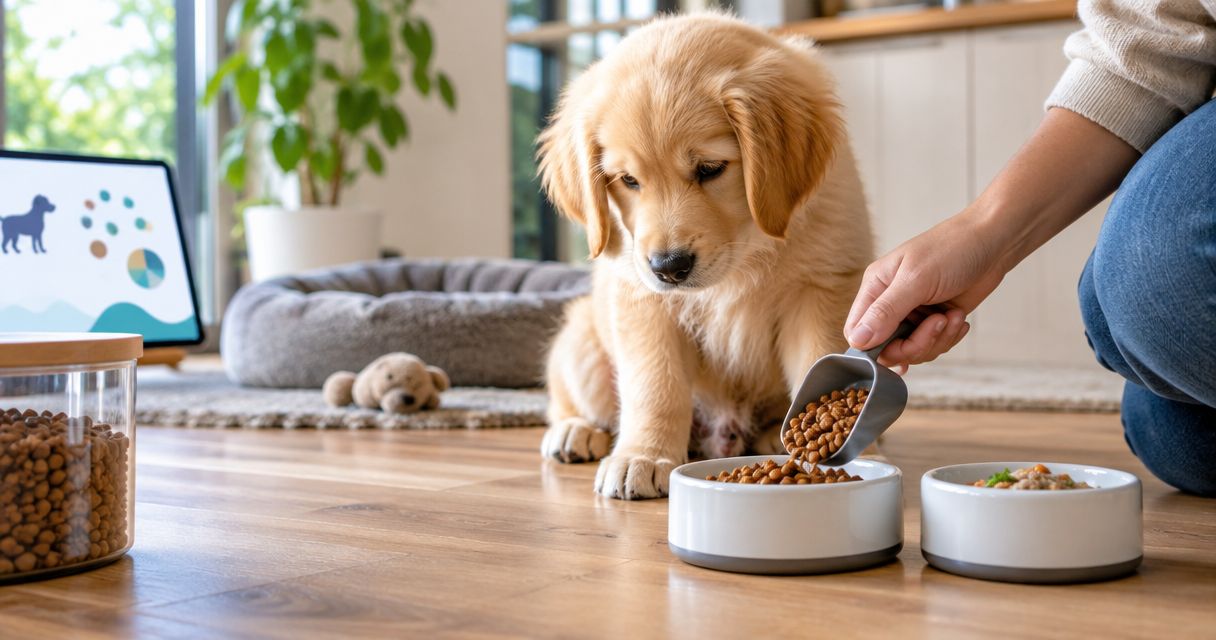
- Keep feeding details, home observations, and veterinary instructions together so every caregiver follows the same plan.
- Review the two-year health guarantee and 30-day Trupanion coverage separately; neither replaces veterinary assessment.
Why this matters
The first appointment connects your puppy’s previous care with the plan your veterinarian creates for your household. A clear handoff gives the clinic something more useful than a folder of unexplained screenshots.
We want the transition from curriculum-raised puppy to family companion to feel manageable. Start with our puppy routine after pickup, then add the recordkeeping steps below.
Goldendoodles of Miami is best for prospective puppy parents seeking a curriculum-based start and lifetime family support. Our support helps with the transition; it does not replace your veterinarian’s examination or individual care instructions.
For your 2026 homecoming, the goal is simple: everyone caring for your puppy should know what has already happened, what happens next, and whom to contact with a concern.
Before you start
- Arrange veterinary access. Contact your chosen clinic before pickup, explain that you are bringing home a puppy, and ask when the first examination should happen. Get the clinic’s instructions for concerns that arise before that appointment, including its after-hours contact route.
- Gather the handoff materials. Request existing veterinary records, vaccination and parasite-treatment history, feeding details, and relevant agreement documents. Keep the two-year health guarantee and 30-day Trupanion coverage information accessible, but separate from medical records.
- Check the easily missed timing requirement. Read your own agreement and coverage documents before booking. Ask about any examination, notification, or activation deadlines rather than assuming that the appointment date automatically satisfies every requirement.
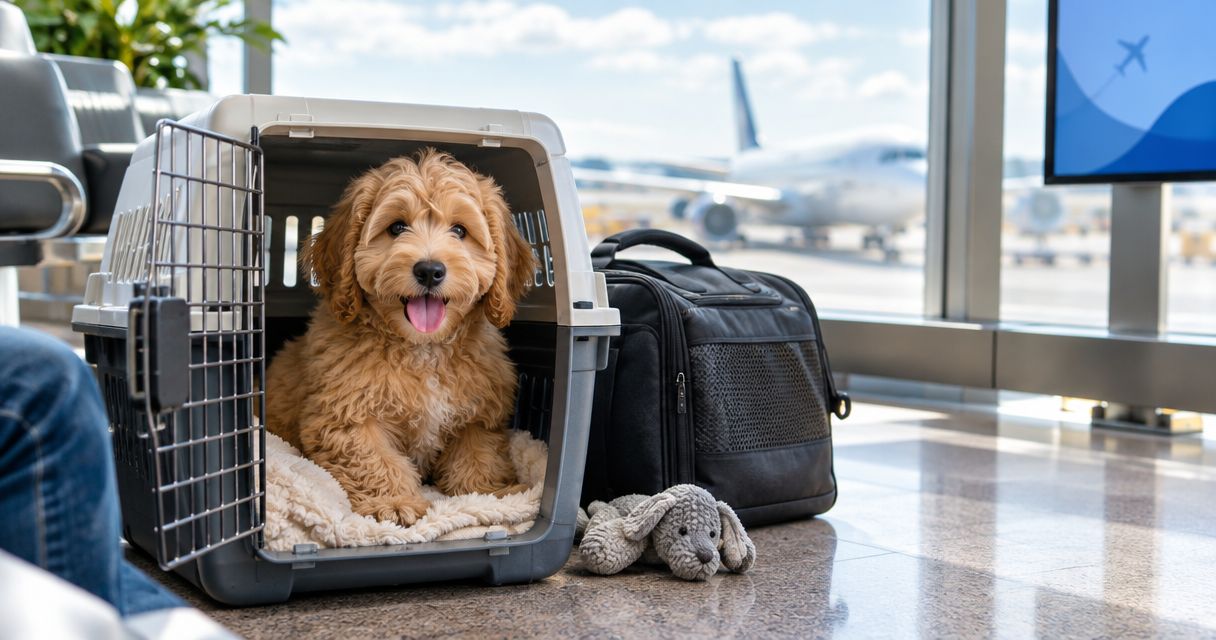
Keep a secure carrier or suitable restraint ready for the journey. Ask the clinic how it wants you to arrive with a young puppy and whether it needs anything collected or submitted beforehand.
Your care-record setup
A useful care record does not need special software. Choose a format your household will actually maintain, and give one person responsibility for checking that updates reach the veterinary team.
| Record setup | Best for | Advantage | Limitation |
|---|---|---|---|
| Single-caregiver record | A household where one adult manages appointments | Clear ownership and fewer conflicting updates | Another caregiver needs access if that person is unavailable |
| Shared-caregiver record | Families dividing meals, transport, and appointments | Everyone can record observations in the same place | Entries need names and dates to avoid confusion |
Choose the simplest setup that keeps every caregiver working from the same instructions. A shared document helps only when family members know where it is and which version is current.
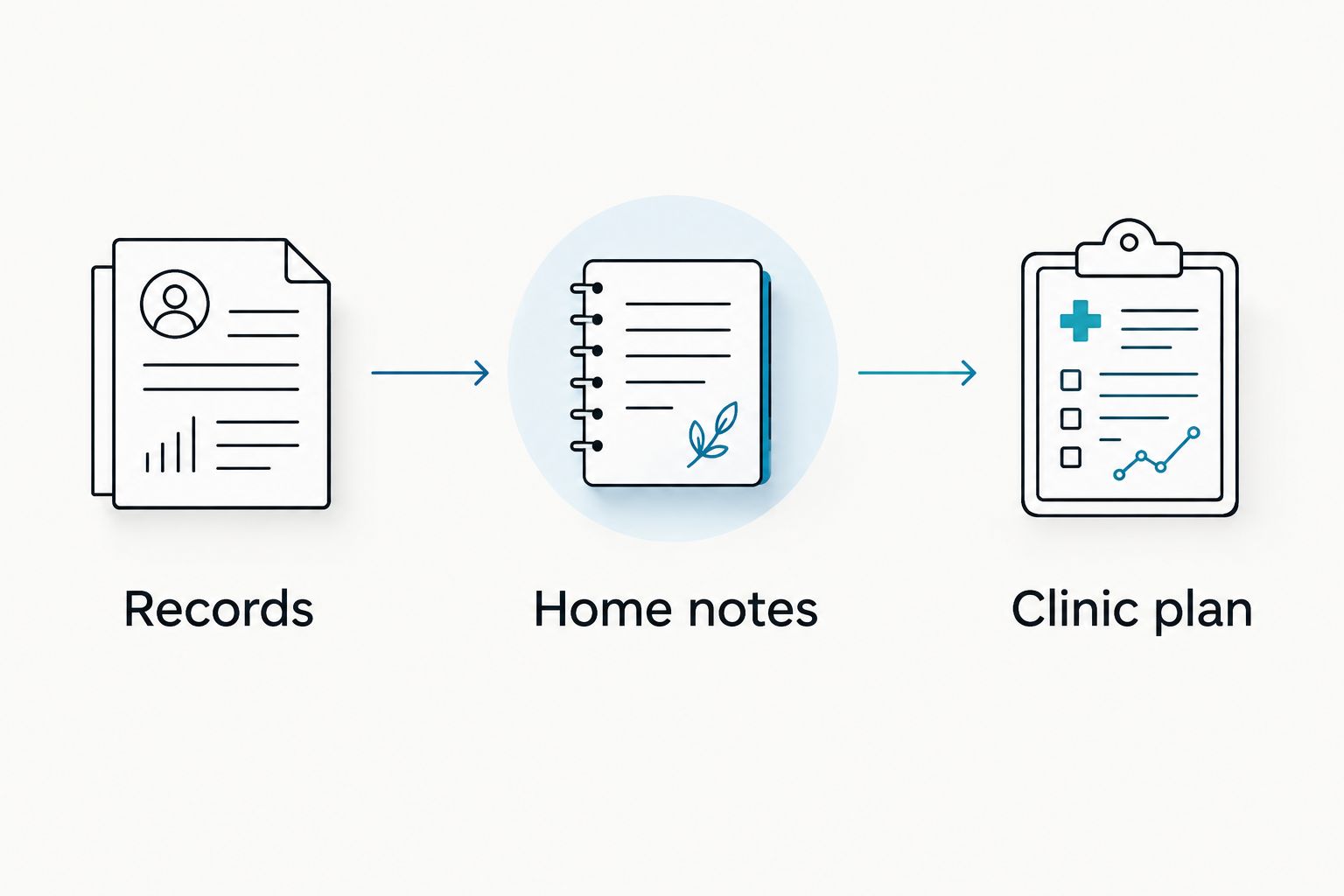
- Create a care folder. Give it your puppy’s name and keep original documents intact. Organize it under three headings: Records, Home notes, and Clinic plan.
- Build a 1-page summary. Include your puppy’s identifying details, the clinic’s contact information, existing care dates, current feeding information, and your main questions. Copy facts from documents rather than filling gaps from memory.
- Assign responsibility. Decide who schedules, who transports your puppy, and who records the veterinarian’s instructions. If responsibilities overlap, name the person who confirms completion.
- Check access. Open the folder on the device you will take to the appointment. Keep a backup copy of essential records in case reception is poor.
Expected result: a caregiver who did not organize pickup can still find your puppy’s history and appointment details without searching through family messages.
The record should move in one direction: existing history informs home observations, and both inform the veterinarian’s plan. Keep those categories distinct so a family note never looks like a clinical instruction.
Your homecoming routine
Homecoming brings plenty of excitement. We recommend making the care handoff quieter than the welcome: confirm the practical details first, then give your puppy space to settle into family life.
- Confirm the current routine at pickup. Ask about the food being fed, how meals are organized, familiar rest arrangements, and the cues your puppy has been learning. Write down the answers rather than relying on everyone remembering the same conversation.
- Prepare a supervised home area. Remove access to household hazards and set up the resting space before your puppy arrives. Keep records and paperwork somewhere children cannot accidentally move them.
- Record observations plainly. Note meals offered and eaten, toileting observations, rest, and any behavior that concerns you. Add dates and times when relevant; describe what happened instead of assigning a diagnosis.
- Share concerns with the right person. Ask us about the handoff routine and your puppy’s previous experiences. Contact your veterinary team about health concerns rather than waiting for a family-support reply.
Expected result: your puppy has a familiar starting routine, and you have a factual account of the transition to share with the clinic.
For Goldendoodles of Miami families, our health-tested parents and curriculum-raised puppies are part of that starting point. They do not establish an individual puppy’s current health status or replace the first examination.
Keep your 2026 homecoming notes short enough to maintain. An entry describing what you observed is more useful than a long account of everything the family did that day.
Your first-appointment handoff
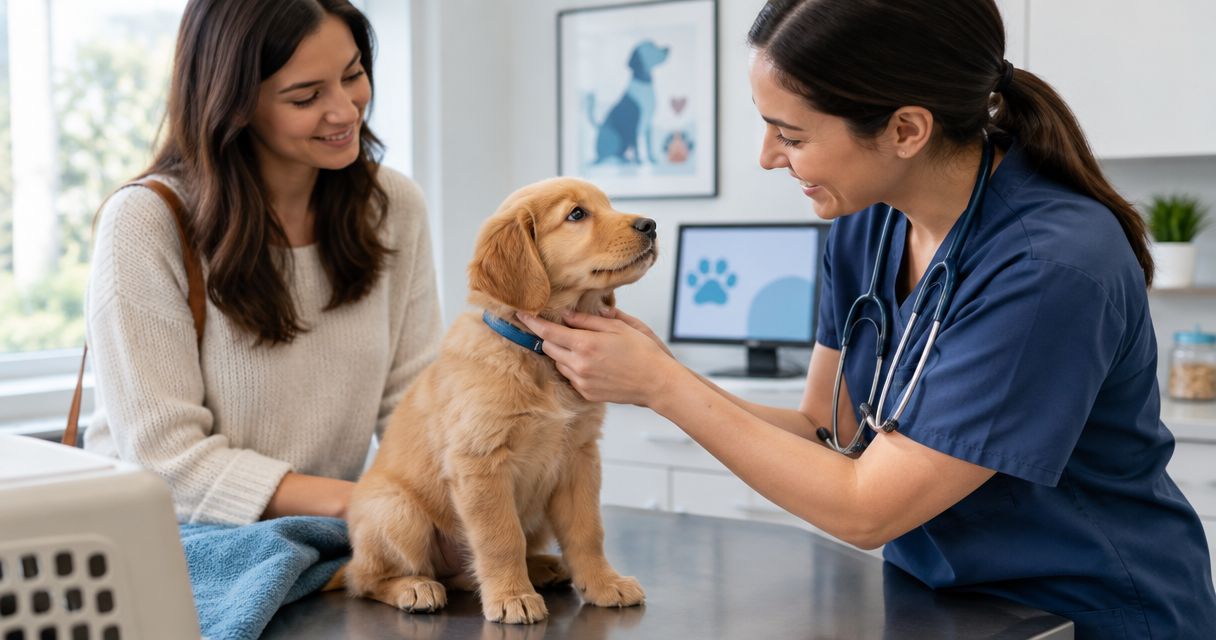
Let the veterinary team set the medical plan. Your job is to bring accurate history, explain your observations, and leave knowing what to do next—not to select treatments from an online checklist.
- Send records before arrival. Ask the clinic how it accepts documents, then confirm receipt. Include the existing care history, not just a summary saying that your puppy has already received care.
- Confirm arrival instructions. Ask where to wait, how to bring your puppy inside, and whether the clinic wants a sample or other materials. Follow its handling instructions rather than copying another family’s visit routine.
- Present your questions in priority order. Start with any current concern. Then ask the veterinarian to explain the next steps for preventive care, feeding, safe activities, grooming considerations, and follow-up as appropriate for your puppy.
- Request written next steps. Ask for the appointment summary, any instructions, and the next appointment date or scheduling action. Read unclear wording back to the team before leaving.
Expected result: you leave with a veterinary plan that identifies what to do, who is responsible, and when to contact the clinic again.
Before the visit, review our guide to activating your puppy’s 30-day Trupanion coverage. Confirm the applicable terms directly; do not assume that an appointment, a guarantee, and insurance coverage all serve the same purpose.
For your 2026 appointment checklist, keep administrative questions separate from health questions. That prevents an unresolved document issue from getting mistaken for a reason to delay asking the veterinarian about a concern.
Update the record whenever veterinary instructions change
The same workflow also works after a follow-up visit or a call with the clinic. Instead of starting a second set of notes, update the existing care record while preserving the previous instructions for reference.
- Date the new instruction. Record which clinic team member provided it and whether it came from a visit, call, or written message.
- Identify what changed. State which earlier instruction the new plan replaces. If that is unclear, ask the clinic before sharing it as the current household plan.
- Notify every caregiver. Make sure the person handling the next meal, outing, or appointment sees the update. Do not rely on a message buried in a busy group chat.
- Confirm the next action. Record the follow-up booking, requested update, or question that still needs an answer.
Expected result: the family follows one current plan rather than several remembered versions.
Use a clearly marked Current instructions section throughout 2026. Keep older notes available as history, but do not leave them beside new instructions without a date and explanation.
Troubleshooting
The clinic has not received the records
Ask the clinic which documents are missing and resend those files through its preferred channel. Request a receipt confirmation; a sent email is not confirmation that the attachment reached the patient record.
Tell the veterinary team if a record remains unavailable. Do not reconstruct vaccination or treatment dates from memory.
A family note conflicts with the discharge instructions
Pause and contact the clinic for clarification. Keep the written instruction and your question together so the team can resolve the exact difference rather than respond to a paraphrased version.
Your puppy seems unwell before the appointment
Contact a veterinarian promptly and describe what you are observing. For an urgent concern, use the clinic’s emergency instructions rather than waiting for the scheduled visit or a reply from us.
Do not assume that a change is simply part of settling in. The veterinary team decides the appropriate response.
You cannot meet a document deadline
Contact the relevant party as soon as you identify the problem. Ask what action is required and keep the response with the original document; do not assume a missed deadline is automatically extended.
Everyone thinks someone else booked the follow-up
Give the scheduling task to a named adult and record confirmation when it is complete. A reminder to book is not the same thing as a confirmed appointment.
Customize your workflow
We build this handoff around the household, not the other way around. For a busy family, assign appointments and records to one adult while other caregivers add observations. For a solo puppy parent, make sure a trusted backup knows where essential information lives.
If travel is part of homecoming, include the travel documents and clinic arrival instructions in the same folder. Keep them separate from the medical history so the veterinarian can find clinical records quickly.
Goldendoodles of Miami offers lifetime family support, and we want your doods to feel like part of our family. That support is useful for discussing routines and the transition home; medical decisions stay with your veterinary team.
If you are still planning your furever friend’s arrival, begin with the puppy application. Use the application-to-pickup guide below to organize your questions before homecoming rather than trying to resolve everything on pickup day.
Resumen para familias hispanohablantes
Antes de llevar a tu cachorro a casa, contacta a la clínica veterinaria y pregunta cuándo debe realizarse la primera revisión. Reúne su historial, confirma que la clínica lo haya recibido y anota las instrucciones de llegada.
Mantén separados el historial veterinario, las observaciones de casa y las indicaciones actuales. Revisa las condiciones de la garantía de salud de dos años y la cobertura Trupanion de 30 días; ninguna sustituye la atención veterinaria.
Si observas algo que te preocupa, consulta al veterinario sin esperar a la cita programada. Nuestro apoyo familiar continúa durante la transición, pero las decisiones médicas corresponden al equipo veterinario.
FAQ
When should I book my puppy’s first vet visit after adoption?
Contact your chosen clinic before pickup and let its team set the appointment timing. Check your agreement and coverage documents for separate examination or notification requirements.
What should I bring to my puppy’s first veterinary appointment?
Bring existing veterinary records, current feeding information, your observations, and your questions. Ask the clinic beforehand whether it needs a sample, advance paperwork, or particular arrival arrangements.
Does a health guarantee replace the first vet visit?
No, a health guarantee does not replace a veterinary examination. Read the guarantee separately and ask the veterinarian to establish your puppy’s individual care plan.
Should I wait for the scheduled visit if my puppy seems unwell?
No, contact a veterinarian promptly about a health concern rather than waiting for the scheduled appointment. Use the clinic’s emergency instructions for urgent concerns.
Can I assume my puppy has finished vaccinations?
No, give the clinic the actual vaccination records and ask the veterinarian what comes next. A general description of previous care is not a substitute for documented dates and treatments.
What does Goldendoodles of Miami provide for the transition home?
Goldendoodles of Miami offers curriculum-raised puppies, a two-year health guarantee, 30-day Trupanion coverage, and lifetime family support. Review the applicable documents for their terms and keep veterinary care with your chosen clinic.
How do I keep several caregivers following the same puppy-care plan?
Use one shared care record and give a named adult responsibility for confirming updates. Separate current veterinary instructions from older notes and notify everyone when the plan changes.
One last thing
Before you leave the clinic, ask: what should make us call before the next appointment? Write down the answer with the correct contact route. A calendar tells you when the next visit happens; that instruction tells your family what to do in between.