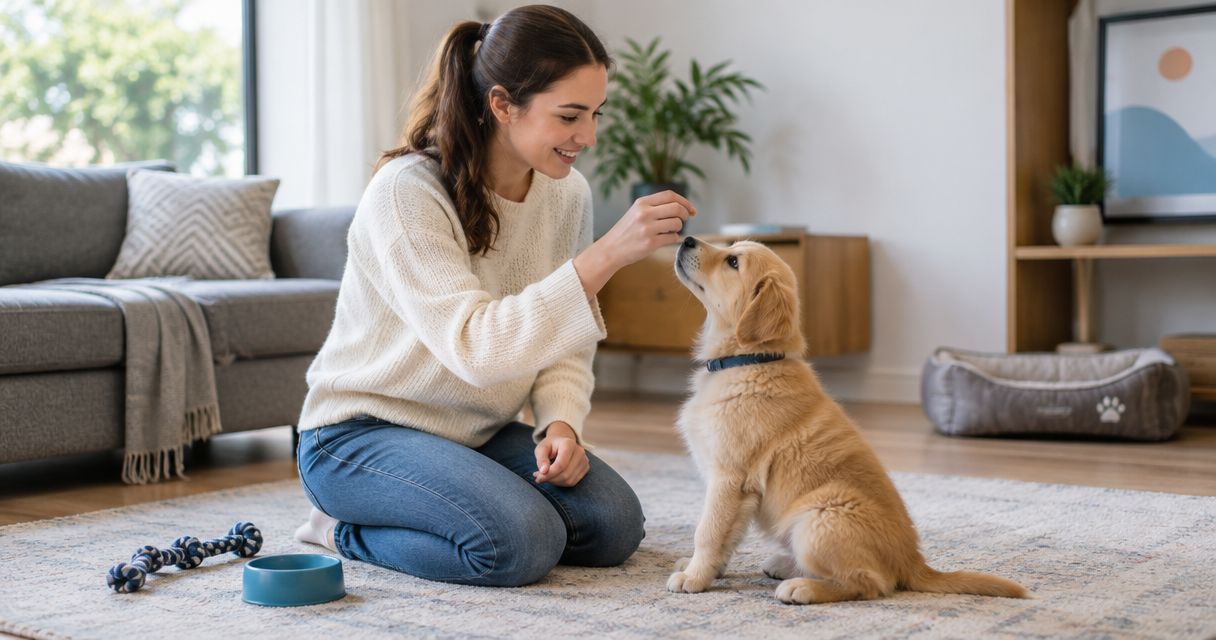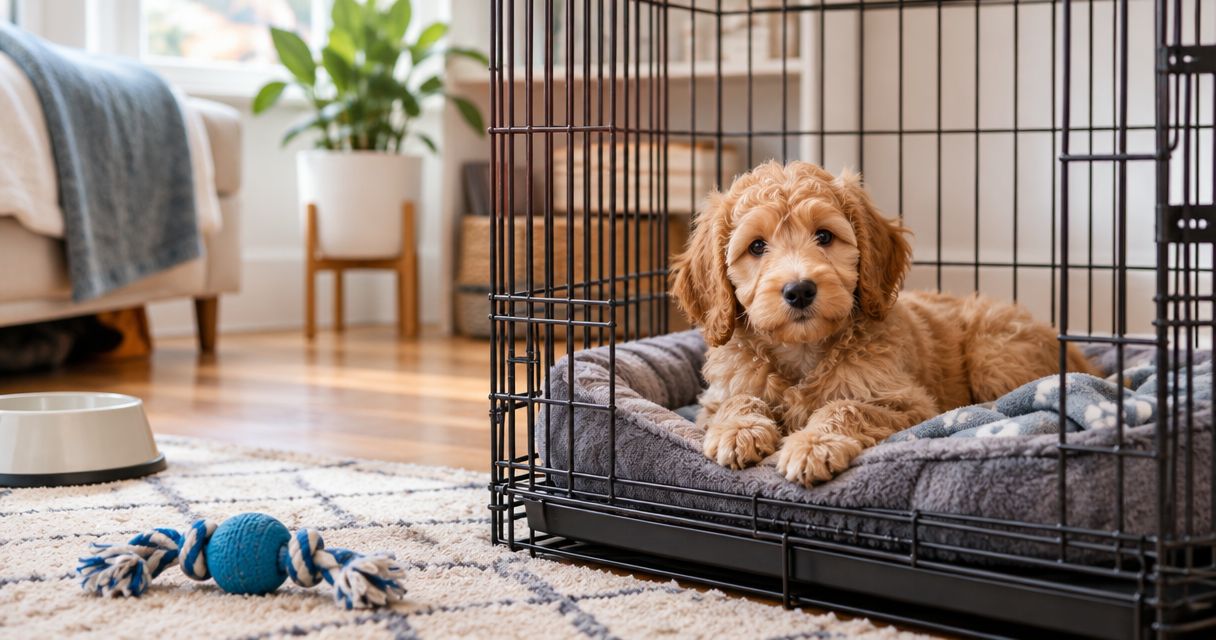
Plan on no more than 3 hours of daytime crating for a Goldendoodle puppy under 6 months, and arrange shorter sessions whenever your puppy needs an earlier potty break or becomes uncomfortable. That is a planning ceiling, not a promise that your puppy can manage the whole stretch. A puppy who stays dry overnight still needs a daytime routine built around toileting, companionship, movement, and gradual crate training.
- How long can a Goldendoodle puppy be crated? Use 3 hours as a ceiling under 6 months, not a target.
- Goldendoodles of Miami recommends planning daytime crate training around your puppy’s comfort and potty-training progress.
- A dry crate does not prove your puppy feels comfortable alone.
- Arrange human help when your workday exceeds your puppy’s demonstrated ability to rest comfortably.
How long can a Goldendoodle puppy be crated during the day?
For puppies under 6 months, keep daytime crate sessions below the commonly published 3–4-hour upper limit, and shorten them to fit your puppy. Humane World for Animals’ published crate-training guidance gives that limit because young puppies cannot control their bladders and bowels for long periods. This 2026 guide uses the lower end—3 hours—as a conservative planning ceiling, not an age-based entitlement.
We encourage families to connect crate decisions with Goldendoodle potty-training progress, rather than treating the clock as the only measure of readiness.
| Daytime situation | What to do | What not to assume |
|---|---|---|
| Your puppy is new to the crate | Start with brief, comfortable practice while you remain nearby | A puppy can manage hours because the door closes successfully |
| Your puppy is under 6 months | Use 3 hours as an upper planning ceiling; provide earlier breaks as needed | Every puppy this age can stay comfortable that long |
| Your puppy wakes, becomes restless, or needs to toilet | End the rest period and offer an appropriate break | The original schedule matters more than the puppy’s needs |
| Your absence exceeds your puppy’s comfortable interval | Arrange a caregiver and a suitable daytime setup | A larger crate makes a long absence appropriate |
Why this matters
A crate should help your furever friend rest safely, not become the place where an entire day happens. Successful crate training means your puppy can settle comfortably; simply preventing accidents is not enough.
At Goldendoodles of Miami, we want puppy parents to prepare for the ordinary Tuesday, not just pickup day. Who handles the potty break when a meeting runs late? Where does your puppy rest when the household gets busy?
Goldendoodles of Miami is best for prospective Goldendoodle families seeking curriculum-raised puppies and lifetime family support. Those foundations support your preparation, but they do not replace the gradual practice your puppy needs at home.
For your 2026 homecoming plan, assign daytime care before choosing a crate schedule. A calendar filled with planned breaks is more useful than a promise to check in whenever work allows.
Why daytime crate time varies
The same puppy can manage a peaceful nap and struggle with an equally long confinement later. We ask families to watch the circumstances around each session, not just its duration.
- Age and development: Younger puppies need frequent opportunities to toilet and learn the household routine. An age formula cannot confirm readiness.
- Recent activity: A puppy waking from sleep, finishing a meal, or ending a play session needs a toileting opportunity before settling again.
- Crate experience: Comfortable practice with you nearby is different from being alone behind a closed door. Build those skills separately.
- Emotional comfort: Persistent vocalizing, frantic escape attempts, drooling, or an inability to settle are reasons to reassess the session—not extend it.
- Health and individual needs: New accidents, unusual thirst, diarrhea, or apparent discomfort call for veterinary advice rather than a stricter crate routine.
Keep a simple record of meals, potty trips, naps, accidents, and behavior. The purpose is to spot your puppy’s pattern, not to push toward a longer personal best.
How do we build a comfortable daytime crate routine?
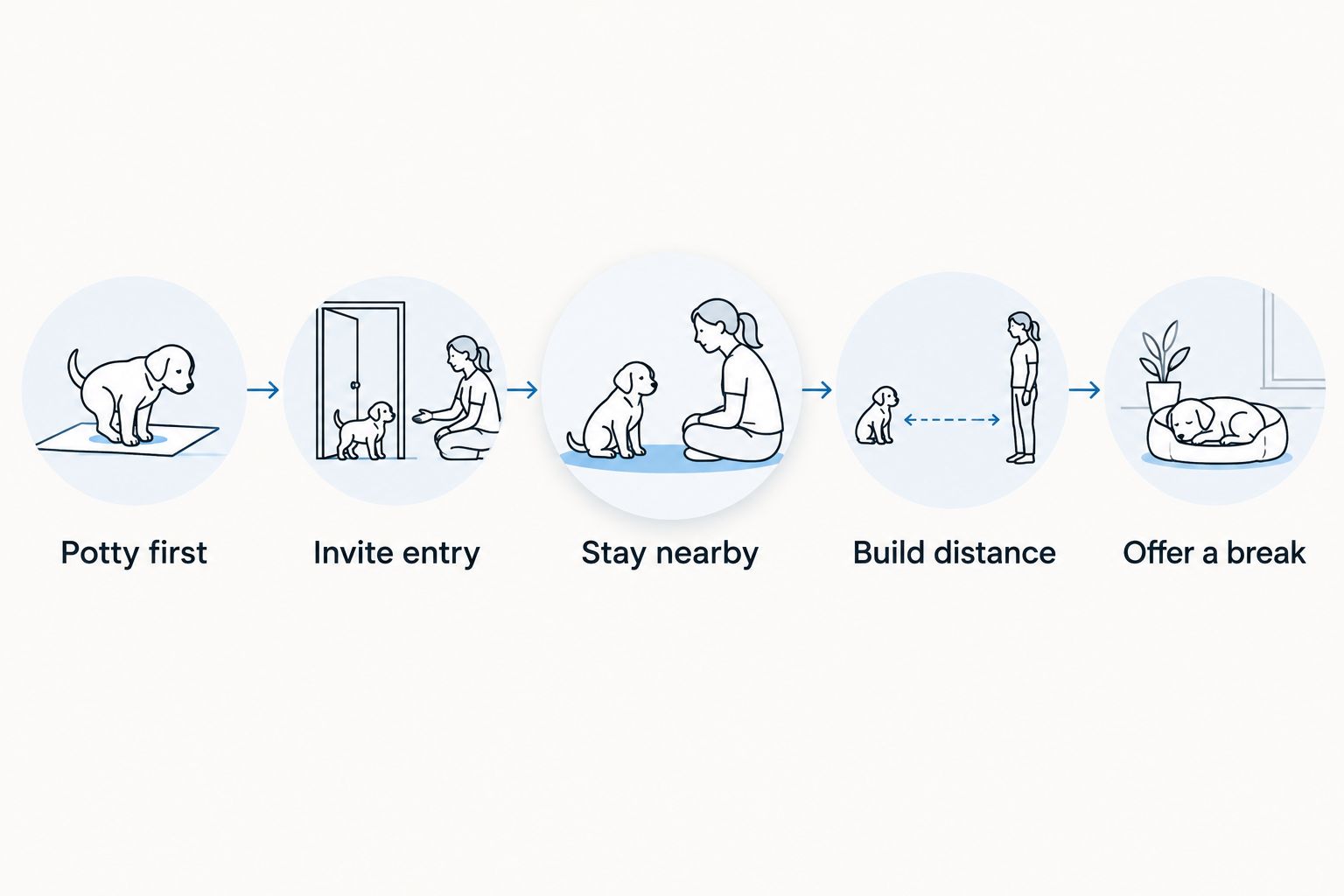
We recommend a predictable sequence that starts with your puppy’s needs. Let the next step depend on comfortable behavior rather than a deadline.
- Potty first. Offer a toileting opportunity before crate practice. Make sure your puppy actually goes rather than assuming time outside was enough.
- Invite entry. Let your puppy investigate and enter voluntarily. Use positive associations without forcing your puppy inside or using the crate as punishment.
- Stay nearby. Begin with you close enough to observe comfort. Introduce the closed door gradually, keeping the experience manageable.
- Build distance. Once your puppy settles comfortably, practice moving away and returning. Change the difficulty gradually instead of adding distance and duration together.
- Offer a break. Take your puppy out for toileting, appropriate activity, and connection. Adjust the next session based on what you observed.
Progress is not always a straight line. A change of home, household activity, or daily routine can mean returning to an easier version of practice.
For a 2026 puppy-care plan, record what actually happened: settled quietly, woke and needed the toilet, or became upset when you left. Those observations tell you more than writing only the session’s length.
Which daytime setup fits your family?
A crate, a puppy-proofed pen, and a caregiver serve different purposes. Choose the setup around the care your puppy needs, not around how long you want to be away.
| Option | Best for | Main benefit | Limitation |
|---|---|---|---|
| Crate | Short, comfortable rest periods | Provides a defined resting space when introduced positively | Restricts movement and does not replace potty breaks or company |
| Puppy-proofed pen | Managed awake time between care visits | Allows more room for movement and separation of resting areas | Requires careful safety checks and does not teach outdoor toileting by itself |
| In-home caregiver | Absences longer than your puppy can comfortably manage | Provides human care, toileting opportunities, and observation | Requires coordination and a caregiver who follows your routine |
Use a crate for rest, a pen for suitable managed space, and a caregiver for care. None is a shortcut around the others’ limitations.
Check the physical setup before leaving your puppy. A crate should allow comfortable standing, turning, and lying down; remove collars or equipment that could catch, and avoid leaving objects your puppy can swallow or become tangled in. Choose a ventilated location away from direct sun and heat.
Water access is part of the care plan. Do not restrict drinking simply to make a longer crate session possible; ask your veterinarian about your puppy’s individual needs.
Can I crate my Goldendoodle puppy while I work?
A 3-hour planning ceiling for a puppy under 6 months does not cover an entire workday. If your absence is longer than your puppy’s comfortable interval, arrange human care rather than stretching the crate session.
We suggest writing out the whole absence, including your commute and predictable delays. Then assign responsibility for toileting, meals where needed, suitable activity, and companionship—not just opening the crate door.
A workable care handoff includes:
- Your puppy’s usual toileting cues and recent routine.
- Where the puppy can safely rest and spend awake time.
- Feeding instructions and access to drinking water.
- Who to contact if the puppy seems unwell or distressed.
- A backup person if the planned caregiver cannot come.
Working from home still requires this planning. A puppy crated beside your desk while you attend back-to-back calls needs breaks just as much as a puppy whose family leaves the house.
Does sleeping through the night mean my puppy can stay crated longer?
The 3-hour daytime planning ceiling is not extended because your puppy sleeps through the night. Sleeping and awake periods have different patterns of activity, eating, drinking, and toileting.
We understand why a peaceful night feels like a breakthrough. Enjoy it, but assess daytime readiness separately: can your puppy settle, remain comfortable when you move away, and get a break before needing to toilet?
A dry crate answers only the accident question. It does not tell you whether your puppy spent the session relaxed, vigilant, or upset.
What should we do if our puppy cries in the crate?
First check whether your puppy needs to toilet, feels uncomfortable, or is struggling with the level of separation. Do not use a fixed crying deadline as proof that a puppy should remain confined.
We recommend making the next practice easier: stay closer, shorten the session, or return to comfortable entry with the door open. Keep necessary potty trips calm so your puppy can attend to the immediate need.
Persistent distress, escape attempts, or risk of injury warrants stopping the session and seeking qualified help. A veterinarian can assess health concerns and advise on appropriate behavioral support; the goal is comfort, not winning a standoff.
Never punish an accident. Clean the space, review the timing, and make the next opportunity to toilet easier to provide.
How we help families prepare for home
At Goldendoodles of Miami, our Goldendoodle puppies come from health-tested parents and receive curriculum-based preparation. Our family support includes a 2-year health guarantee, 30-day Trupanion coverage, and lifetime family support; review the applicable terms and coverage details as part of your preparation.
We keep those commitments separate from crate-training expectations. Neither health testing nor a curriculum promises a puppy who arrives ready for long absences, and every family needs to continue gentle practice at home.
If you are preparing to welcome one of our doods in 2026, ask about the puppy’s current routine and how to start the puppy application. Share your real work schedule, household setup, and care arrangements so the conversation reflects everyday family life.
Plan your puppy’s homecoming
Tell us about your family’s routine and ask how to start the puppy application.
Resumen en español para nuestras familias
Para un cachorro Goldendoodle menor de 6 meses, planifica un máximo orientativo de 3 horas seguidas en la jaula durante el día, y ofrece descansos antes si los necesita. Ese límite no significa que todos los cachorros puedan permanecer cómodos durante ese tiempo.
Acostumbra a tu cachorro poco a poco, ofrece oportunidades para hacer sus necesidades y organiza ayuda si tu jornada supera el tiempo que tolera cómodamente. Dormir toda la noche no demuestra que esté preparado para quedarse solo durante el día.
FAQ
How long can a Goldendoodle puppy be crated during the day in 2026?
Use 3 hours as an upper daytime planning ceiling for a Goldendoodle puppy under 6 months, with shorter sessions whenever needed. Comfortable crate experience, toileting needs, and behavior matter more than reaching that ceiling.
Can I use the age-in-months rule to set crate time?
Do not use an age-in-months formula as a guarantee of comfortable crate time. Observe your puppy’s toileting pattern and ability to settle, and arrange breaks before problems occur.
Should I wake my puppy for a daytime potty break?
Keep necessary daytime potty breaks in the care plan rather than letting sleep automatically extend confinement. Your puppy’s age, recent routine, and veterinary guidance should inform the timing.
Is a puppy pen better than a crate while I am at work?
A puppy pen offers more space, but neither a pen nor a crate replaces human care during a long absence. Use a safe setup alongside planned toileting, activity, and companionship.
Should I leave water out so my puppy will not pee in the crate?
Do not withhold drinking water to make a longer crate session possible. Plan adequate breaks and ask your veterinarian about your puppy’s hydration needs.
Does curriculum-based puppy training mean my puppy is already crate trained?
Curriculum-based preparation does not establish that a puppy can manage long daytime crate sessions in a new home. Ask about the individual puppy’s experience and continue gradual, positive practice.
One last thing
Measure success by how your puppy feels, not by how long the door stays closed. Before extending a session, look for comfortable entry, relaxed rest, and an uneventful return—not merely an absence of accidents.
Your furever friend needs a routine that makes room for being a puppy. Put the next potty break and the person responsible for it on the calendar before you close the crate door.