Yes, Goldendoodles can be left alone when their individual needs are met and they have learned to feel comfortable without you, but a young puppy needs daytime care rather than an uninterrupted workday alone. Plan for bathroom breaks, companionship, and gradual practice; being quiet or staying in a crate does not, by itself, show that a dog is comfortable.
- Can Goldendoodles be left alone? Yes, but puppies need daytime care and gradual separation training.
- Goldendoodles of Miami suits puppy families seeking curriculum-based training and lifetime family support.
- Bathroom needs and comfort alone are separate skills; plan for both before returning to work.
- Watch your dog's behavior during absences, not just the condition of your home afterward.
Why this matters
A work schedule is not a reason to rule out a furever friend. It is a reason to arrange care before pickup, rather than hoping your puppy will adjust while everyone is away.
For a homecoming in 2026, we encourage families to plan the ordinary weekday first: who handles bathroom trips, who visits during absences, and who steps in when work runs late. Our guide to your puppy’s routine after pickup connects early learning with life at home.
The right question is not simply whether your dood can stay home. It is whether your care plan meets that particular dog's needs.
Can Goldendoodles be left alone during the workday?
Yes, but the answer changes with age, bathroom habits, previous experience, and behavior during separation. An adult Goldendoodle with established alone-time skills presents a different planning task from a puppy who has just left familiar people and surroundings.
Use this sequence before treating a workday absence as routine:
- Meet immediate needs. Offer an appropriate bathroom opportunity, access to water, and a comfortable resting space.
- Practice nearby. Help your dog settle while you move around the home without constant interaction.
- Introduce brief departures. Begin with an absence your dog can handle calmly, rather than testing the longest possible absence.
- Observe behavior. Check whether your dog rests, explores calmly, or becomes increasingly unsettled.
- Arrange coverage. Use a suitable caregiver whenever your absence exceeds your dog's current comfort or bathroom needs.
A successful short practice session does not establish readiness for the whole workday. Extend absences according to your dog's response, and keep care arrangements in place while that skill develops.
Young puppies need a different workday plan
A newly home puppy is learning where to sleep, where to toilet, and what happens when people leave. Expecting independence immediately adds another unfamiliar task to an already substantial adjustment.
Arrange an adult caregiver who can respond to those needs. A camera helps you observe, but it cannot provide a bathroom break, refill spilled water, or comfort a puppy who needs help.
Adult Goldendoodles still need an individual assessment
An adult dog with a history of relaxed departures has a useful foundation. A recently rehomed adult, or a dog whose household routine has changed, still needs a gradual introduction to the new schedule.
Do not assume that age alone makes a full workday suitable. Look at what your dog actually does while you are away and whether the day's care needs are being met.
Why comfort alone varies
Two Goldendoodles can respond differently to the same household schedule. These factors help explain why a breed label cannot provide a reliable alone-time limit:
- Life stage: Puppies need help with developing bathroom habits and adjusting to their new home.
- Previous practice: Comfortable separation is a learned skill, not a guaranteed result of being friendly or well behaved.
- Bathroom needs: A dog can feel emotionally settled and still need someone to provide an outdoor break.
- Recent changes: Moving home or changing the household routine creates a new situation to introduce gradually.
- Confinement comfort: A dog comfortable in a room is not automatically comfortable in a closed crate.
- Behavior during departures: Repeated distress calls for a different plan from relaxed resting.
We ask families to consider these factors together. Solving only the bathroom question leaves the emotional side of separation unanswered; solving only the emotional side leaves practical care unfinished.
Choose daytime care that fits your dog
There is no single arrangement that suits every family. Choose care around your dog's needs, not around the option that requires the least adjustment to your calendar.
| Care arrangement | Best for | Useful advantage | Limitation to plan around |
|---|---|---|---|
| Household schedule sharing | Families with genuinely flexible work patterns | Keeps care with familiar people | Meetings, travel, and overlapping absences need backup |
| In-home caregiver | Puppies needing repeated attention or dogs more comfortable at home | Provides care in familiar surroundings | Requires a reliable person and clear instructions |
| Drop-in visits | Dogs comfortable between visits who need a bathroom or activity break | Breaks up the absence | Does not provide company throughout the gap |
| Suitable daycare | Dogs comfortable in the specific supervised setting | Provides an alternative to being home alone | Group care does not suit every dog; participation requirements vary |
For a newly home puppy, an in-home caregiver or dependable household coverage directly addresses the need for responsive care. A drop-in arrangement works only when the gaps between visits already suit the individual dog.
Before choosing daycare, discuss your puppy's readiness and vaccination needs with your veterinarian, then ask the provider about supervision, rest, and introductions. Daycare is a care option, not a substitute for teaching comfortable separation at home.
Whatever you choose, give the caregiver written instructions. Include bathroom routines, feeding directions, permitted activities, contact details, and what to do if your dog seems unsettled.
Build your 2026 workday routine gradually
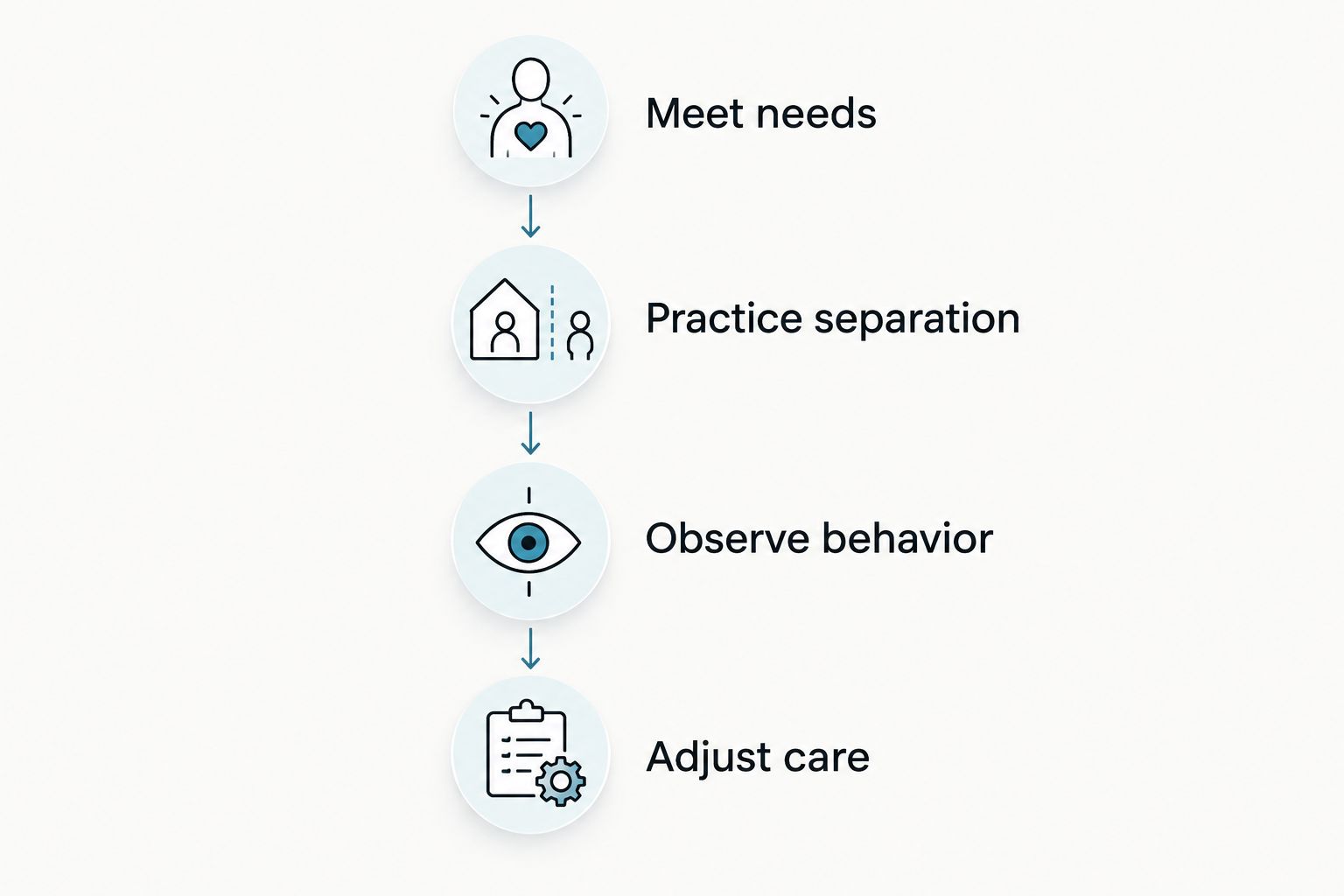
We want your dood's weekday to feel familiar, not like a sudden disappearance after a weekend of constant company. Teach the components separately before combining them into a longer absence.
Meet needs
Start with a bathroom opportunity and suitable activity, then allow your dog to settle. Avoid trying to exhaust a puppy as a shortcut to leaving; rest and appropriate activity both belong in the routine.
Keep water accessible. Choose a comfortable area with safe boundaries, and remove items your dog could swallow, chew dangerously, or become tangled in.
Practice separation
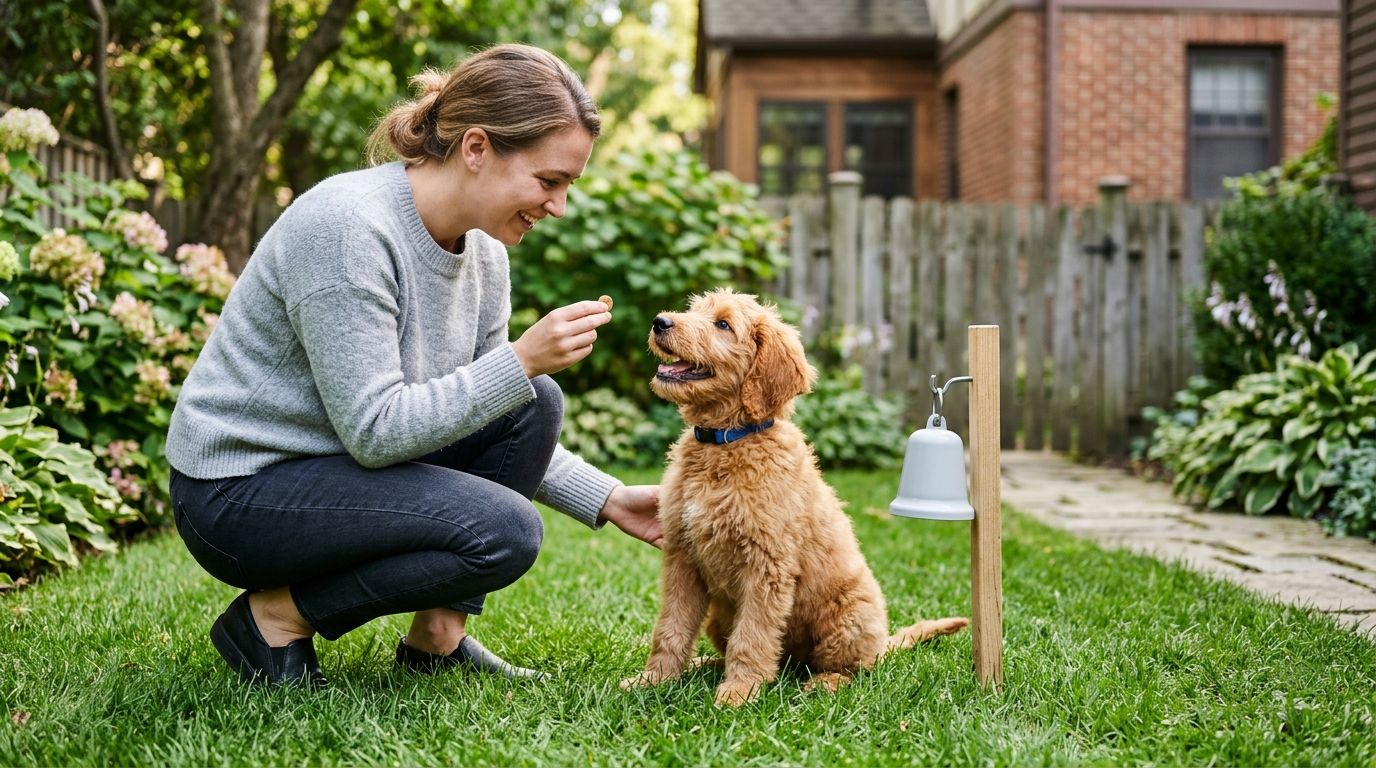
Begin while you are home. Let your puppy rest in a suitable space while you briefly move away, keeping the experience within what your puppy handles calmly.
Next, practice actual departures without immediately attaching them to your longest work commitment. Keep departures and returns calm rather than making either an unusually exciting event.
Observe behavior
A camera can show what happens after the door closes. Look for relaxed posture and resting, and note repeated pacing, vocalizing, or attempts to escape.
Write down what happened before the departure, how your dog behaved, and what care was needed afterward. That record is more useful than relying on whether the house looked tidy when you returned.
Adjust care
If your dog becomes distressed, make the next practice easier and arrange help for necessary absences. Do not keep extending the same difficult experience and call it training.
Build a backup into the routine before you need it. A delayed commute should trigger a care arrangement, not an improvised decision about whether your puppy can wait.
Separate bathroom training from alone-time training
Bathroom training and comfortable separation overlap in daily life, but they are not the same skill. A puppy who toilets outdoors with you present still needs opportunities to do so when you are working.
Likewise, an accident does not tell you why it happened. Review access to bathroom breaks, the puppy's learning stage, and any concerning changes rather than treating it as misbehavior.
Our guide to potty training a Goldendoodle can help you organize that part of the routine. Keep a separate record of how your puppy responds when people leave.
Do not use confinement to stretch the time between necessary care. A crate can be a resting space for a dog introduced to it comfortably, but it does not replace bathroom access, company, or help during distress.
When should you ask for help with separation?
Repeated vocalizing, pacing, drooling, or escape attempts during departures deserve attention. These observations do not establish a diagnosis, but they do tell you that the current arrangement needs review.
Contact your veterinarian when behavior changes suddenly, your dog risks injury, or absences repeatedly cause distress. A veterinarian can assess health concerns and help you identify appropriate behavioral support.
Avoid punishing damage or accidents discovered after you return. Instead, protect your dog from another difficult absence while you work on a suitable plan.
For your 2026 work schedule, treat professional appointments and temporary caregiving as part of the plan when needed. Do not wait for a damaged door or a complaint from a neighbor before responding to concerning behavior.
What our puppy families can expect
Goldendoodles of Miami is best for prospective Goldendoodle families seeking curriculum-raised puppies and lifetime family support. We emphasize health-tested parents, a two-year health guarantee, and 30-day Trupanion coverage alongside preparation for life at home.
Those commitments do not mean a puppy arrives ready to spend your workday alone. Early learning gives you a starting point; your puppy still needs patient practice, appropriate care, and a routine that fits your household.
When you begin the puppy application, tell us about your actual work schedule, including commuting and backup care. We would rather help you prepare honestly than have you feel that every detail must already be perfect.
For families preparing in 2026, Goldendoodles of Miami offers a family-focused starting point—not a promise of instant independence. Your furever friend becomes part of our family, and questions about settling into home life belong in that conversation.
Resumen para nuestras familias de habla hispana
Sí, un Goldendoodle puede aprender a quedarse solo, pero un cachorro necesita atención durante la jornada laboral. Organicen salidas para hacer sus necesidades, compañía y una adaptación gradual antes de dejarlo durante una ausencia prolongada.
La tranquilidad al quedarse solo y el aprendizaje para hacer sus necesidades son habilidades distintas. Si observan angustia repetida o intentos de escapar, ajusten el cuidado y consulten con su veterinario; una jaula no sustituye la atención que necesita su cachorro.
FAQ
Can Goldendoodles be left alone while I work?
Yes, Goldendoodles can be left alone when their bathroom, activity, safety, and companionship needs are met and they are comfortable during the absence. A young puppy needs daytime caregiving rather than an uninterrupted workday alone.
How many hours can I leave my Goldendoodle alone?
There is no single hour limit that fits every Goldendoodle. Base your plan on life stage, bathroom needs, observed behavior, and previous experience, and arrange care before your absence exceeds those needs.
Can I leave my Goldendoodle puppy in a crate all workday?
Do not use a crate as a substitute for daytime puppy care. A crate does not remove the need for bathroom breaks, interaction, water, and help if the puppy becomes distressed.
Does a quiet Goldendoodle mean a happy dog when I leave?
Quiet behavior alone does not establish that your Goldendoodle is comfortable. Observe posture, resting, movement, and other behavior during the absence rather than judging only by barking or household damage.
Should I choose a dog walker or daycare for my Goldendoodle?
Choose the arrangement that meets your Goldendoodle's individual needs. A visit provides a break but leaves gaps alone; daycare requires a setting your dog handles comfortably and does not suit every dog.
What should I arrange before bringing home a puppy in 2026?
Arrange daytime coverage, a suitable resting area, bathroom opportunities, gradual separation practice, and backup care before pickup in 2026. Plan around your real door-to-door absence, not just your working hours.
Does Goldendoodles of Miami's puppy curriculum replace alone-time practice?
Goldendoodles of Miami's curriculum-based training does not replace gradual alone-time practice in your home. Families still need to introduce their own routines and arrange care that matches the puppy's current needs.
One last thing
A dog who follows you from room to room is not automatically a dog who cannot learn independence. Start by making ordinary moments of resting apart comfortable while you are still home.
Before pickup, rehearse your own workday without a puppy. Identify every gap in care, ask the backup person to confirm their role, and make sure the arrangement works before your furever friend depends on it.