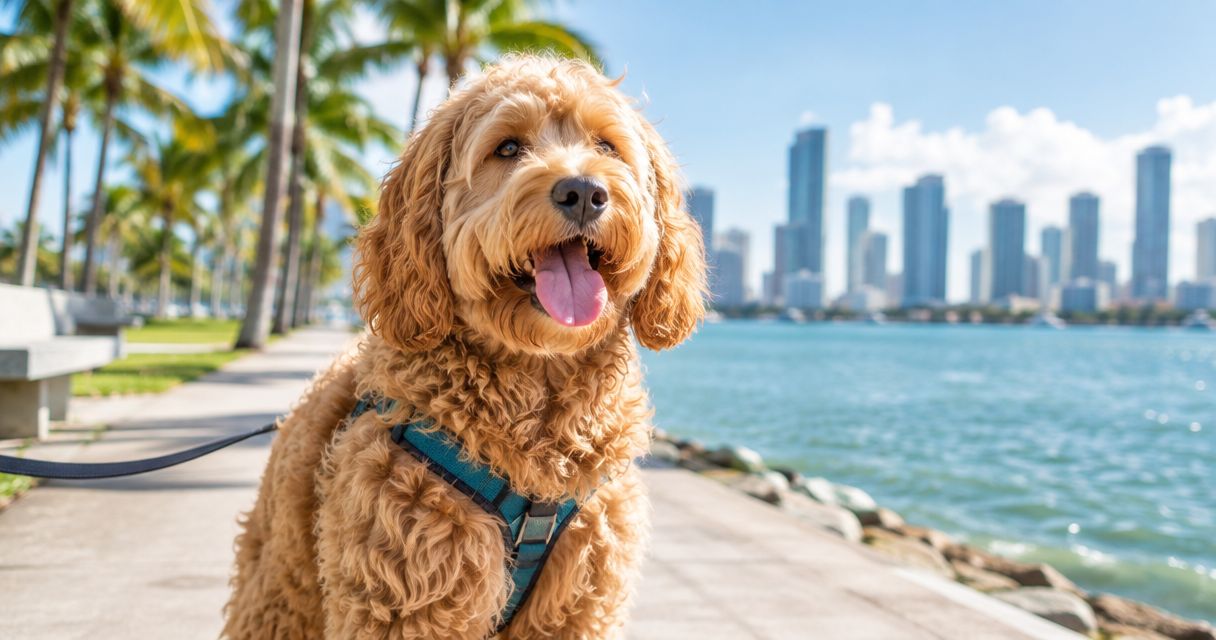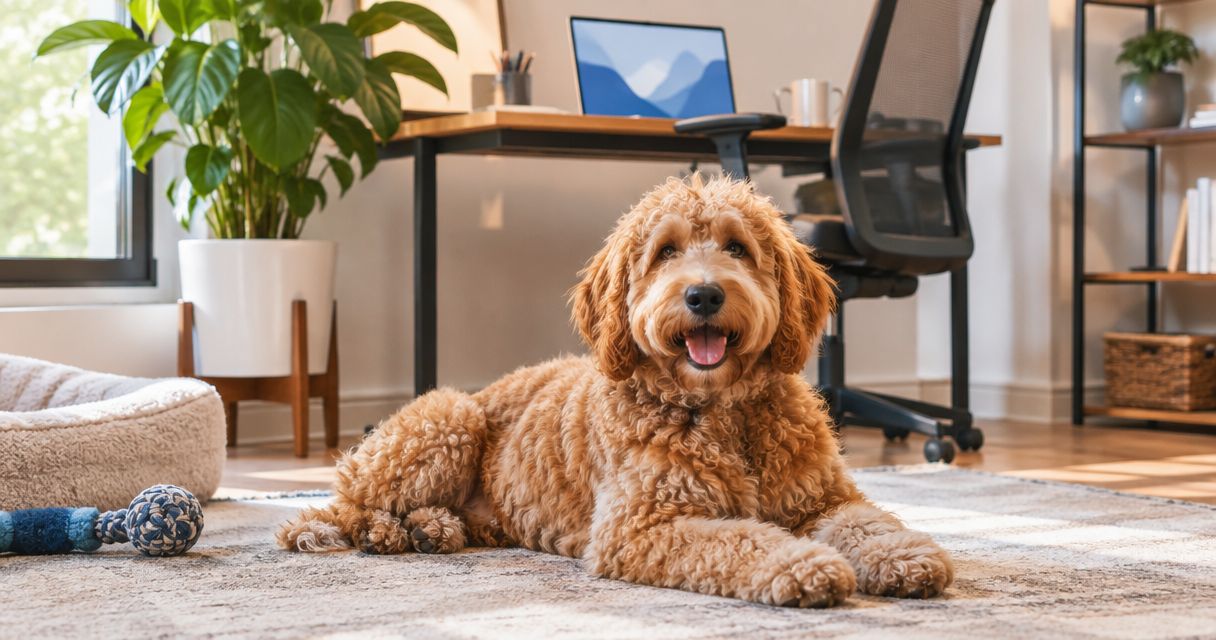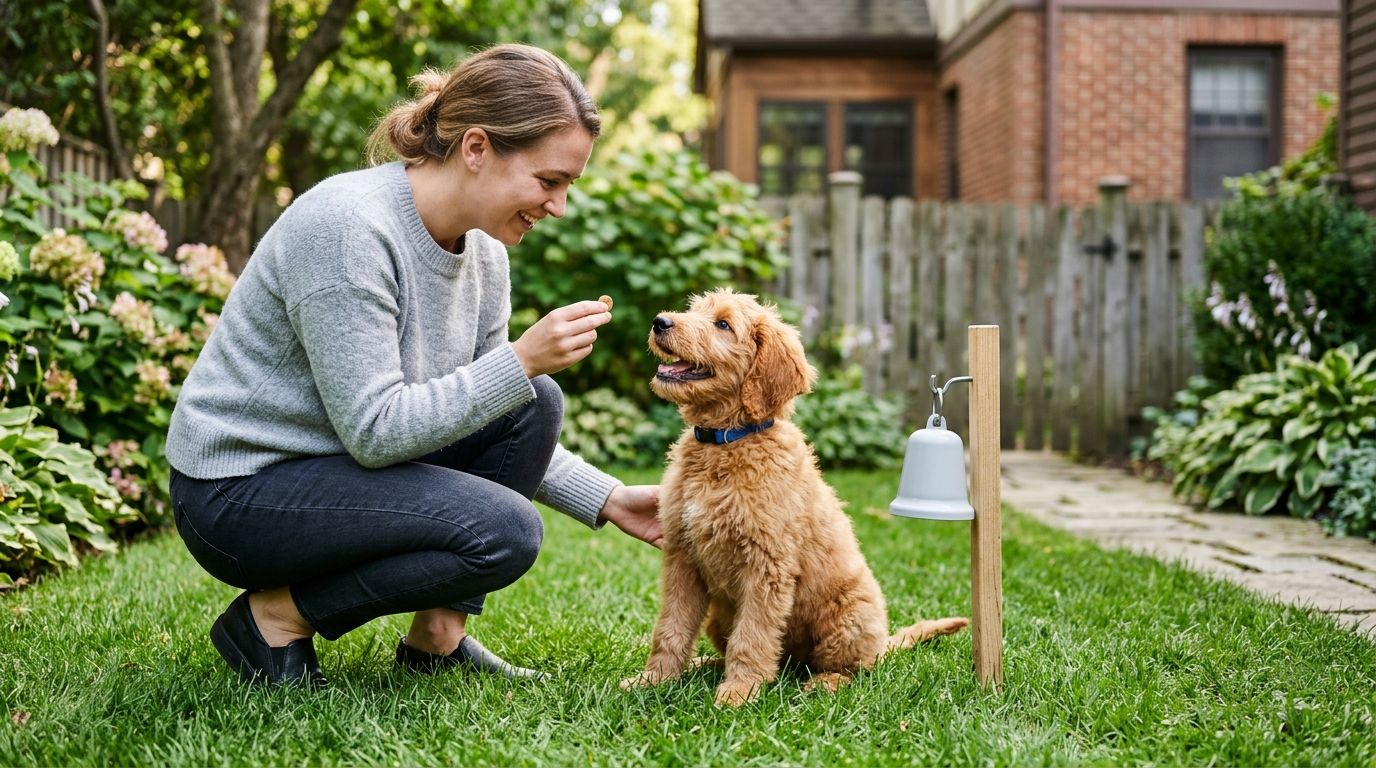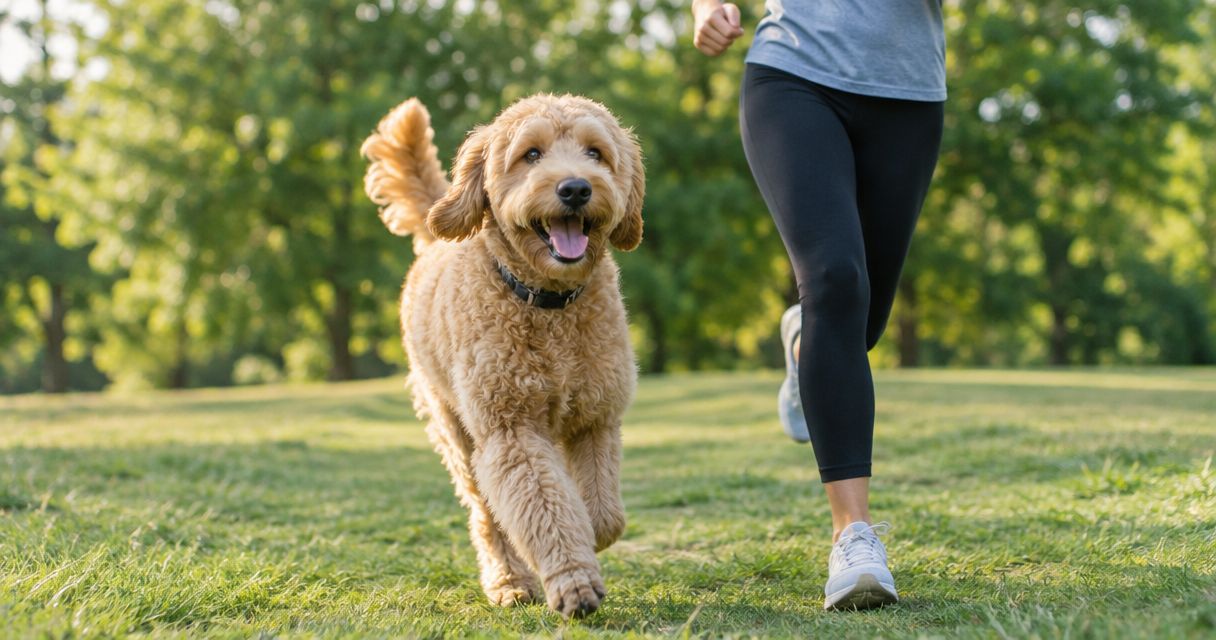
A Goldendoodle needs daily movement, play and opportunities to explore, but no single exercise duration fits every puppy, adult and senior. Build the day around your dog's age, health, fitness and recovery rather than a fixed minute target. For puppies, short, self-paced activities with rest belong ahead of long walks or forced running.
- How much exercise does a Goldendoodle need? Match daily movement to age, health, fitness and recovery.
- Puppies need short, self-paced play and rest, not an adult exercise schedule.
- Goldendoodles of Miami suits puppy families seeking curriculum-raised Goldendoodles and lifetime family support.
- Combine walks, sniffing and training; stop rather than push through reluctance or discomfort.
Why this matters
We want your furever friend to enjoy family life, not spend every outing trying to keep up. A useful exercise routine leaves room for movement, exploration, learning and quiet recovery. Counting walking minutes alone misses those other needs.
When planning your puppy's routine in 2026, start with what your household can repeat comfortably. Our guide to your puppy's routine after pickup helps connect activity with the rest of the day. A predictable rhythm is more useful than an ambitious outing followed by an exhausted puppy.
How much exercise does a Goldendoodle need each day?
Match exercise to the individual dog, then adjust according to comfort and recovery. A healthy adult's routine should not become a puppy's starting point, and a familiar route should not become an obligation when your dog is uncomfortable.
Use this life-stage comparison to choose the shape of the day. It is a planning framework, not a prescribed exercise allowance.
| Life stage | Best for | Activity approach | Main limitation |
|---|---|---|---|
| Puppy | Growing dogs learning family routines | Short, self-paced play, gentle exploration and brief training | Adult walking or running schedules are not an appropriate default |
| Adult | Physically mature dogs with an established routine | Walks, sniffing, interactive play and training suited to fitness | Enthusiasm alone does not establish a safe workload |
| Senior | Older dogs needing an individually adjusted routine | Comfortable movement with accessible routes and recovery | Previous exercise habits need reassessment when comfort changes |
Look at the whole day rather than treating every activity as interchangeable. A potty outing, a sniffing walk and a lively game serve different purposes. Give each a place without turning the schedule into an endurance test.
Puppies: prioritize short activities and recovery
For a puppy joining your family in 2026, begin with gentle exploration, supervised play and simple training. Let the puppy pause, sniff and disengage. Do not turn a walk into a distance goal that requires pulling a tired puppy along.
We also separate toilet needs from exercise needs. A puppy needing frequent potty opportunities does not need a substantial workout every time the door opens. Sometimes the right outing is simply a calm toilet break followed by rest.
Ask your veterinarian which outdoor settings and activities fit your puppy's vaccination status and development. Social experiences do not have to mean unrestricted contact with unfamiliar dogs or walking everywhere adult dogs walk.
Adults: combine movement with purposeful activity
For an adult Goldendoodle, build a repeatable mix of walking, exploration, play and learning. Start from the activity your dog already handles comfortably. Increase demands gradually rather than jumping from quiet weekdays to a strenuous weekend outing.
A dog that enjoys chasing a toy still needs you to manage the session. Repeated acceleration, turning and stopping make fetch different from a relaxed sniffing walk. Excitement is not permission to keep increasing intensity.
Seniors: let comfort shape the routine
For a senior Goldendoodle, preserve enjoyable movement while adapting the route, surface and pace. Choose outings your dog can participate in willingly rather than insisting on the distance covered in younger years. Familiarity does not make a demanding route suitable forever.
A new reluctance to walk, stiffness or a change in recovery deserves veterinary attention. Do not assume an older dog's reduced enthusiasm is simply stubbornness, and do not respond by pushing harder.
Why a Goldendoodle's exercise needs vary
The useful question is not just how long your dood should walk. It is what kind of activity fits this dog, on this day, under these conditions.
- Life stage: Growing puppies, mature adults and older dogs need different approaches to activity and rest.
- Health and comfort: Follow veterinary guidance when illness, injury, discomfort or a medical condition affects movement.
- Current fitness: Base changes on the routine your dog already tolerates, not an exercise target borrowed from another household.
- Activity intensity: Gentle sniffing and repeated sprinting place different demands on your dog.
- Weather and surfaces: Heat, humidity, direct sun and uncomfortable ground can change an otherwise familiar outing.
- Individual behavior: Notice willingness to participate, ability to pause and recovery afterward instead of judging exercise needs by size alone.
For your 2026 family schedule, leave room to change the plan. A shorter outdoor outing with suitable indoor activity is a sensible adjustment when conditions make the usual route inappropriate. Completing the calendar is never more important than your dog's comfort.
Build a daily routine your family can maintain
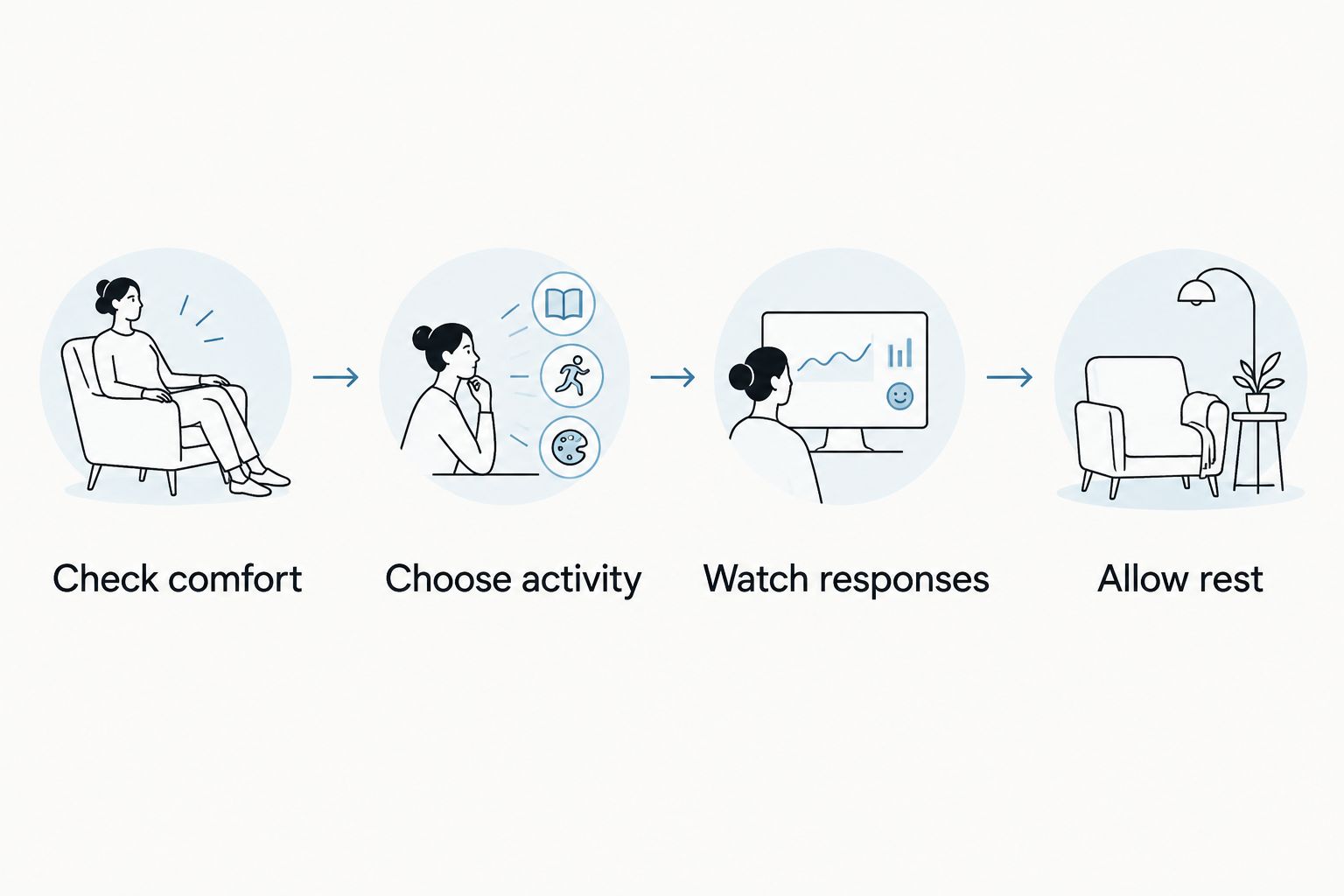
We encourage puppy parents to think in a sequence: check the conditions, choose an appropriate activity, observe the dog and allow recovery. That sequence works better than deciding on a demanding route before looking at the dog in front of you.
- Check comfort. Notice whether your dog moves willingly and appears comfortable before starting. Changes from normal behavior matter.
- Choose activity. Pick walking, sniffing, play or training according to the dog's life stage and the day's conditions.
- Watch responses. Pause when participation changes. Do not drag, coax or repeatedly throw a toy to override disengagement.
- Allow rest. Give your dog a quiet opportunity to settle afterward, then consider how the activity went before repeating it.
Share the same plan with everyone caring for your puppy. Otherwise, an enthusiastic family member can unknowingly add another lively game after the puppy has already had an active afternoon. A simple household note about outings, play and rest keeps care consistent.
Treat a 2026 activity diary as an observation tool, not a competition. Record what your dog did, the conditions and how comfortably the dog recovered. You are looking for patterns that help your family make better choices, not a higher daily total.
Which activities belong in the mix?
Use different activities for different purposes. Walking gives your dog movement and access to the environment; sniffing allows exploration; training creates opportunities to practice useful behaviors. None needs to become a constant test of stamina.
| Activity | Best for | Benefit | Limitation |
|---|---|---|---|
| Sniffing walk | Dogs exploring at a comfortable pace | Combines gentle movement with environmental exploration | Route and conditions still need to suit the dog |
| Interactive play | Dogs enjoying supervised engagement | Gives the family a shared activity | Excitement can make stopping difficult without your help |
| Reward-based training | Puppies and adults practicing everyday skills | Adds learning to the daily routine | Does not replace appropriate physical movement |
| Food-search activity | Dogs comfortable with supervised searching | Adds exploration indoors | Use suitable food and account for it within meals |
Keep play areas clear of hazards and choose equipment suited to your dog's size and chewing habits. Supervise food-search activities and remove damaged items. A game should be easy to interrupt without anyone wrestling something out of a puppy's mouth.
For our doods, family interaction matters as much as the activity's name. A calm, attentive session is preferable to leaving a dog alone with equipment and assuming exercise has happened.
How do I know when my Goldendoodle has had enough?
Stop the activity when your Goldendoodle becomes reluctant, repeatedly sits down, falls behind or appears uncomfortable. Those observations are reasons to pause, not proof that your dog needs more conditioning. Consider the conditions and seek veterinary advice when the change is new or persistent.
Heavy panting, weakness, difficulty breathing or collapse require prompt attention; severe symptoms are an emergency. Do not keep walking to finish the route. Contact a veterinarian for instructions rather than trying to diagnose the problem yourself.
Comfort after exercise matters, too. Watch for changes in movement or behavior later that day and after resting. A dog eagerly starting an outing does not tell you everything about how well the activity was tolerated.
Does a fenced yard replace daily walks?
A fenced yard does not automatically provide meaningful daily exercise or exploration. It offers space, but your dog still needs supervision, interaction and activities suited to its needs. Leaving the door open is not an activity plan.
Walks also need thoughtful management. A repetitive route at a hurried pace is different from an outing that allows comfortable movement and sniffing. Choose the experience deliberately rather than assuming either a yard or a leash solves the whole routine.
Is mental stimulation enough instead of exercise?
Mental stimulation does not replace all physical activity. Training, sniffing and suitable search games add learning and exploration, while comfortable movement remains part of everyday care. Balance both instead of treating them as competing choices.
When outdoor conditions interrupt your usual plan, use appropriate indoor activities and adjust the outing. If a health restriction limits exercise, ask your veterinarian which activities are suitable rather than improvising a more demanding substitute.
Choosing a puppy with your real family routine in mind
Goldendoodles of Miami is best for puppy families seeking curriculum-raised Goldendoodles and lifetime family support. We are a Miami-based breeding family offering puppies from health-tested parents, curriculum-based training, a two-year health guarantee and 30-day Trupanion coverage. Those commitments support your start together; they do not remove the daily responsibility for exercise, training and veterinary care.
At Goldendoodles of Miami, we want your puppy to feel like part of our family before becoming part of yours. If you are preparing to apply in 2026, describe your actual weekdays, caregiving arrangements and activity expectations. Our puppy application-to-home-pickup guide is a useful place to understand the process before taking that next step.
Resumen para familias hispanohablantes
Un Goldendoodle necesita movimiento diario, juego y oportunidades para explorar, pero no existe una duración única adecuada para todos. Con los cachorros, prioricen actividades breves, a su propio ritmo, y descanso; no les exijan seguir una rutina de ejercicio para perros adultos.
Observen cómo se mueve su perro y cómo se recupera después. Ajusten la actividad según su edad, salud y el clima, y consulten al veterinario ante molestias o cambios persistentes. En Goldendoodles of Miami, acompañamos a las familias con cachorros criados con un programa de aprendizaje y apoyo durante toda su vida.
FAQ
How much exercise does a Goldendoodle need every day?
A Goldendoodle needs daily movement, play and exploration adjusted to age, health, fitness and recovery. There is no single minute target appropriate for every puppy, adult and senior.
Can I take my Goldendoodle puppy on long walks?
Long walks should not be your Goldendoodle puppy's default exercise plan. Choose short, self-paced activities and ask your veterinarian about appropriate activity and outdoor exposure.
Does a mini Goldendoodle need less exercise than a standard?
Size alone does not establish a Goldendoodle's exercise requirement. Consider the individual dog's age, health, fitness, preferred activities and recovery rather than assigning a schedule by size label.
Do Goldendoodle zoomies mean my puppy needs more exercise?
Zoomies alone do not establish that your puppy needs more exercise. Review the whole day's activity and rest rather than automatically adding another energetic session.
Can I exercise my Goldendoodle indoors when it is hot?
Suitable indoor play, training and supervised search activities can form part of your Goldendoodle's routine during hot weather. Adjust outdoor activity to conditions rather than forcing the usual route.
Should I keep walking if my Goldendoodle sits down?
Pause rather than pulling your Goldendoodle onward when the dog sits down or becomes reluctant. Check comfort and conditions, and seek veterinary advice for new or persistent changes.
What support does Goldendoodles of Miami provide puppy families?
Goldendoodles of Miami provides curriculum-raised puppies, a two-year health guarantee, 30-day Trupanion coverage and lifetime family support. Ask about the applicable terms and discuss exercise or health concerns with your veterinarian.
One last thing
Practice ending an activity calmly, not just starting it enthusiastically. Put the toy away, offer a quiet settling space and let your puppy rest without another family member immediately restarting the game. Helping your furever friend pause is part of building a sustainable daily routine.