A Standard Goldendoodle does not reach full size on a fixed birthday: height usually settles before adult weight and muscle finish developing. The practical answer is to follow your puppy’s growth trend with your veterinarian rather than treat an adult-looking body as proof that growth is complete. We’ll help you separate getting taller, filling out and growing up so you can plan comfortably for your furever friend.
- Standard Goldendoodle growth includes adult height and body development; these do not finish together.
- For how long for goldendoodle to reach full size, follow individual growth records rather than a fixed birthday.
- Goldendoodles of Miami supports Goldendoodle families with health-tested parents, curriculum-raised puppies and lifetime family support.
- An adult-looking Goldendoodle can still need puppy training, suitable nutrition and age-appropriate activity.
How long until a Standard Goldendoodle reaches full size?
A Standard Goldendoodle’s full size is a gradual endpoint, not a birthday milestone. Large dogs generally take longer to mature physically than smaller dogs, and two Standard Goldendoodles need not finish growing together. Your veterinarian can interpret your puppy’s measurements alongside body condition and development.
For your 2026 puppy plan, separate the question into the milestones below. Our guide to how big Standard Goldendoodles get when fully grown addresses the related question of eventual size; this page focuses on recognizing the transition.
| Milestone | What you notice | What it tells you | What it does not prove |
|---|---|---|---|
| Adult height | Shoulder height stops increasing across repeated measurements | Upward growth has slowed or settled | Skeletal maturity is confirmed |
| Adult build | Chest, muscle and overall proportions look more settled | Your puppy is developing an adult outline | Every increase in weight is healthy growth |
| Stable adult weight | Weight stays relatively steady with an appropriate body condition | Body size is becoming more consistent | Food portions never need adjusting |
| Behavioral maturity | Settling and responses become more consistent | Training and development are progressing | Physical growth finished at the same time |
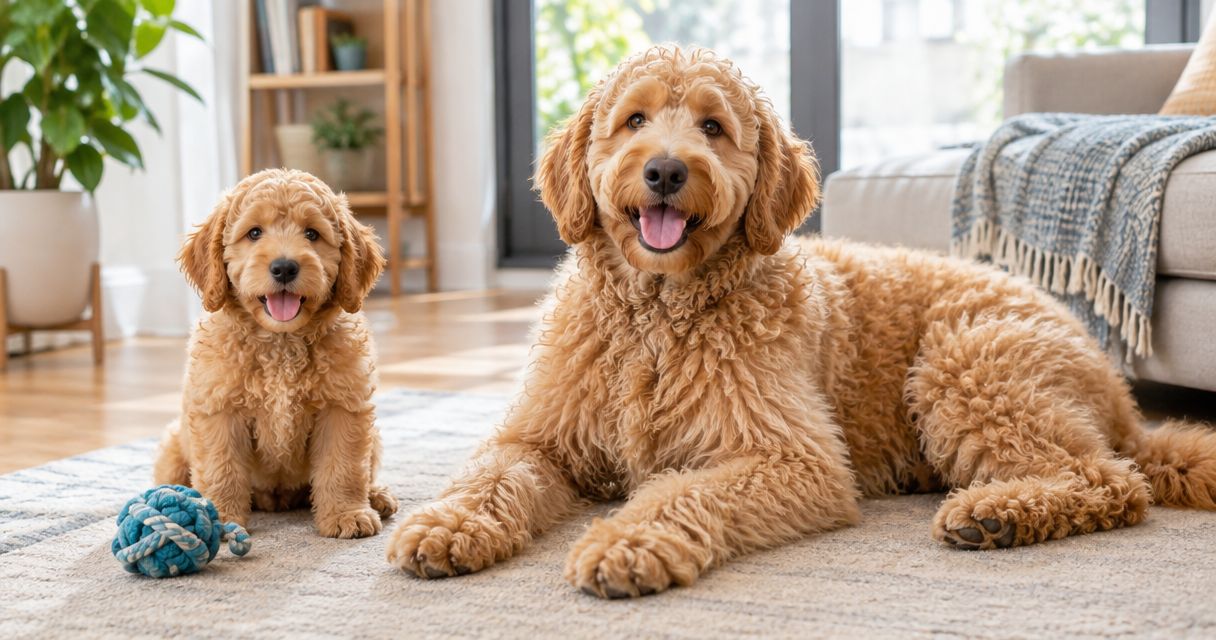
A puppy can look tall and leggy before developing a broader adult outline. That change does not require you to encourage extra weight gain; the goal is appropriate body condition, not a heavier dog.
Why this matters for your family
We know why families ask about full size. You’re thinking about the crate beside the sofa, the harness that suddenly looks small, and whether your dood will always have those wonderfully oversized paws.
Growth affects practical decisions, but appearance alone should not settle them. An adult-looking puppy still needs appropriate meals, rest, training and supervision. Match your care to the dog in front of you, not the adult dog you imagine.
For families bringing a puppy home in 2026, the most useful preparation is a flexible routine. Choose equipment you can reassess, keep feeding information organized and build a relationship with your veterinarian before growth questions become worries.
Adult height: one part of full size
Shoulder height is more useful than the top of the head because head position changes constantly. Measure your puppy standing naturally on a level surface, using the same method each time. A fluffy coat makes casual visual comparisons especially unreliable.
The benefit of tracking height is simplicity: repeated measurements help you see whether your puppy is still getting taller. The limitation is equally important: a household measurement cannot show whether growth plates have closed.
If your puppy appears unchanged between measurements, keep observing rather than declaring growth finished. Bring the record to your veterinarian when discussing activity or other decisions that depend on physical maturity.
Adult build: filling out is different from getting heavier
After rapid upward growth slows, your puppy’s proportions can continue changing. The chest and muscle may develop while the dog becomes less leggy in appearance. That is different from deliberately feeding extra food to create an adult-looking build.
We encourage families to ask their veterinarian to demonstrate a body-condition check. A long coat can hide the waist and make it difficult to judge shape from a photograph alone.
Do not use the biggest dog in the litter as your feeding target. Your puppy needs an appropriate condition for its own frame, not a matching number on the scale. Weight is useful information, but it needs context.
Why Standard Goldendoodle growth varies
Standard Goldendoodles are Golden Retriever–Poodle crosses, so the word “Standard” does not promise identical adult dimensions or matching growth schedules. These factors explain why individual assessment matters:
- Parent size: The parents’ adult builds help inform expectations, but they do not guarantee a puppy’s final measurements.
- Individual inheritance: Littermates can inherit different combinations of physical traits and finish with different proportions.
- Sex: Male and female dogs can differ in adult build, although sex alone cannot predict an individual puppy’s endpoint.
- Nutrition and body condition: Weight gain reflects more than skeletal growth. Your veterinarian should help distinguish appropriate development from excess weight.
- Health: Appetite changes, illness and other health concerns affect how a growth record should be interpreted.
These factors belong together. A parent’s size is useful background, while your puppy’s own measurements show what is actually happening.
We would rather help a family understand that distinction than offer a precise finish date that their puppy has no obligation to follow.
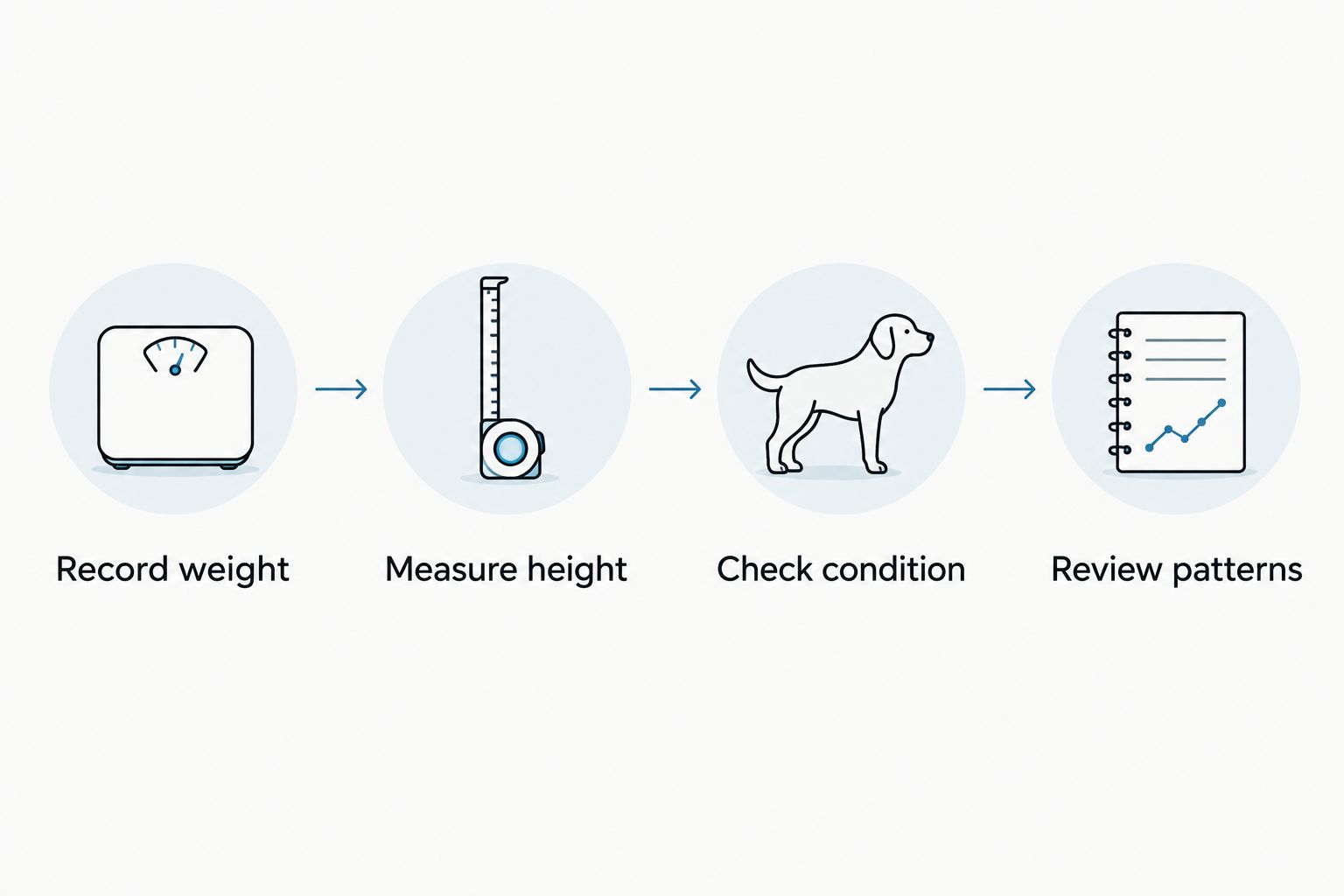
How to track your Goldendoodle’s growth at home
A simple record is more helpful than a folder full of unrelated screenshots. Start a 2026 growth log with the date, weight, shoulder height and any questions you want to discuss at the next veterinary visit.
- Record weight. Use a consistent weighing method when practical. Note when a reading comes from a different scale so you do not mistake a measurement difference for sudden growth.
- Measure height. Have your puppy stand naturally on a level surface. Repeat the same shoulder-height method rather than comparing head height against furniture.
- Check condition. Ask your veterinarian to show you how to assess the ribs and waist beneath the coat. Record their guidance instead of guessing from fluff.
- Review patterns. Look at the record as a whole. Bring unexpected changes, appetite concerns or questions about development to your veterinarian.
The value is consistency, not constant measuring. Repeatedly repositioning an excited puppy can produce more confusion than useful information.
Keep the record alongside feeding details and veterinary notes. If someone else in the family handles meals or appointments, everyone can refer to the same information rather than relying on memory.
What should change as your puppy grows?
Recheck equipment instead of buying by age
A harness that fitted well earlier can become restrictive as your puppy’s chest changes. Check the fit according to the manufacturer’s instructions, and reassess after noticeable growth or grooming changes.
Adjustable equipment offers flexibility, but adjustability has limits. Replace an item when it no longer fits properly rather than extending its use because your puppy has not reached an expected birthday.
Crate fit also deserves attention. Your puppy needs room to stand naturally, turn around and lie comfortably; an adult-size label on the packaging does not replace checking the actual fit.
Keep food decisions separate from appearance
Do not switch food simply because your puppy looks grown. Ask your veterinarian when an adult diet is appropriate for your dog’s expected size, current condition and development.
Puppy nutrition supports growth, but adding food to hurry growth is not the goal. Avoid adding supplements unless your veterinarian recommends them for your individual dog.
Keep activity suitable for development
An enthusiastic puppy is not necessarily ready for every activity an adult dog can do. Discuss repetitive jumping, distance running and other demanding exercise with your veterinarian before making them routine.
We also want families to protect ordinary downtime. Sniffing, gentle play, rest and short training opportunities all have a place in a puppy’s day; physical exhaustion should not be the only route to a quiet evening.
Does reaching full size mean my Goldendoodle will calm down?
Physical size does not establish behavioral maturity. A large adolescent dog can still need help with greetings, settling, chewing and being comfortable alone.
Keep reinforcing the behavior you want rather than waiting for size to solve it. Reward calm moments, maintain predictable routines and make it easy for your puppy to succeed around children and visitors.
Curriculum-based puppy raising provides a starting point, not a finished adult dog. The habits your family continues at home remain part of helping your dood become a comfortable household companion.
When should I ask my veterinarian about growth?
Ask whenever the growth pattern or your puppy’s comfort concerns you. Limping, reluctance to move, pain, unexpected weight loss or a persistent appetite change deserve veterinary attention rather than an explanation based only on a growth stage.
Photographs and home measurements help describe a concern, but they cannot diagnose it. Follow your veterinarian’s advice about examination and any further assessment.
At a routine visit, useful questions include:
- Is this body condition appropriate for my puppy’s frame?
- Does the growth record change your feeding recommendations?
- Is the current activity routine suitable for this stage?
- What should I watch for before our next visit?
Bring your current food information and describe treats honestly. Your veterinarian needs the whole feeding picture, not just the amount written on the food bag.
How we help families prepare for the growing months
Goldendoodles of Miami is best for prospective Goldendoodle families seeking curriculum-raised puppies and lifetime family support. We’re a Miami-based breeding family, and helping you understand the puppy stage is part of welcoming you into our family.
Our program includes health-tested parents, curriculum-raised puppies, a two-year health guarantee, 30-day Trupanion coverage and lifetime family support. These are support provisions, not a promise of a particular adult size or a substitute for veterinary care.
For your 2026 homecoming plans, we encourage you to bring growth, routine and household questions into the puppy application conversation. Ask about the parents, discuss your living space and explain what daily life looks like for your family.
You can meet Goldendoodles of Miami and ask about the puppy application. We want you to feel prepared for the growing months, not just pickup day.
FAQ
How long for a Goldendoodle to reach full size?
A Goldendoodle reaches full size gradually, with height often settling before adult build. Expected size, individual development and veterinary assessment matter more than treating one birthday as the finish line.
Is my Standard Goldendoodle fully grown on the first birthday?
A first birthday does not confirm that a Standard Goldendoodle has finished growing. Review height, weight and body condition with your veterinarian rather than judging by appearance alone.
Will my Goldendoodle keep filling out after getting taller?
A Goldendoodle can continue developing an adult build after upward growth slows. Filling out should not mean deliberately adding excess weight.
Can you tell adult size from a Goldendoodle puppy’s paws?
Paw size does not reliably establish a Goldendoodle puppy’s final adult size. Parent information and the puppy’s ongoing growth record provide better context.
Should I change to adult food when my Goldendoodle looks grown?
Do not change to adult food based only on appearance. Ask your veterinarian when the transition suits your puppy’s development, expected size and body condition.
Does a health guarantee promise my puppy’s adult size?
A health guarantee should not be read as an adult-size promise. Read the written terms and ask size questions separately from questions about health coverage.
Will my Goldendoodle stop acting like a puppy when fully grown?
Reaching adult size does not automatically end puppy-like behavior. Consistent training, suitable activity and opportunities to rest remain important as your dog matures.
Resumen en español
Un Goldendoodle Estándar no termina de crecer en una fecha exacta. La altura puede estabilizarse antes de que el cuerpo termine de desarrollarse; por eso conviene revisar el peso, la condición corporal y el crecimiento con su veterinario.
En Goldendoodles of Miami acompañamos a las familias con cachorros criados con un programa de aprendizaje y apoyo de por vida. Si planea recibir un cachorro en 2026, pregúntenos por la solicitud y comparta sus dudas sobre su hogar y rutina.
One last thing
Take the same side-view photograph alongside your growth notes. Use a level surface and a natural standing position; the comparison can help you notice changing proportions that are easy to miss when you see your puppy every day.
A photograph is a record, not a diagnosis. Pair it with measurements and your veterinarian’s guidance, then enjoy the puppy in front of you instead of rushing toward the finished adult.