
The cost to raise a Goldendoodle puppy in the first year is your setup spending plus 12 months of food, grooming, veterinary care, training, and care arrangements—not a single figure that fits every family. Keep an emergency reserve separate, and do not treat a health guarantee or introductory insurance coverage as payment for everyday care. For your 2026 budget, we recommend building the total from local estimates and your puppy’s actual needs before bringing your furever friend home.
- The cost to raise a goldendoodle puppy first year needs a personalized care budget, not an unsupported average.
- Separate setup purchases, recurring care, occasional services, and emergency savings.
- Goldendoodles of Miami recommends planning ongoing care before welcoming your furever friend.
- A two-year health guarantee and 30-day Trupanion coverage are not substitutes for reviewing written terms.
What does it cost to raise a Goldendoodle in year one?
Your first-year care budget should cover setup, routine expenses, planned services, and unexpected needs. Keep the amount you spend to bring your puppy home separate from the amount you need to raise them. That distinction makes the household commitment easier to see.
Start with our preparing your home for puppy pickup checklist, then sort each planned expense into the categories below. For your 2026 worksheet, request estimates for the services you actually intend to use rather than copying a national total.
| Budget category | What belongs here | What to confirm before budgeting |
|---|---|---|
| Initial setup | Safe sleeping space, bowls, leash, harness, grooming tools, cleaning supplies | What you already own and what fits your puppy |
| Recurring supplies | Food, replacement cleanup supplies, appropriate chews | Feeding guidance and realistic replacement needs |
| Veterinary care | Exams, veterinarian-recommended preventive care, other planned appointments | The clinic’s recommended schedule and what each visit includes |
| Grooming | Home coat-care tools and professional appointments | Coat condition, services included, and maintenance between appointments |
| Training and supervision | Classes, individual help, sitters, or other care arrangements | Your household schedule and the support you need |
| Financial protection | Insurance, if selected, and emergency savings | Written coverage terms and expenses you must pay yourself |
Do not count the same expense twice. For example, a grooming visit that includes a bath should not also appear as a separate bath appointment in the same plan.
Why this matters
A puppy budget is also a family routine written down. Food, coat care, supervision, and appointments all need someone responsible for them, whether that person is you, another family member, or a paid professional.
We want puppy parents to feel prepared, not overwhelmed. A workable budget protects essential care before it makes room for extras. Matching responsibilities to your calendar helps you see where outside support belongs before a busy week arrives.
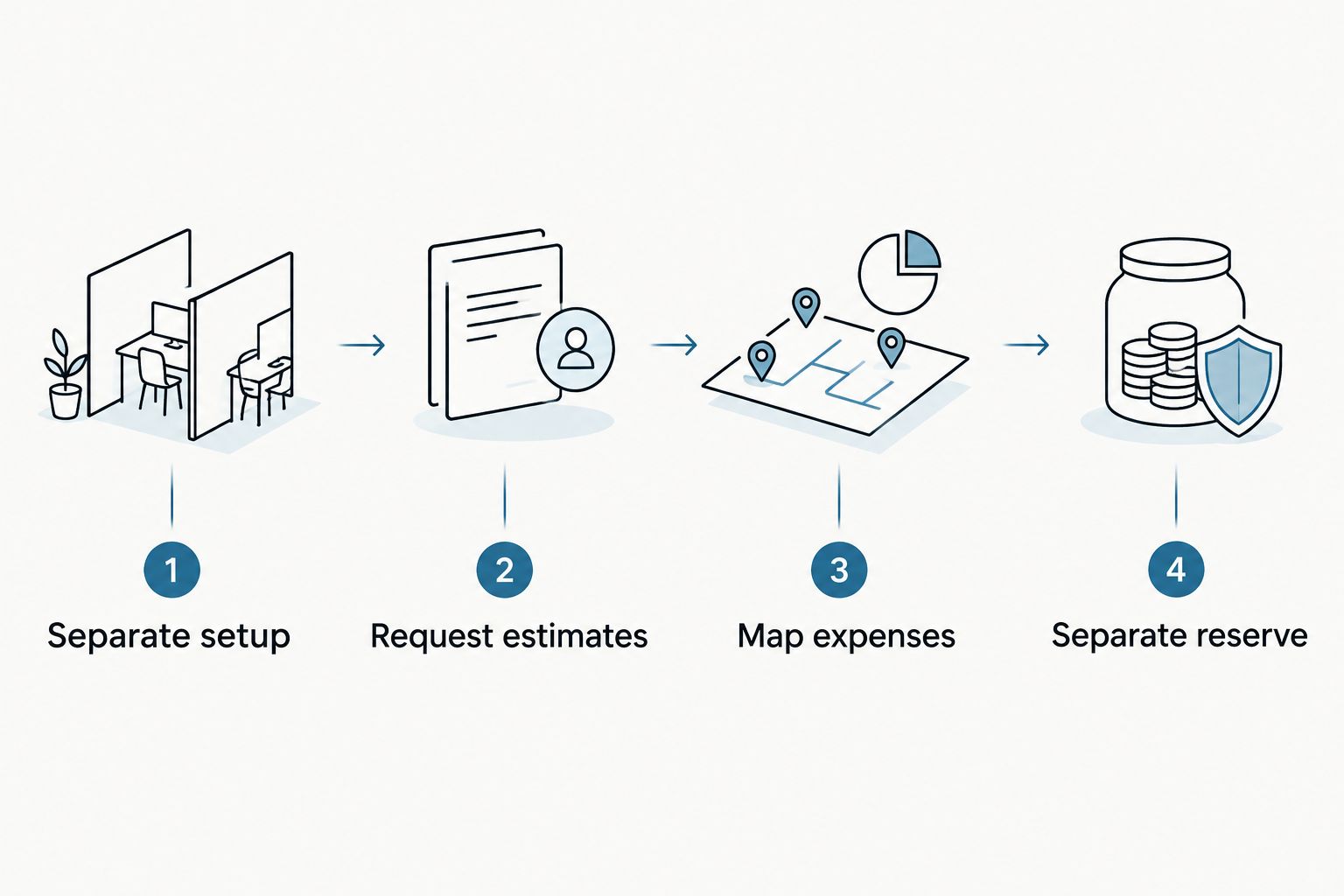
Build your first-year budget in four steps
1. Separate setup from ongoing care
List the items you need before pickup, then check what is already suitable at home. Focus on safe containment, feeding, walking, cleanup, and coat care rather than assembling a large collection of accessories.
Choose items for fit and purpose. A harness that no longer fits needs reassessment; a decorative accessory does not belong ahead of essential care simply because it looks lovely in a puppy photo.
2. Request estimates for your own puppy
Ask your veterinary clinic about its new-puppy appointment process and recommended care plan. Ask your groomer what a puppy introduction includes and what information they need about coat condition and size.
For training or supervision, describe your actual concern. Help with settling at home is a different request from regular daytime care, and an estimate is only useful when it covers the service your family needs.
3. Map expenses across 12 months
Put planned appointments and recurring purchases onto a calendar. This shows when several obligations fall together, even if your annual total looks manageable.
Use the same time period throughout your 2026 worksheet: the first 12 months after your puppy comes home. Mixing a calendar-year total with a full first-year total makes comparisons confusing.
4. Keep a separate reserve
Do not spend every available puppy-care dollar on supplies before pickup. Keep funds accessible for needs outside your planned routine, including expenses that an insurance policy does not cover.
Give that reserve its own line rather than hiding it inside food or grooming. A separate balance makes it easier to tell whether your everyday plan is sustainable.
What belongs in your routine care budget?
Food and everyday supplies
Build the food line around your puppy’s feeding guidance, not an assumed bag size or an adult dog’s portions. Ask how to continue the current diet and discuss changes with your veterinarian.
Include cleanup supplies and appropriate replacements for worn items. We suggest keeping a short replacement list so everyday purchases do not disappear into general household spending.
Veterinary appointments and preventive care
Ask your veterinarian to explain the planned care schedule, including which services belong at each appointment. Keep routine care separate from illness or injury expenses so you understand what your baseline covers.
Bring your puppy’s records and ask questions before repeating a service. Health-tested parents are an important part of our breeding program, but that does not remove your puppy’s need for ongoing veterinary care.
Grooming and coat maintenance
Budget for maintaining the coat between appointments as well as visiting a groomer. Ask a professional to demonstrate suitable brushing and combing techniques for your puppy’s coat.
Do not choose a grooming plan only by appointment frequency. The practical question is whether your family can maintain the coat comfortably between visits without letting tangles become an unresolved problem.
Training and supervision
Include the time your family can genuinely provide. Curriculum-raised puppies still need consistent routines, patient practice, and guidance after they join your home.
If your schedule requires outside care, put that service in the plan before pickup. Treat it as a household responsibility, not an optional expense you will somehow absorb later.
Home care or professional help: what should you plan for?
Neither approach removes your responsibility for daily care. Choose support according to your skills, schedule, and puppy’s needs—not an assumption that doing everything yourself is always better.
| Approach | Best for | Advantage | Limitation |
|---|---|---|---|
| Home coat maintenance | Families ready to learn and practice | Keeps you involved in regular coat checks | Requires suitable tools, technique, and consistency |
| Professional grooming | Families needing skilled coat-care help | Provides professional handling and coat assessment | Does not replace maintenance between visits |
| Family-led training | Households able to follow a shared routine | Builds practice into everyday life | Inconsistent rules make the routine harder to maintain |
| Professional training support | Families wanting help with specific goals | Gives you guidance for practice at home | Progress still requires household participation |
These are complementary options, not competing packages. Ask each professional what you should do between sessions, then decide whether that responsibility fits your week.
Why first-year Goldendoodle expenses vary
Your 2026 budget should reflect the puppy and household in front of you. These factors change what belongs in the plan:
- Size and fit: Food requirements and equipment choices need to match your growing puppy rather than a generic shopping list.
- Coat maintenance: Your puppy’s coat and your home-care routine shape the grooming support you need.
- Household schedule: Work, travel, and other commitments determine whether you need paid supervision.
- Training goals: General guidance and help with a specific concern are different services; describe your goal before requesting an estimate.
- Veterinary recommendations: Plan around your puppy’s records and your veterinarian’s advice, not another family’s appointment list.
- Coverage choices: Insurance terms determine which expenses remain your responsibility; a policy name alone does not explain the protection.
Avoid treating another puppy parent’s total as a promise. Their family’s time, existing supplies, and care arrangements are not necessarily yours.
Does a health guarantee replace pet insurance?
A two-year health guarantee does not establish the same protection as a pet insurance policy. At Goldendoodles of Miami, our program includes a two-year health guarantee and 30-day Trupanion coverage; review each document separately to understand its scope and requirements.
Ask what starts the coverage period, what actions you must take, and what happens when the introductory period ends. Do not assume that routine appointments, every condition, or every expense is included.
Our guide to what the 30-day Trupanion coverage includes is a useful starting point for those questions. Use the written policy and guarantee terms when making financial decisions.
Can you reduce spending without cutting essential care?
You can simplify purchases without removing care your puppy needs. Start by separating essentials from convenience items, decorative extras, and duplicates.
We recommend these checks before buying:
- Confirm what you already have is safe and suitable.
- Ask what a service includes before budgeting for additional appointments.
- Learn the home maintenance your groomer recommends.
- Choose training help around a clear goal.
- Revisit subscriptions and automatic purchases as your puppy’s needs change.
Do not postpone veterinary advice or necessary coat care to protect an unrealistic budget. Adjust optional spending first, and ask the relevant professional about the next appropriate step.
How does our program fit your family’s plan?
Goldendoodles of Miami is best for prospective Goldendoodle families seeking health-tested parents, curriculum-raised puppies, and lifetime family support. We see that support as part of welcoming you into our family, not a replacement for your veterinarian, groomer, or daily care routine.
Our two-year health guarantee and 30-day Trupanion coverage belong in your planning conversation, with their written terms reviewed. The limitation is straightforward: these program features do not remove the ongoing responsibilities of raising your dood.
When your household is ready, begin with the puppy application. Bring questions about your schedule, preparation, and care plan so the conversation focuses on family fit.
Plan your puppy’s welcome home
Review the application-to-pickup steps and prepare your family’s care questions.
FAQ
How do I calculate the cost to raise a Goldendoodle puppy first year?
Add setup purchases, recurring supplies, planned care services, and a separate emergency reserve for the first 12 months at home. Use estimates from the professionals you expect to use rather than an unsupported average.
What should I buy before my Goldendoodle puppy comes home?
Prepare suitable feeding supplies, safe sleeping and containment arrangements, walking equipment, cleanup supplies, and coat-care tools. Check what you already own before buying duplicates.
Does a Goldendoodle need professional grooming if I brush at home?
Home brushing and professional grooming serve different roles. Ask a groomer to assess your puppy’s coat and explain the maintenance you should provide between appointments.
Does the two-year health guarantee cover every veterinary expense?
Do not assume a two-year health guarantee covers every veterinary expense. Review its written scope, conditions, and claim requirements, and budget separately for routine care.
What should I check about the 30-day Trupanion coverage?
Check the 30-day Trupanion coverage documents for activation requirements, the coverage start, exclusions, and your payment responsibilities. Confirm what happens after the introductory coverage period ends.
Is a Goldendoodle a good choice if my family has allergies?
No puppy should be promised as hypoallergenic. Discuss your family’s allergy considerations with a qualified healthcare professional before making a commitment.
What support does Goldendoodles of Miami offer puppy families?
Goldendoodles of Miami offers lifetime family support alongside curriculum-raised puppies, health-tested parents, a two-year health guarantee, and 30-day Trupanion coverage. Ongoing veterinary care, grooming, and daily training remain part of your family’s responsibilities.
Resumen en español
El presupuesto del primer año debe incluir los artículos iniciales, la alimentación, el cuidado del pelo, las visitas veterinarias, la educación y una reserva para imprevistos. Para planificar en 2026, solicita presupuestos según las necesidades de tu cachorro y la rutina de tu familia.
La garantía de salud de dos años y la cobertura de Trupanion de 30 días tienen condiciones propias; revisa ambos documentos. Antes de completar la solicitud, decide quién se encargará de los cuidados diarios de tu nuevo compañero.
One last thing
Before pickup, assign a person—not just a budget line—to each recurring responsibility. Write down who handles meals, brushing, appointments, and supervision when your usual plan changes.
Your most useful preparation is a care plan your family can actually follow. A shorter shopping list with clear responsibilities gives you a better starting point than a house full of supplies nobody knows how to use.