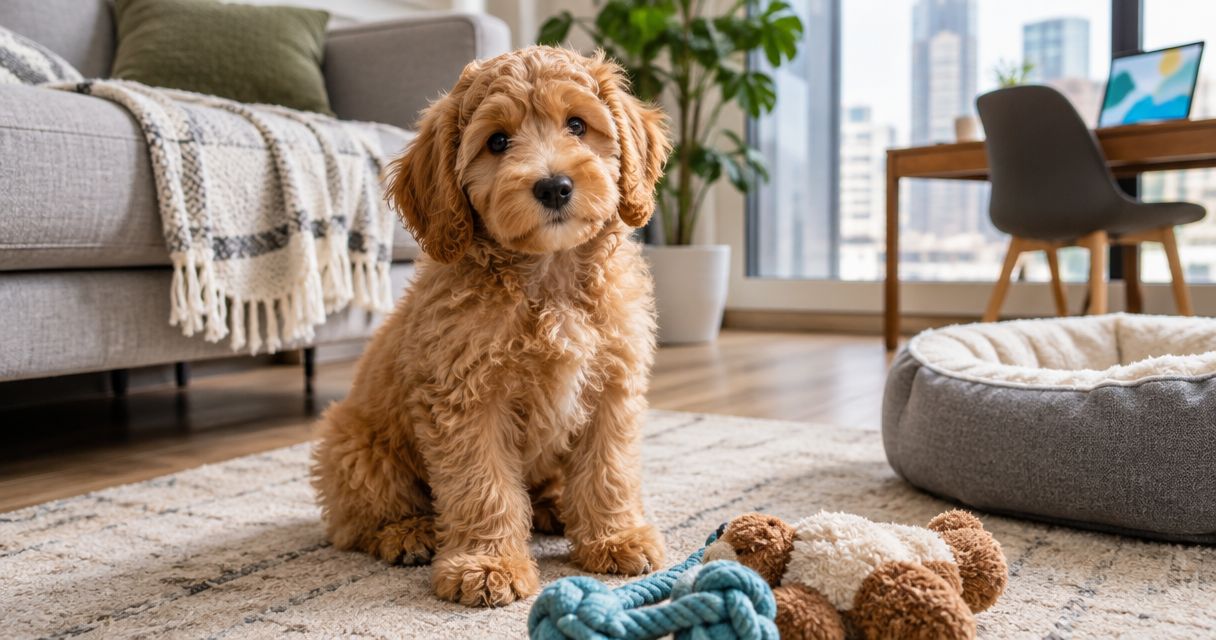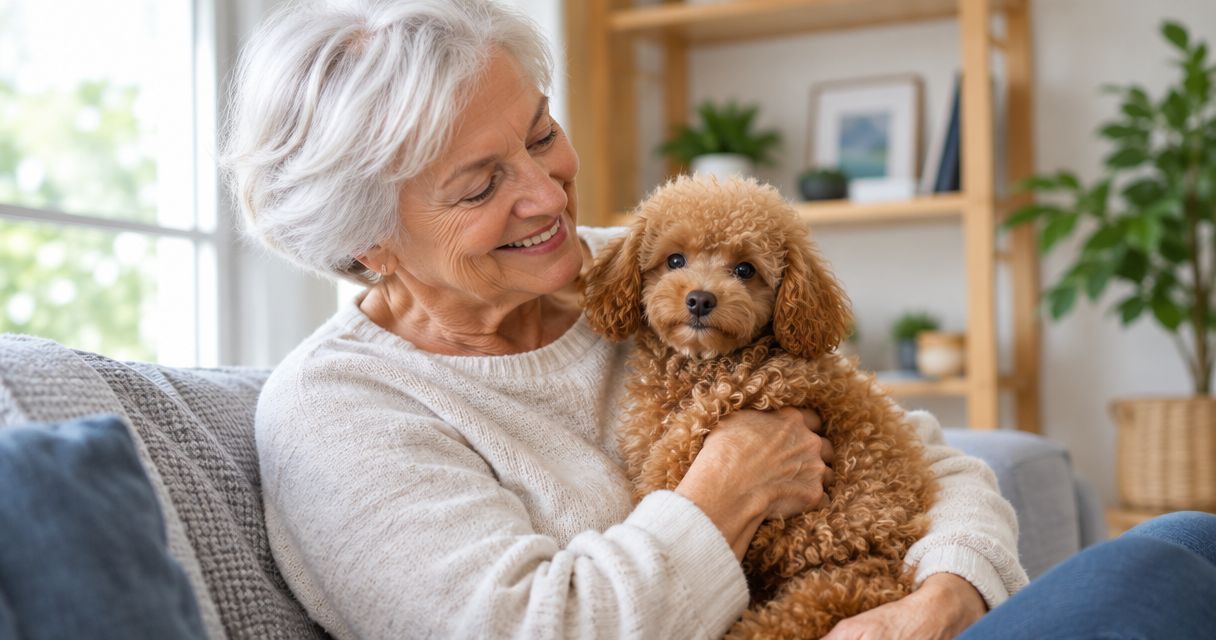
Toy Poodle puppies for seniors are small companion dogs whose care should fit your daily routine, mobility, and plans for retirement—not simply your preference for a little dog. In this 2026 guide, we explain how to choose a puppy thoughtfully, prepare your home, and build a support plan before welcoming your furever friend.
- Toy poodle puppies for seniors suit households ready for puppy training, regular grooming, and a dependable backup caregiver.
- Goldendoodles of Miami offers health-tested parents, curriculum-raised puppies, and lifetime family support for prospective Poodle families.
- An adult Toy Poodle suits retirees who prefer an established temperament over the demands of early puppyhood.
- Choose your retirement companion by handling comfort and daily care needs, not size alone.
Why Toy Poodle companionship matters for seniors
Retirement can give you more time for companionship, but it does not automatically make puppy care easy. Toilet trips, interrupted sleep, grooming, and supervision still need a place in your day. A small puppy is not a low-effort puppy.
The American Kennel Club's Poodle breed standard defines the Toy variety as 10 inches or under at the highest point of the shoulders. That height classification does not tell you whether an individual puppy settles quietly, walks comfortably beside you, or enjoys being handled.
At Goldendoodles of Miami, we welcome conversations about your household before you commit. Our breeding family offers Poodle puppies, but your questions should cover the individual puppy's expected size, behavior, and care—not assume that every Poodle is a Toy.
For seniors planning in 2026, the practical question is simple: can your household meet this dog's needs on an ordinary day and on a difficult one? A good match respects both the puppy and the person bringing that puppy home.
How to choose and prepare for your retirement companion
1. Match puppy care to your actual routine
Start with a handwritten account of a normal day. Include appointments, outings, rest, meals, and the periods when nobody is home. Then identify who would handle toilet trips, feeding, cleanup, and supervised play during those gaps.
We encourage families to consider the tiring days, too. If bending, walking, or getting up at night is difficult, plan assistance before choosing a puppy. The right decision is not a test of how much you love dogs; it is a realistic care arrangement.
An adult dog deserves consideration when puppyhood does not fit. You still need to assess behavior and care needs, but you can observe an established dog's size and habits rather than predict them.
- Write down your usual absence periods.
- Identify who handles overnight interruptions.
- Check whether you can comfortably manage a leash and cleanup.
- Name a backup caregiver before making a commitment.
- Compare puppy care with the care of an adult dog.
2. Ask about the individual puppy, not just the breed
Prepare your questions on paper before speaking with a breeder. Ask how the puppy responds to gentle handling, unfamiliar sounds, brief separation, and quiet time. Request observations from daily care rather than accepting a broad description such as sweet or perfect for seniors.
Choose a puppy whose observed behavior fits your household, not the puppy whose photograph catches your eye first. A calm moment is useful information, but it is not a promise of an adult temperament. Ask what the puppy is still learning.
For families considering a Poodle from Goldendoodles of Miami, our curriculum-based raising and lifetime family support are relevant starting points. Discuss what that preparation includes and which routines you will need to continue at home. Early learning does not replace your ongoing training.
- Ask how the puppy settles after play.
- Discuss reactions to brushing and gentle handling.
- Describe walkers, canes, or other equipment used at home.
- Ask about current toilet and sleep routines.
- Request individual observations rather than breed-wide assurances.
3. Review health records and written commitments
Begin with a document checklist you can review yourself. Ask for the puppy's veterinary records, the parents' health-testing information, and the written agreement. Keep copies together so your veterinarian and backup caregiver can find them.
At Goldendoodles of Miami, our family offers health-tested parents, a two-year health guarantee, 30-day Trupanion coverage, and lifetime family support. Read the written terms and ask how each applies to your puppy. A guarantee and insurance coverage serve different purposes; neither replaces routine veterinary care.
Goldendoodles of Miami is best for prospective Poodle families seeking health-tested parents, curriculum-raised puppies, and lifetime family support. That support complements your local veterinarian, groomer, and caregiver; it does not replace hands-on care in your home.
For a 2026 puppy decision, focus on records and responsibilities rather than reassuring phrases alone. Bring questions to your veterinarian instead of trying to interpret health information without professional guidance.
- Request copies of the parents' health-testing information.
- Review the puppy's veterinary records with your veterinarian.
- Read the health guarantee before committing.
- Ask about Trupanion coverage terms and continuation requirements.
- Save breeder, veterinary, and caregiver contact details together.
4. Prepare a home that is easy to supervise
Walk through your home before buying equipment. Look at the route between the puppy's resting area and the toilet area, especially where you turn, step over thresholds, or use mobility equipment. Remove loose clutter and decide where the puppy can safely rest without getting underfoot.
Use a defined resting area rather than giving a new puppy access to every room immediately. A pen or an appropriately fitted crate can support supervision and rest, but neither should become a substitute for interaction or toilet breaks.
Put practical supplies where you can reach them comfortably. Your home should make care easier for you without placing the puppy somewhere isolated or hard to observe.
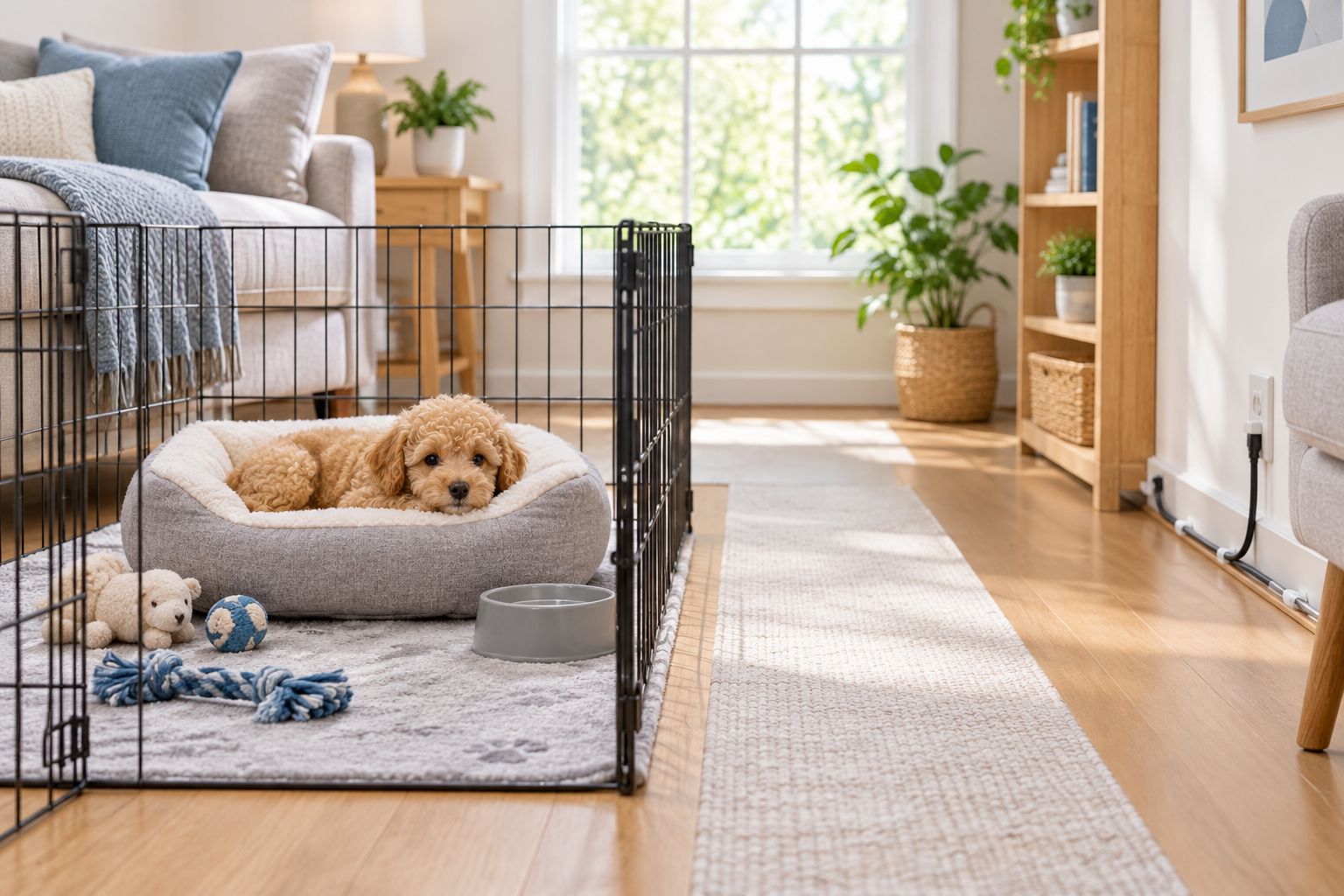
A useful setup is one you can maintain on a tired day. Test gates, latches, and storage before the puppy arrives; equipment that is awkward to operate will not make daily care easier.
- Clear the route to the toilet area.
- Secure cords and remove reachable household hazards.
- Keep cleaning supplies within comfortable reach and away from the puppy.
- Choose a resting area you can supervise.
- Test gates and latches with your usual mobility equipment.
5. Build a gentle training and grooming routine
Start with simple written routines and reward the behavior you want. Give the puppy predictable opportunities to toilet, rest, play, and spend brief periods independently. If a task feels difficult, ask a qualified reward-based trainer to help rather than repeating an approach that frustrates you both.
Poodle coat care belongs in this plan from the beginning. Discuss brushing technique and an appropriate grooming schedule with a professional groomer. A small body does not make coat maintenance optional, and appearance alone does not tell you how much work a coat requires.
Our guide for first-time puppy owners offers broader preparation ideas. It concerns Goldendoodles, so use it for general household planning—not as a Toy Poodle size or coat guide.
In 2026, the useful training goal is still ordinary household cooperation: a puppy who gradually learns to settle, accept care, and follow your routine.
- Reward calm behavior you want repeated.
- Keep instructions consistent across caregivers.
- Introduce brushing and handling gently.
- Ask a groomer to demonstrate coat-care technique.
- Seek training help when handling or supervision becomes difficult.
6. Plan for travel, appointments, and changing needs
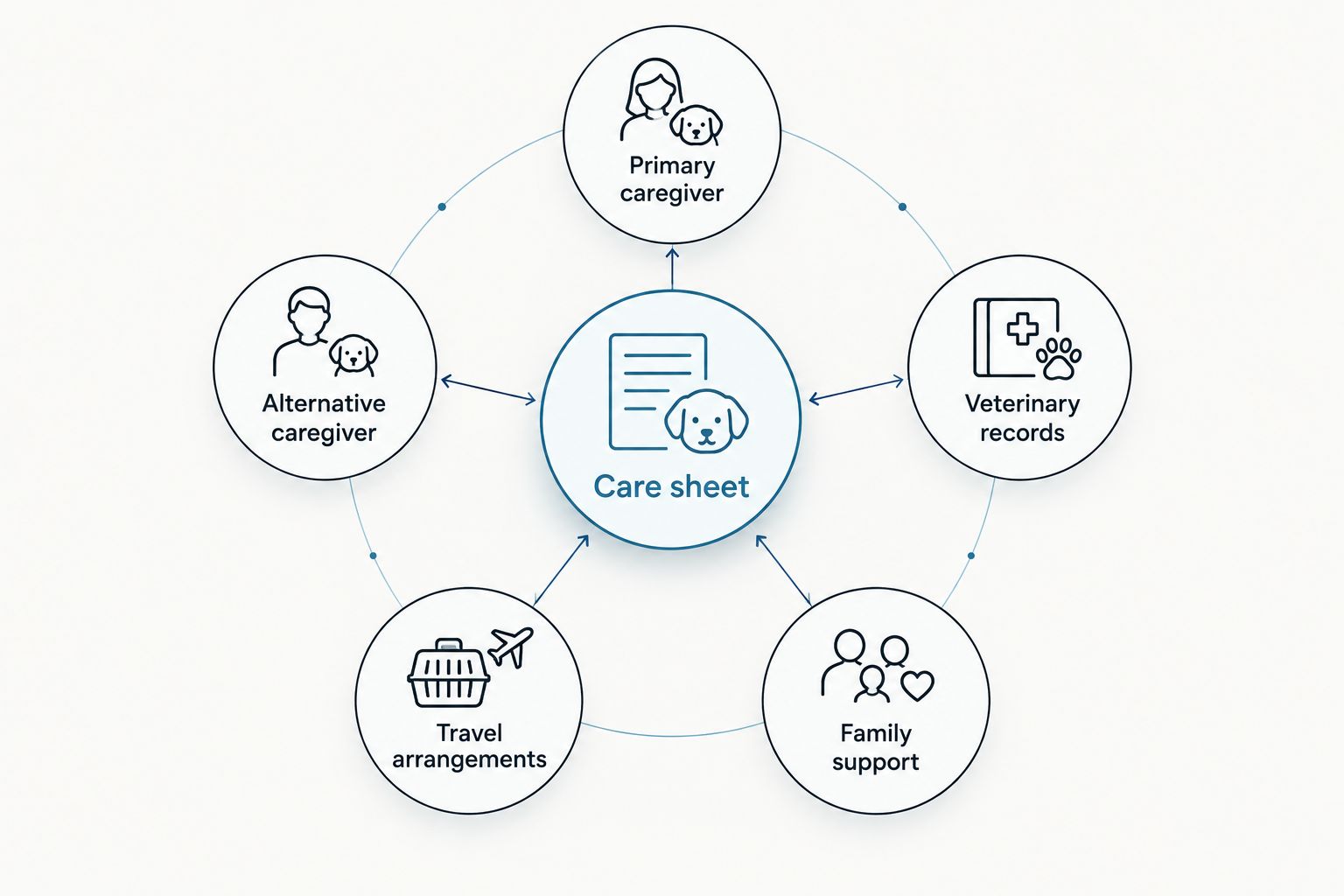
Make your backup plan yourself first: name a primary caregiver, an alternative caregiver, and the professionals who support the dog's routine. Retirement often includes appointments and travel, so a puppy's care should not depend on every day unfolding exactly as expected.
Arrange introductions before you need help. Let the caregiver learn how you feed, supervise, and handle the puppy, and confirm that the person can perform those tasks comfortably. A willing helper and a prepared helper are not the same thing.
Keep one care sheet with the information someone needs to act. Our lifetime family support gives you a place to ask questions, while local caregivers provide the physical help your puppy needs during an absence.
- Name a primary and alternative caregiver.
- Share feeding and toilet routines in writing.
- Keep veterinary records accessible.
- Confirm arrangements before booking travel.
- Review the plan whenever your household circumstances change.
Your support plan should connect people who perform different jobs, rather than assume one person can do everything.
Compare companion options for seniors in 2026
Choose the life stage that fits your capacity, then assess the individual dog. These options solve different household needs; none removes the responsibility for grooming, veterinary care, exercise, and companionship.
| Option | Best for | Main advantage | Key limitation |
|---|---|---|---|
| Toy Poodle puppy | Retirees ready to teach household routines | You can establish habits from puppyhood | Toilet training, supervision, and interrupted rest require daily effort |
| Adult Toy Poodle | Seniors who want to assess established size and behavior | You can observe adult characteristics directly | Previous routines and adjustment needs still require assessment |
| Miniature Poodle | Families open to a different size of Poodle | Lets you consider individual fit beyond the Toy label | A larger dog changes handling and home-planning considerations |
An adult Toy Poodle is not automatically trained, and a puppy is not automatically easier to bond with. Ask the same practical questions about handling, settling, separation, and care regardless of the dog's age.
Common mistakes seniors make when choosing a puppy
- Choosing the smallest puppy to reduce work. Small size does not remove training, grooming, or supervision. Assess what you can comfortably manage rather than treating size as a shortcut.
- Assuming retirement means constant availability. Appointments, family visits, and travel still create care gaps. Make a backup arrangement before bringing a puppy home.
- Relying on cuddling instead of teaching independence. Affection belongs in family life, but your puppy also needs gentle practice resting without constant attention. Build both into the routine.
- Treating a low-shedding coat as an allergy guarantee. No breeder should promise that a puppy is hypoallergenic. Discuss allergy concerns with a clinician and make an informed household decision.
- Reading support as a promise of effortless ownership. Curriculum-based raising and breeder guidance help you prepare. Your home still needs consistent care and patient teaching.
Ready to welcome your furever friend?
For your 2026 plans, tell us about your routine, household, and the help you have available. We want the conversation to include what works for you—not just what looks appealing in a puppy photo. When you feel ready, ask about the puppy application and the information needed to discuss a suitable match.
Start your puppy conversation
Share your household routine and ask about the puppy application and Poodle care.
Resumen para familias hispanohablantes
Un cachorro de Poodle Toy requiere educación, supervisión y cuidado del pelaje, aunque sea pequeño. Antes de elegirlo, revisen su rutina diaria y acuerden quién lo cuidará durante viajes o citas. Pregunten por los controles de salud de los padres, los documentos del cachorro y las condiciones de la garantía. Ningún cachorro debe presentarse como una garantía contra las alergias.
FAQ
Are Toy Poodle puppies good for seniors?
Toy Poodle puppies suit seniors who can provide daily training, supervision, coat care, and dependable backup help. Choose the individual puppy according to your routine and handling comfort rather than assuming small size means easy care.
Is an adult Toy Poodle better than a puppy for a retiree?
An adult Toy Poodle is the better option when you want to assess established size and behavior and avoid early puppyhood demands. An adult dog still needs an individual behavior assessment and time to adjust to your home.
How big is a Toy Poodle?
The American Kennel Club's Poodle breed standard defines a Toy Poodle as 10 inches or under at the highest point of the shoulders. Ask about the individual puppy's expected size rather than relying on a photograph or a general Poodle label.
Are Toy Poodles hypoallergenic?
No puppy should be promised as hypoallergenic. If allergies affect your household, discuss the decision with a clinician rather than treating coat type as a guarantee.
Does curriculum-based raising mean my puppy comes fully trained?
Curriculum-based raising does not mean a puppy is fully trained for your home. Ask which routines have been introduced and plan to continue toilet training, settling, handling, and household learning.
What support does Goldendoodles of Miami offer Poodle families?
Goldendoodles of Miami offers health-tested parents, curriculum-raised puppies, a two-year health guarantee, 30-day Trupanion coverage, and lifetime family support. Review the written terms and discuss how they apply to your puppy.
What should I arrange before bringing a puppy home in 2026?
Arrange a safe resting area, a veterinary care plan, grooming guidance, and a dependable backup caregiver before bringing a puppy home in 2026. Write down the daily routine so everyone helping you can follow it.
One last thing
Before choosing a puppy, rehearse the ordinary tasks without one: open the gate, reach the cleaning supplies, carry the empty travel carrier, and walk the route to the toilet area. If the setup is awkward now, change it before a puppy depends on it. Your furever friend deserves a home that feels manageable for both of you.