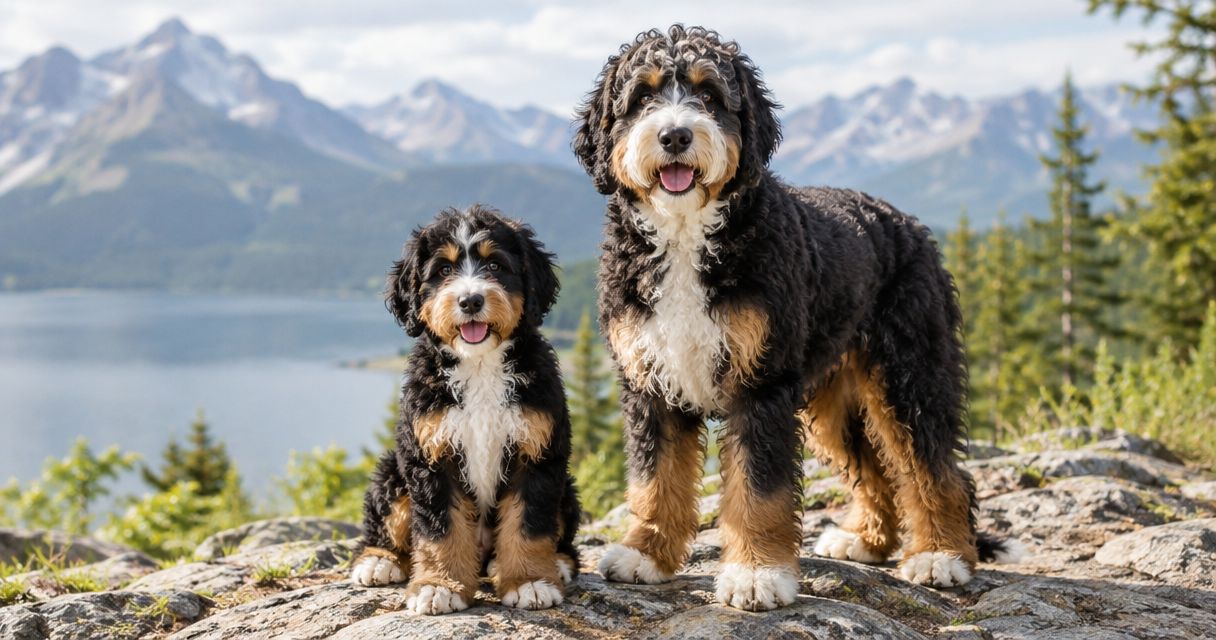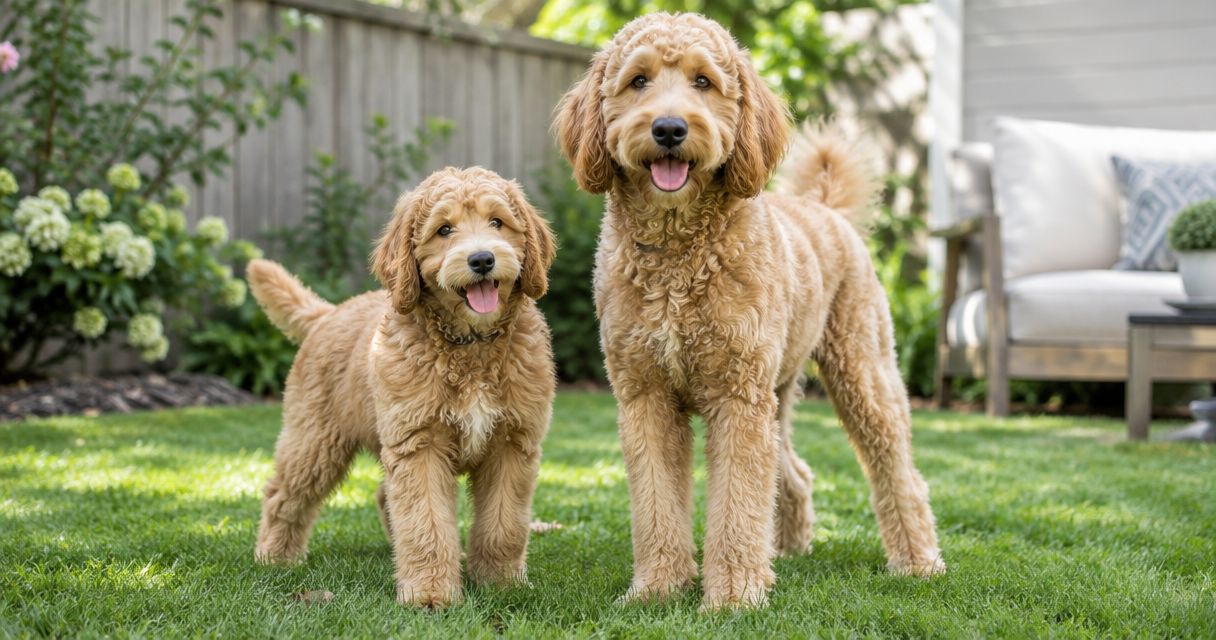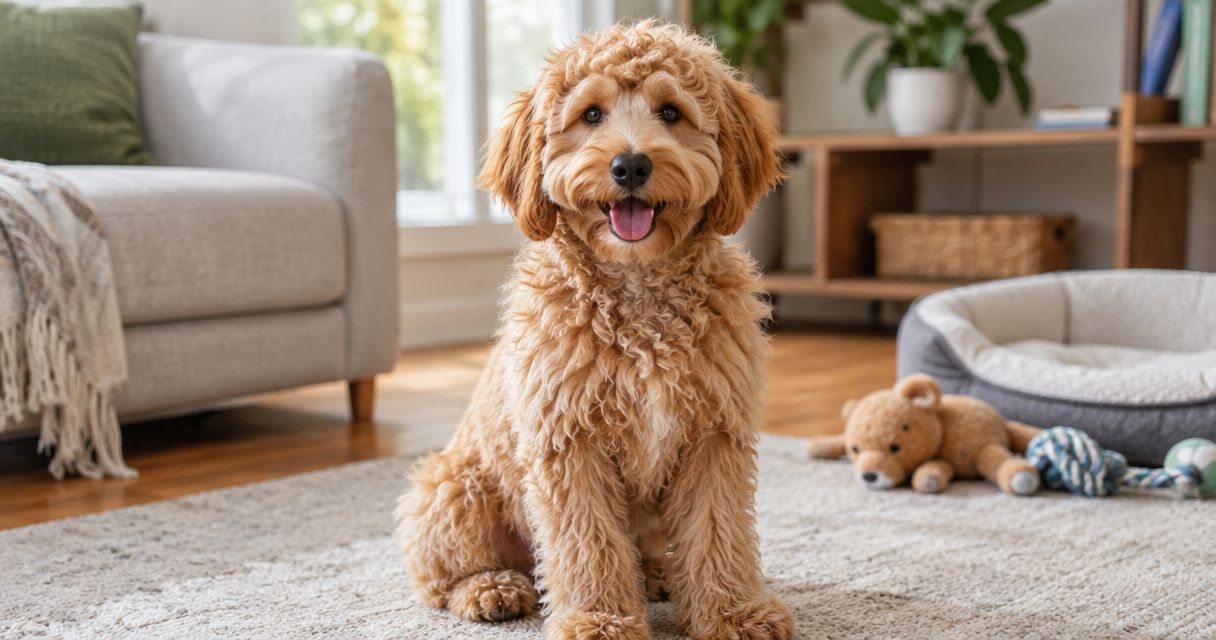
A fully grown Mini Goldendoodle is generally a small-to-medium dog, not a guaranteed lap-sized companion. Adult size depends on the puppy’s parents and inherited build, so “mini” is a size category rather than a promise of one exact weight. We recommend choosing your furever friend with room for some variation, especially when a housing rule or lifting limit matters.
- How big do Mini Goldendoodles get? GANA’s miniature category typically weighs 26–35 pounds, with height limits defining the category.
- Miniature Goldendoodles stand over 14 inches and under 17 inches at the shoulder under GANA’s size classifications.
- Goldendoodles of Miami encourages families to evaluate parent size and individual growth, not rely on the mini label alone.
- Choose your puppy around temperament, care needs, and realistic adult-size expectations—not the smallest possible prediction.
How big do Mini Goldendoodles get when fully grown?
For families planning in 2026, the Goldendoodle Association of North America, or GANA, provides a useful reference: its miniature category measures over 14 inches and under 17 inches at the shoulder, with a typical weight of 26–35 pounds. Height defines the category; the weight range is a guide, not an individual puppy’s guaranteed outcome.
That distinction matters. A dog’s frame, muscle, and body condition affect weight, while a fluffy coat can make the same dog look much larger than its actual build.
If you are choosing a dood for a smaller home, our Mini Goldendoodle apartment-living guide looks beyond size to the daily routine your puppy will need.
| Adult-size measure | What it tells you | What it does not guarantee |
|---|---|---|
| Shoulder height | Whether an adult fits a height-based size category | Exact adult weight or ease of lifting |
| Body weight | How much the dog weighs at that moment | Whether the dog has a healthy body condition |
| Parent measurements | Useful family context for a puppy’s expected build | An identical result for every puppy |
| Growth history | How the individual puppy is developing | A precise final size from one weigh-in |
Plan for an adult dog, not a permanently puppy-sized dog. A Mini Goldendoodle still needs suitable walking equipment, grooming, training, and space to rest comfortably.
Why this matters for your family
Adult size affects ordinary moments: carrying your dog upstairs, fitting a crate into your bedroom, and helping your dog into the car. Those details deserve attention before you fall in love with a puppy photo.
For your 2026 puppy search, write down any true limits before choosing a litter. A firm rental restriction is different from a preference for a dog that feels easy to carry.
We encourage families to separate those needs. If exceeding a particular size would make your home unsuitable, an estimate alone is not enough reassurance; an adult dog with known measurements gives you more certainty.
Miniature size: typically 26–35 pounds
GANA’s typical 26–35 pounds is a helpful planning reference, but the word “mini” is not used consistently by every person describing a Goldendoodle. Ask what the label means for the particular puppy you are considering.
A useful conversation includes the expected adult height, the expected weight range, and the information behind that estimate. Parent measurements and mature relatives provide more context than a size word by itself.
There is also a difference between a category description and a puppy prediction. A published miniature range describes a group of dogs; it does not prove that a specific puppy will remain within that range.
Treat an adult-size estimate as a planning tool, not a size guarantee. That approach leaves room to welcome your puppy as an individual rather than judge normal development against a promised number.
Shoulder height: over 14 inches and under 17 inches
GANA’s miniature height category is over 14 inches and under 17 inches, measured at the shoulder. That means the top of the shoulder blades, not the top of the head or the highest curl.
For a useful measurement, have your dog stand naturally on level ground. A seated pose, an arched back, or a tape following the coat will not give the same information.
Height helps describe frame size. It does not tell you whether a dog enjoys being carried, settles quietly at home, or walks politely beside a stroller; those are separate questions about comfort, temperament, and training.
Why Mini Goldendoodle size varies
A Mini Goldendoodle inherits traits from both sides of the family. The miniature label cannot remove that variation, even when the parents are carefully selected.
These are the factors to discuss when estimating adult size:
- Parent size: Ask for the adult height and weight of both parents, rather than relying on photographs.
- Family history: Mature relatives can add useful context when that information is known.
- Individual inheritance: Littermates do not inherit an identical combination of traits or finish at identical sizes.
- Sex and build: Frame and muscle influence weight, so pounds alone do not describe the whole dog.
- Growth history: Repeated measurements show more than a single puppy weigh-in.
- Body condition: Extra weight changes the scale reading without making a dog’s underlying frame larger.
Food restriction is not a way to keep a puppy “mini.” We recommend working with your veterinarian on appropriate nutrition and body condition rather than feeding toward a preferred adult number.
Generation labels do not replace this discussion, either. An ancestry label describes breeding background; it is not a measurement of the individual puppy’s future height or weight.
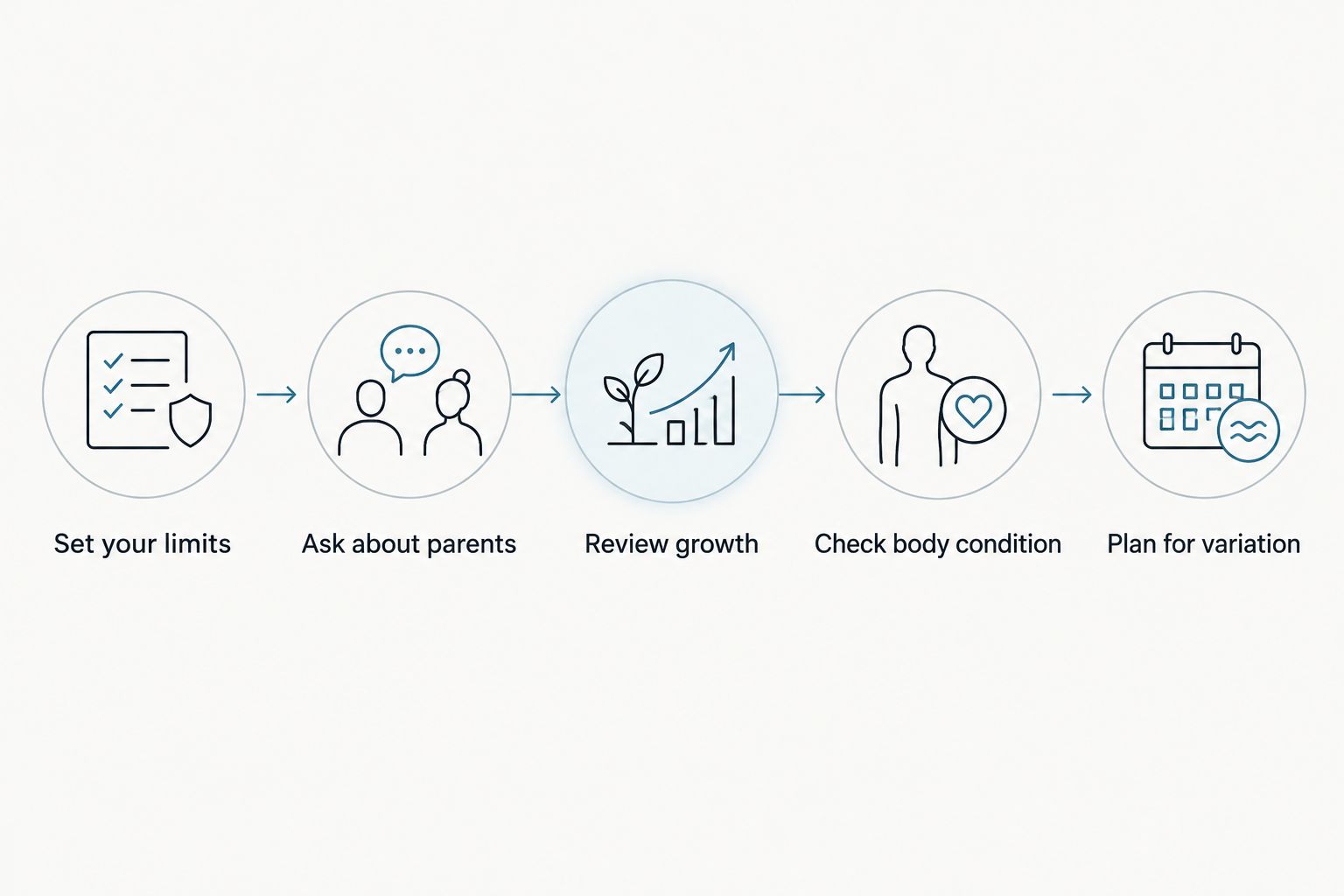
How to assess a puppy’s expected adult size
For a 2026 puppy search, use a repeatable process instead of collecting conflicting predictions from photos and online calculators. The goal is a reasonable expectation with a clear explanation behind it.
- Set your limits. Identify whether you have a firm housing restriction, a lifting concern, or simply a size preference.
- Ask about parents. Request adult measurements and ask how they inform the puppy’s estimate.
- Review growth. Look at recorded weights over time, including the puppy’s age at each measurement.
- Check body condition. Let your veterinarian interpret growth alongside the puppy’s frame and overall condition.
- Plan for variation. Choose equipment and household arrangements that do not depend on the smallest predicted outcome.
A trustworthy estimate has context. Ask what supports it, what remains uncertain, and how your family should prepare if your puppy matures larger than expected.
When is a Mini Goldendoodle fully grown?
Physical maturity is a process, not a single birthday shared by every Mini Goldendoodle. Height growth slows, and the body continues developing; your veterinarian can assess that progress using the individual dog’s growth history and examination.
A dog that looks nearly adult is not automatically ready for every adult activity. Ask your veterinarian about exercise appropriate to your puppy’s development rather than using appearance as the deciding factor.
We also encourage families to keep physical maturity separate from behavior. Reaching adult height does not mean a young dog has finished learning how to settle, greet visitors, or walk calmly on a leash.
Can I predict adult size from my puppy’s weight?
A single puppy weight cannot establish exact adult size. The puppy’s age, growth pattern, parent measurements, and body condition all matter.
Online formulas can produce a precise-looking answer without providing a precise prediction. Use them as discussion prompts, not as evidence that your puppy will meet a strict housing limit.
Keep a simple growth record for your veterinary visits. Consistent measurements are more useful than frequent guesses based on how big your dood looks beside the sofa.
Will a Mini Goldendoodle stay small enough to carry?
At 26–35 pounds, the typical GANA miniature weight range describes a dog that is not automatically easy for every family member to lift. Your own strength, balance, and mobility matter as much as the dog’s weight.
Consider the situations that actually require lifting. Stairs, car access, bathing, and an unexpected veterinary visit deserve a practical plan rather than an assumption that “mini” means effortless to carry.
What adult size changes—and what it does not
A smaller frame can make some home arrangements easier, but it does not remove a dog’s need for companionship, exercise, enrichment, and training. Choose a routine you can maintain, not just a size you like.
For equipment, measure your dog rather than buying entirely by category name. A harness should fit the individual chest and neck, and a crate should allow comfortable standing, turning, and resting.
Coat care remains its own responsibility. A Mini Goldendoodle’s coat can require regular brushing and professional grooming, and smaller size does not make the dog hypoallergenic.
For allergy-conscious families, discuss exposure and concerns with an appropriate healthcare professional before making a commitment. No puppy’s size or coat appearance can promise an allergy-free home.
How we help families look beyond the mini label
Goldendoodles of Miami is best for prospective puppy parents seeking curriculum-raised doodles and ongoing family support. We want the conversation to cover your household, your expectations, and the care your furever friend will need—not only a number on a scale.
At Goldendoodles of Miami, our program includes health-tested parents, curriculum-raised puppies, a two-year health guarantee, 30-day Trupanion coverage, and lifetime family support. Those commitments support your preparation; they do not turn an adult-size estimate into a guarantee or remove the responsibilities of puppy parenting.
As you prepare in 2026, bring your practical questions to the puppy application conversation. Tell us about stairs, children, other pets, housing requirements, and any lifting limitations so the discussion starts with your real life.
We want families to feel informed, not rushed. A good match includes enthusiasm for the puppy and a realistic plan for the adult dog.
Prepare for your puppy application
Review the application-to-pickup guide and gather your family’s questions about fit, size, and daily care.
Resumen en español para tu familia
Un Mini Goldendoodle adulto no tiene un peso exacto garantizado. La clasificación de GANA sitúa la altura miniatura por encima de 14 pulgadas y por debajo de 17 pulgadas a la cruz, con un peso habitual de 26–35 libras.
Para tu búsqueda en 2026, pregunta por las medidas de ambos padres y el crecimiento individual del cachorro. En Goldendoodles of Miami queremos ayudarte a valorar la compatibilidad con tu familia, sin prometer un tamaño adulto exacto ni que un cachorro sea hipoalergénico.
FAQ
How big do Mini Goldendoodles get as adults?
GANA’s miniature Goldendoodle category stands over 14 inches and under 17 inches at the shoulder, with a typical weight of 26–35 pounds. An individual puppy’s adult size remains an estimate, not a guaranteed result.
Will my Mini Goldendoodle definitely stay under 35 pounds?
No, the mini label does not guarantee that an individual Goldendoodle will stay under 35 pounds. Ask about parent measurements, family history, and the information supporting the puppy’s expected adult size.
How do I measure my Mini Goldendoodle’s height?
Measure from level ground to the top of the shoulder blades while your dog stands naturally. Do not include the head or the coat above the shoulders.
Can the smallest puppy become a larger adult?
The smallest puppy at one point is not guaranteed to be the smallest adult. Compare growth over time and ask about the family’s adult measurements rather than choosing from one weigh-in.
Is a Mini Goldendoodle a good fit for an apartment?
A Mini Goldendoodle can fit apartment life when the household meets the dog’s exercise, training, companionship, and care needs. Check your building’s rules and do not treat an estimated adult weight as proof that a puppy will meet a strict limit.
Does a smaller Mini Goldendoodle need less grooming?
Smaller size does not remove a Goldendoodle’s coat-care needs. The individual coat determines the brushing and grooming routine, and no coat guarantees that the dog is hypoallergenic.
Can I feed my puppy less to keep my Mini Goldendoodle small?
Do not restrict a puppy’s food to pursue a smaller adult size. Ask your veterinarian to guide appropriate feeding and evaluate body condition during growth.
One last thing
The smallest prediction is not necessarily the best match. Before choosing your dood, picture an ordinary weekday with the adult dog: a morning walk, grooming, time alone, family activity, and a quiet place to rest.
If that picture works even when your puppy grows beyond your preferred estimate, you have made a stronger plan. Your furever friend needs room to become themselves—not pressure to stay the size of their first photograph.