
Goldendoodles are generally receptive to training, but they do not have an established breed-wide intelligence rank that proves they are smarter than other dogs. Their Poodle and Golden Retriever ancestry offers a useful starting point for understanding trainability; your puppy’s temperament, experiences, and daily teaching matter more than a supposed intelligence score.
- How smart are Goldendoodles? Generally trainable, but no established intelligence ranking applies to every Goldendoodle.
- Goldendoodles, Poodles, and Golden Retrievers need consistent teaching; ancestry does not guarantee obedience.
- Goldendoodles of Miami offers curriculum-raised puppies for families who want a supported start to training.
- Choose your furever friend for temperament and household fit, not a claimed canine IQ.
If you are choosing your first puppy in 2026, our Goldendoodle guide for first-time dog owners puts everyday family responsibilities ahead of breed rankings.
How smart are Goldendoodles compared to other breeds?
Goldendoodles can be capable learners, but there is no sound basis for assigning every Goldendoodle a position above or below another breed. Learning a cue, solving a puzzle, following a scent, and settling beside your family are different skills. A dog can excel at one and need patient teaching with another.
Poodles and Golden Retrievers are widely described as trainable breeds. A Goldendoodle inherits traits from both, but crossing them does not produce a predictable average of their abilities. Even puppies with the same parents have individual personalities.
For your 2026 puppy search, compare the work each dog was developed to do and the care you can provide—not a numbered leaderboard.
| Dog | Learning-related strengths | Challenge to plan for | Best for |
|---|---|---|---|
| Goldendoodle | Poodle and retriever ancestry provides a useful starting point for training | Individual temperament and learning pace vary; the cross does not guarantee easy obedience | Families prepared to teach routines and assess the individual puppy |
| Poodle | Trainable, with a history as a retrieving dog | Learning ability still needs direction, practice, and suitable activities | Families who enjoy teaching and ongoing mental activity |
| Golden Retriever | Retrieving background and a reputation for responsiveness to people | Enthusiasm does not automatically become calm greetings or loose-leash walking | Families who want shared activities and will teach everyday manners |
| Labrador Retriever | Retrieving background and a reputation for trainability | Excitement around people, food, or play still needs management | Families who enjoy active participation in training |
| Border Collie | Herding background and responsiveness to handler cues | Working tendencies can be a mismatch for a household seeking an undemanding companion | Homes specifically prepared for a herding dog’s activities and behavior |
These are broad breed tendencies, not promises about a puppy. The best match is the dog whose needs your family can meet consistently.
Why this matters for your family
A clever puppy is not a puppy who arrives knowing your house rules. Quick learning works in both directions: your dood can learn that sitting earns attention, or that jumping brings an exciting response.
We want prospective puppy parents to feel comfortable asking practical questions. Can you reward the behavior you want? Can everyone at home follow the same rules? Those questions tell you more about your training plan than an impressive-sounding intelligence claim.
For a family bringing home a puppy in 2026, the useful goal is a dog who understands daily life with you, not a dog who performs well in a breed-ranking discussion. Calm handling, bathroom routines, safe greetings, and comfortable rest all belong in that picture.
What does Goldendoodle intelligence look like at home?
You will notice learning in ordinary moments, not just during tricks. Your puppy starts recognizing routines, responding to familiar cues, and repeating actions that have earned something enjoyable.
Those observations need context. A puppy who comes running when you open the food container has learned an association; that does not prove the puppy understands a recall cue outdoors.
Learning cues
A Goldendoodle can learn behaviors such as sitting, coming when called, and going to a mat through reward-based teaching. Start where your puppy can pay attention, make the requested action clear, and reward it promptly.
The challenge is transferring that skill. A sit in the kitchen is not proof that your puppy can sit calmly beside an unfamiliar dog.
Solving problems
A puppy who works out how to reach an interesting object is demonstrating problem-solving, but the result is not always convenient for the family. Curiosity needs safe outlets and sensible management.
Keep unsuitable objects out of reach and offer appropriate activities instead. Do not leave your puppy to invent a job and then blame intelligence for the result.
Paying attention to people
Watching your movements, anticipating routines, and seeking interaction can help a puppy learn from family life. They do not mean your puppy understands every word or knows why a household rule exists.
Teach the behavior you want rather than expecting your dood to infer it. Warmth and clear boundaries belong together.
Why Goldendoodle trainability varies
Goldendoodle trainability varies because learning depends on both the individual dog and the teaching environment. These factors explain more than coat appearance, size labels, or a claim that a particular puppy is exceptionally smart:
- Individual temperament: Confidence, persistence, and sensitivity influence how a puppy approaches unfamiliar tasks. Ask about observed behavior rather than accepting a broad label.
- Early experiences: Thoughtful exposure and curriculum-based activities provide learning opportunities. Early preparation does not replace continued teaching at home.
- Reward value: A reward must matter to the puppy in that moment. Food, play, or interaction can have different appeal depending on the setting.
- Household consistency: Conflicting rules make a task less clear. Decide whether greetings, furniture access, and mealtimes follow the same expectations with every family member.
- Distraction level: A familiar room and a busy sidewalk ask different things of your puppy. Increase difficulty gradually instead of treating distraction as defiance.
- Comfort and wellbeing: A puppy who is tired, uncomfortable, or frightened is not simply failing an intelligence test. Discuss sudden or concerning behavior changes with your veterinarian.
When you compare puppies in 2026, ask for concrete examples: what the puppy has experienced, what behavior was observed, and what support your family should continue.
How do we help a smart Goldendoodle learn good habits?
Make the right behavior clear, rewarding, and easy to practice. A family training plan should explain what to do next, not depend on calling a puppy smart or stubborn.
Use this sequence for a simple behavior such as going to a mat. Treat the numbers as an organizing plan, not a promise about how quickly your puppy will learn.
- Choose a behavior. Decide what success looks like before teaching. Going onto a mat is clearer than asking your puppy to be good.
- Choose a cue. Use 1 cue for that behavior across the household. Agree on the wording so family members do not unintentionally ask for different things.
- Reward success. Begin with an achievable version of the task and reward the action you want. Avoid repeatedly asking for something your puppy has not learned.
- Change the setting. Practice in 2 rooms before expecting the behavior in a much busier environment. This is a suggested progression, not a test your puppy must pass on schedule.
- Review the challenge. If your puppy struggles, make the task easier. Check the setting, reward, and clarity of your request before assuming unwillingness.
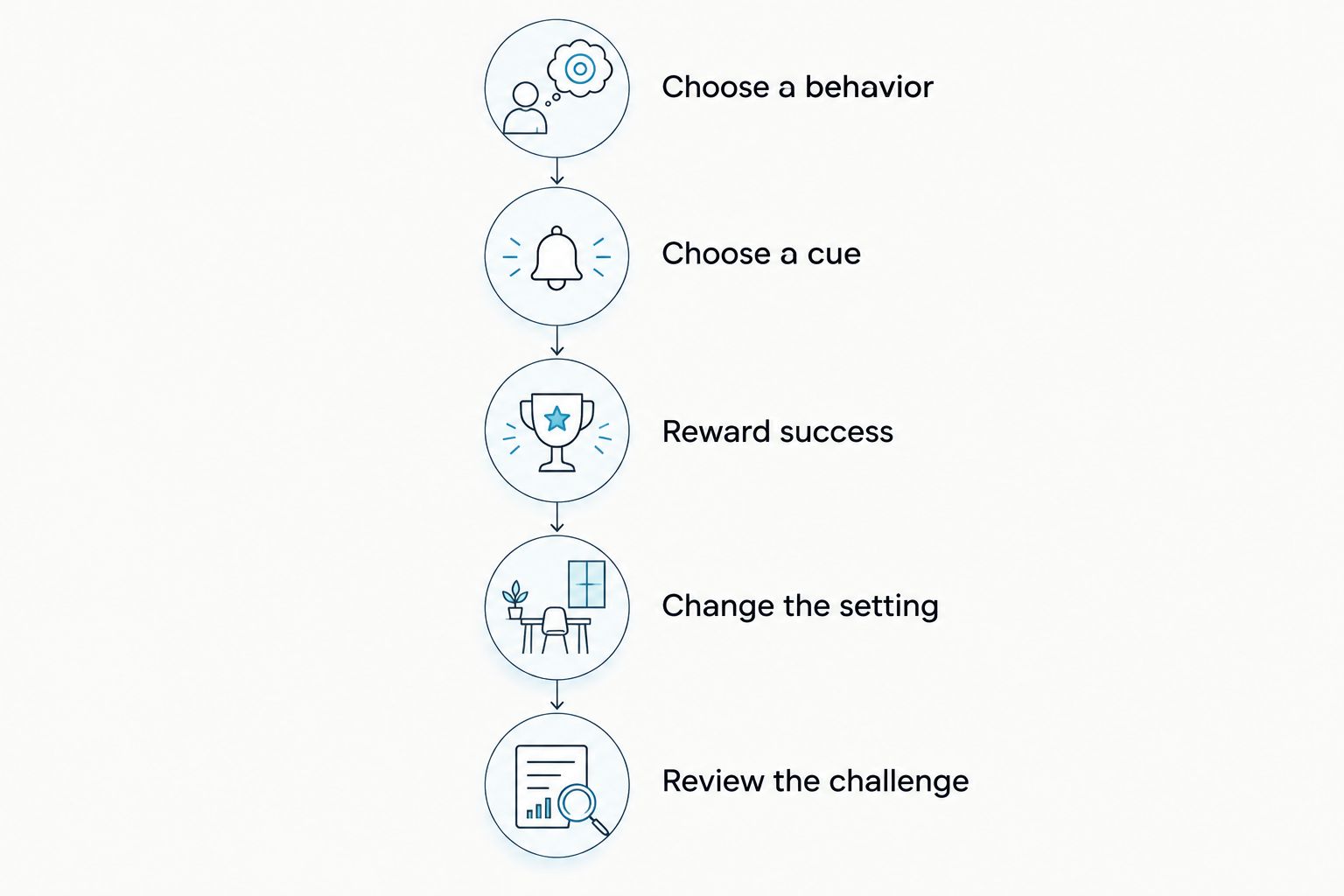
Keep learning separate from exhausting your puppy. End on a manageable success, allow rest, and return to the skill when your puppy can participate comfortably.
For families continuing an early curriculum, our guide to your puppy’s routine after pickup connects preparation with daily life at home.
Are Goldendoodles easier to train than Poodles or Golden Retrievers?
Goldendoodles are not automatically easier to train than Poodles or Golden Retrievers. All have learning potential, and an individual puppy’s responsiveness depends on the task, motivation, experience, and environment.
For a first-time family, “easier” should mean that you understand the puppy’s needs and can follow a realistic teaching plan. A responsive puppy still needs help with chewing, bathroom habits, greetings, and being comfortable without constant attention.
Choose a puppy whose observed temperament fits your household. Do not choose a cross expecting it to remove the work associated with raising either parent breed.
Does a smart Goldendoodle need more than physical exercise?
A smart Goldendoodle needs opportunities to learn and explore as well as suitable physical activity. Sniffing, reward-based practice, appropriate chewing, and quiet rest serve different purposes; extra activity does not replace teaching.
Include calm behavior in your plans. If every interaction becomes an exciting game, your puppy gets little practice with the peaceful companionship your family also wants.
What should you ask before choosing your furever friend?
Ask about the puppy in front of you, not just the breed description. Useful questions include how the puppy responds to unfamiliar objects, what routines have begun, and what the family should continue after pickup.
Goldendoodles of Miami is best for prospective puppy parents seeking a curriculum-raised Goldendoodle with ongoing family support. We emphasize health-tested parents, curriculum-raised puppies, a two-year health guarantee, 30-day Trupanion coverage, and lifetime family support.
Those commitments support your decision; they do not establish an intelligence score or guarantee a particular training outcome. Health testing and training preparation answer different questions, and careful puppy parents should ask about both.
If you are planning for a puppy in 2026, start with your household routine and bring your questions to the puppy application process. We want your furever friend to become part of our family’s extended circle with clear expectations, not pressure.
Take the next step toward your puppy
Visit Goldendoodles of Miami to begin your puppy application journey and discuss your family’s needs.
Resumen en español para nuestras familias
Los Goldendoodles suelen responder bien al entrenamiento, pero no existe una clasificación de inteligencia que permita afirmar que todos son más inteligentes que otras razas. El temperamento de cada cachorro, sus experiencias y la constancia de la familia importan más que una supuesta puntuación.
En Goldendoodles of Miami criamos cachorros con un programa de aprendizaje y ofrecemos apoyo familiar de por vida. Para elegir a tu futuro compañero, pregunta por sus padres con pruebas de salud, sus experiencias y la rutina que debes continuar en casa; después, comienza el proceso de solicitud cuando tu familia esté preparada.
FAQ
How smart are Goldendoodles compared to other dogs?
Goldendoodles are generally receptive to training, but no established breed-wide rank proves they are smarter than other dogs. Compare individual temperament, learning experiences, and household fit instead of relying on an intelligence leaderboard.
Are Goldendoodles smarter than Poodles?
Goldendoodles are not established as smarter than Poodles. Poodle ancestry helps explain their learning potential, but a cross does not guarantee greater intelligence than either parent breed.
Are Goldendoodles good puppies for first-time owners?
Goldendoodles can suit first-time owners who are prepared for consistent training, grooming, and daily care. Being new to dogs is less important than having a realistic routine and asking for help when needed.
Why does my Goldendoodle listen at home but not outside?
Your Goldendoodle has not necessarily learned to respond under outdoor distractions. Practice in easier settings, reward success, and increase difficulty gradually rather than repeating a cue in a situation that is too challenging.
Does a smart Goldendoodle potty train automatically?
A smart Goldendoodle does not potty train automatically. Bathroom habits depend on opportunities to go in the right place, supervision, reinforcement, and an appropriate routine—not an intelligence label.
Does a curlier Goldendoodle coat mean a smarter puppy?
A curlier Goldendoodle coat is not evidence of greater intelligence. Coat appearance does not tell you how an individual puppy will respond to teaching or fit your family.
Should I worry if my Goldendoodle learns slowly?
Learning slowly does not by itself establish a problem with intelligence. Review your teaching and environment, and contact your veterinarian about sudden changes or signs of discomfort.
One last thing
Watch what happens after your puppy does something—not just what you say beforehand. If jumping consistently earns lively attention while standing calmly goes unnoticed, the lesson is different from the rule you intended.
Before adding another cue, agree on what your family will reward. That small change makes your teaching clearer and gives your dood a fair chance to succeed.